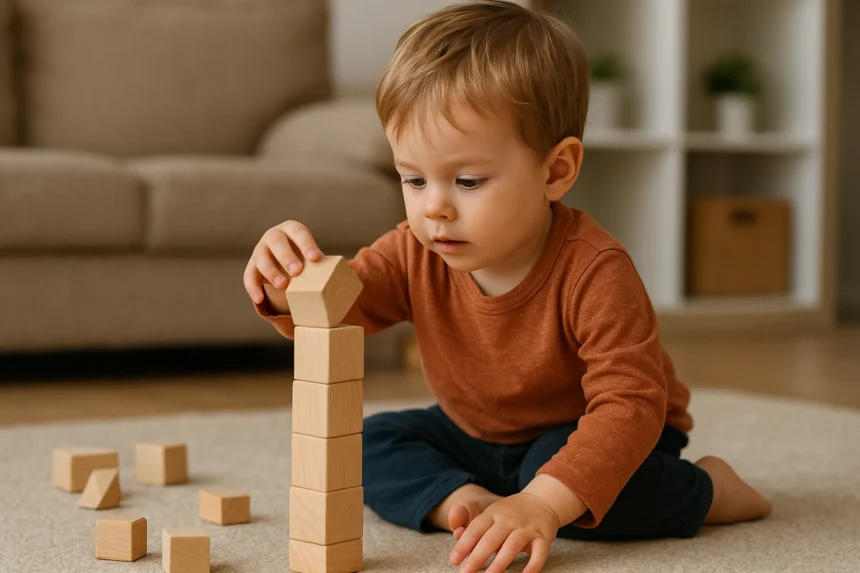
Parents can help their toddlers grow with confidence, patience, and clarity if they know what developmental milestones are. Between the ages of 2 and 5, kids make huge strides. They learn to talk, solve problems, make friends, and get around the world on their own. Every child grows at their own pace, but knowing what normal milestones are can help you keep track of their progress, spot problems early, and make your home a good place for them to learn.
This complete guide goes over the most important milestones in physical, cognitive, social-emotional, and language development for kids ages 2, 3, 4, and 5. You’ll also find expert advice, timeless parenting tips, and examples from real life that will still be useful for years, no matter what new parenting trends or technology come along.
- Why Toddler Developmental Milestones Are Important
- A Quick Look at How Development Works
- 1. Growth in the body
- 2. Development of the mind
- 3. Growth in Language and Communication
- 4. Growth in social and emotional skills
- 5. Skills for adapting and helping yourself
- Important Developmental Milestones for Toddlers at Age 2
- Physical Development at Age 2: Gross Motor Skills
- Cognitive Growth at 2 Years Old
- Language Development at Two Years
- Social and Emotional Growth at Age 2
- Important Developmental Milestones for Toddlers at Age 3
- Physical Development at Age 3: Gross Motor Skills
- Cognitive Development at Age 3
- Language Growth at Age 3
- Social and Emotional Growth at Age 3
- Age 4: Important Developmental Milestones for Toddlers
- Physical Development at Age 4: Gross Motor Skills
- Cognitive Growth at Age 4
- Language Growth at Age 4
- Social and Emotional Growth at Age 4
- 5 Years Old: Important Developmental Steps
- Physical Development at Age 5: Gross Motor Skills
- Cognitive Growth at Age 5
- Language Growth at Age 5
- Social and Emotional Growth at Age 5
- Timeless Ways to Help Toddlers Grow and Learn
- 1. Make Daily Plans
- 2. Promote Play That Has No End
- 3. Read Every Day
- 4. Show How to Act in a Healthy Way in Social Situations
- 5. Use Positive Reinforcement
- 6. Give People Chances to Be Independent
- 7. Talk to Each Other in a Clear and Calm Way
- Examples from the Real World That Parents See Every Day
- Example 1: The “Why?” Phase
- Example 2: Having Trouble Sharing
- Example 3: Tantrums in Public
- Example 4: Fear of the Dark
- Example 5: Making Deals on Everything
- How Parents Can Use Milestones Without Getting Stressed
- Conclusion
Why Toddler Developmental Milestones Are Important


Development is not a race, but knowing what milestones are can help parents:
- ✔ Early understanding of your toddler’s strengths
- ✔ Knowing where they might need more help
- ✔ Advice on how to create a caring environment
- ✔ Feeling sure when you go to the doctor or talk to your child’s teacher
Milestones also help parents understand what is normal, including the wide range of differences. At age 3, one child might speak in full paragraphs while another uses short phrases but is very good at physical skills. Both of them could be growing normally.
A Quick Look at How Development Works
Development in early childhood happens in many different areas that are all connected:
1. Growth in the body
Improvement in self-care, motor skills, coordination, and strength.
2. Development of the mind
How kids think, learn, remember things, and figure things out.
3. Growth in Language and Communication
Speaking, understanding, vocabulary, grammar, and expressive skills.
4. Growth in social and emotional skills
Being aware of yourself, controlling your emotions, having empathy, having social skills, and being independent.
5. Skills for adapting and helping yourself
Daily tasks like getting dressed, eating, going to the bathroom, and cleaning up.
Each area grows at its own speed, but they all help a child get ready for preschool, kindergarten, and everyday life.
Important Developmental Milestones for Toddlers at Age 2

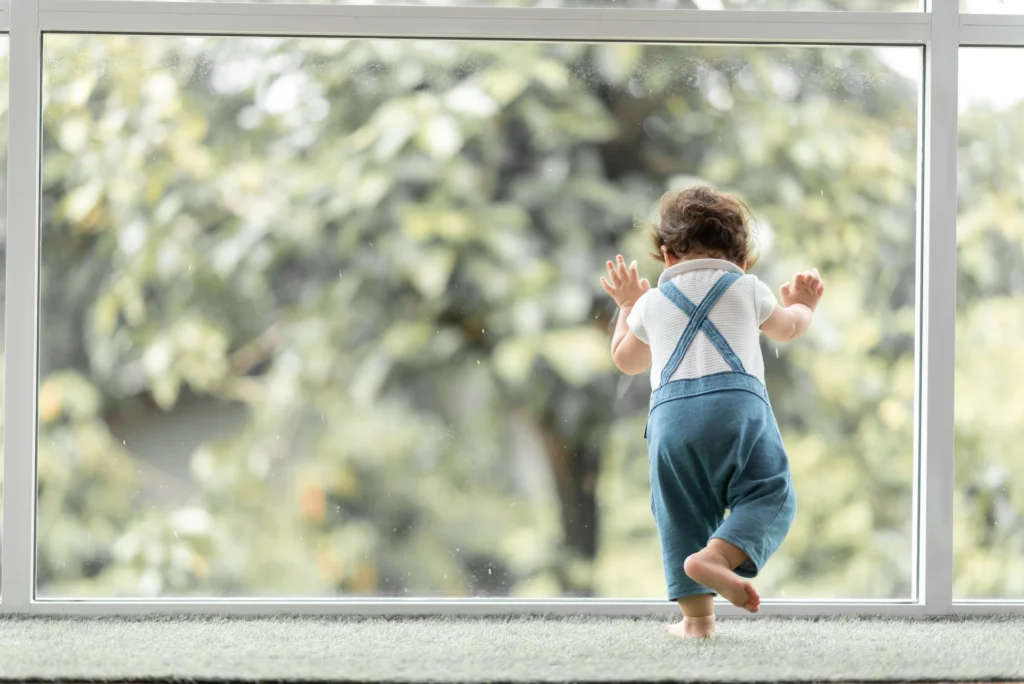
Two-year-olds are curious little explorers who love pushing limits and finding out how things work. Their brains are making connections quickly, and their personalities are starting to show.
Physical Development at Age 2: Gross Motor Skills
Most 2-year-olds can:
- Walk with confidence and start to run
- Get on and off of furniture
- Kick a ball
- Start jumping with both feet
- Pull toys while you walk
Fine Motor Skills
Kids may:
- Make towers out of four to six blocks
- Flip through the pages of the book
- Draw lines by scribbling and copying
- Use a spoon that doesn’t spill much
A parent might see their 2-year-old trying to “help” mix things in the kitchen. This is a great time to help kids improve their hand-eye coordination by giving them safe, easy tasks to do.
Cognitive Growth at 2 Years Old
Two-year-olds start to:
- Show that you understand basic ideas (big, hot, fast)
- Put things in order by shape or color
- Play pretend
- Follow two-step directions, like “Get your shoes and bring them to me.”
They have a short attention span, but they are very curious, which is why they often switch activities quickly.
Language Development at Two Years
The majority of kids:
- Say between 50 and 100 words
- Say things like “Mommy come” or “More juice” in two-word phrases
- When you say the name, point to things you know
- Use easy pronouns like “me” or “my”
At this age, language changes a lot, but steady growth from month to month is a good sign.
Social and Emotional Growth at Age 2
Expect:
- A lot of feelings and a lot of anger
- Playing next to other people, not with them
- Growing independence (“I do it!”)
- The start of empathy (hugging a sad friend or giving them toys)
At this age, toddlers know how to feel things but can’t fully control them, which is why they often throw tantrums.
Important Developmental Milestones for Toddlers at Age 3

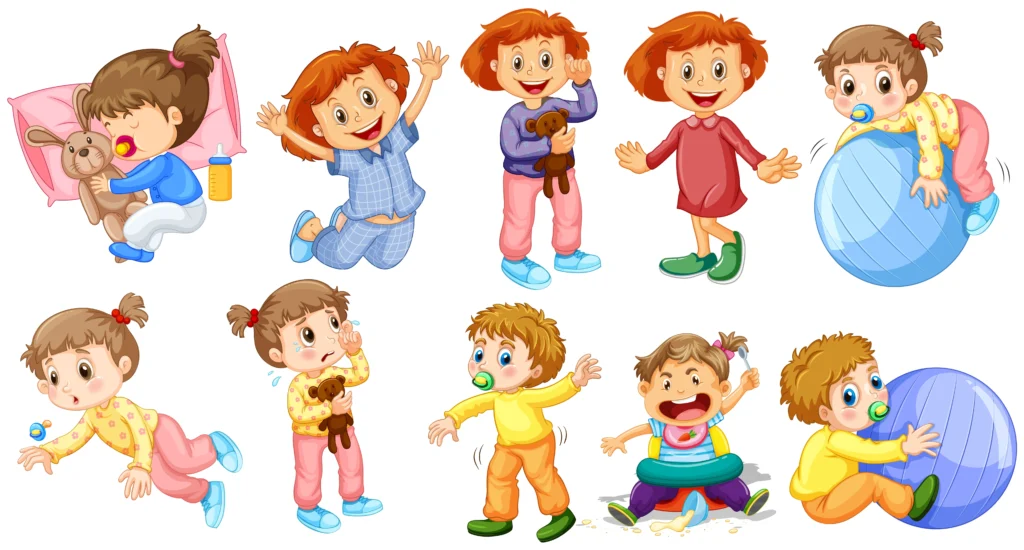
At age 3, toddlers become preschoolers. They start talking more clearly, their imaginations get stronger, and they start spending more time with other kids.
Physical Development at Age 3: Gross Motor Skills
Some common skills are:
- Running with better coordination
- Doing a good job of climbing
- Riding a tricycle
- Jumping ahead
- Overhand throwing a ball
Fine Motor Skills
Usually, three-year-olds can:
- Turn the handles on the doors
- Make block towers that are taller
- Make circles
- Use scissors that are safe for kids (with help)
- Get help getting dressed
These skills get them ready for things like crafts and playing on the playground at preschool.
Cognitive Development at Age 3
Three-year-olds can:
- Do easy puzzles
- Know what “same” and “different” mean
- Do things that adults do, like cooking, cleaning, and talking on the phone
- Play pretend with stories
- Put things into groups
They remember things better, so routines are very helpful.
Language Growth at Age 3
Kids do a lot of things:

- Use 3–4 words to talk
- Use more than 200 words
- Ask a lot of questions, like “Why?” “What is that?”
- Follow instructions that have more than one step
- Start using the past tense and plurals
People who don’t know you can understand your speech better (about 75%).
Social and Emotional Growth at Age 3
You might see:
- Interest in other kids and starting to play together
- Growth in sharing (with help)
- Better at calming down with help
- Strong bonds with caregivers
- Strong likes and dislikes for toys or activities
They start to understand their place in the world and make friends at this age.
Age 4: Important Developmental Milestones for Toddlers
Four-year-olds are full of energy, love to talk, have big imaginations, and want to be independent. This is an important year for growing emotionally and socially.
Physical Development at Age 4: Gross Motor Skills
A lot of 4-year-olds can:
- Jump on one foot
- Get a ball that bounced
- Go up and down stairs, switching feet each time
- Climb on playground structures with confidence
Fine Motor Skills
They usually:
- Draw faces that are easy to understand
- Cut better with scissors
- Copy shapes like crosses and squares
- Start writing some letters
These skills are necessary for being ready for kindergarten.
Cognitive Growth at Age 4
Four-year-olds typically:
- Comprehend fundamental temporal concepts (“yesterday,” “later”)
- Find shapes and colors
- Know some letters
- Count to ten or higher
- Solve easy problems on your own
Their thoughts become more logical, but they are still very real.
Language Growth at Age 4
At this age, kids:
- Use full sentences when you talk
- Tell short stories
- Learn the most common grammar rules
- Ask questions that make you think
- Talk to adults in depth
They often know more than 1,000 words.
Social and Emotional Growth at Age 4

Expect kids to:
- Have fun playing with others
- Be more in control of yourself
- Play by the rules (with reminders)
- Show that you care about and understand other people
- Make your friendships stronger
This is a great time to learn how to work together, solve problems, and settle disagreements.
5 Years Old: Important Developmental Steps
Five-year-olds are more responsible, independent, and aware of other people. They start getting ready for more structured school settings and more complicated relationships.
Physical Development at Age 5: Gross Motor Skills
Five-year-olds can usually:
- Jump and skip without stopping
- Ride a bike with training wheels on it
- Stand on one foot for 10 seconds
- Climb well
Fine Motor Skills
They might:
- Draw people with bodies and other details
- Be sure to use utensils
- Write some letters and numbers down
- Put on and take off clothes on your own
- Cut along the lines correctly
Being good at fine motor skills helps them do well in school.
Cognitive Growth at Age 5
At this age, kids:
- Learn the basics of addition
- See patterns
- Know their full name and, in some cases, their address
- Follow directions that have more than one step
- Keep in mind routines and sequences
Their thoughts become more organized and reflective.
Language Growth at Age 5
Five-year-olds usually:
- Use long, detailed sentences when you talk
- Say “I will…” in the future tense
- Tell stories in a way that makes sense
- Get wordplay and jokes
- Talk clearly so that everyone can understand
Language skills are very important for doing well in school in the future.
Social and Emotional Growth at Age 5

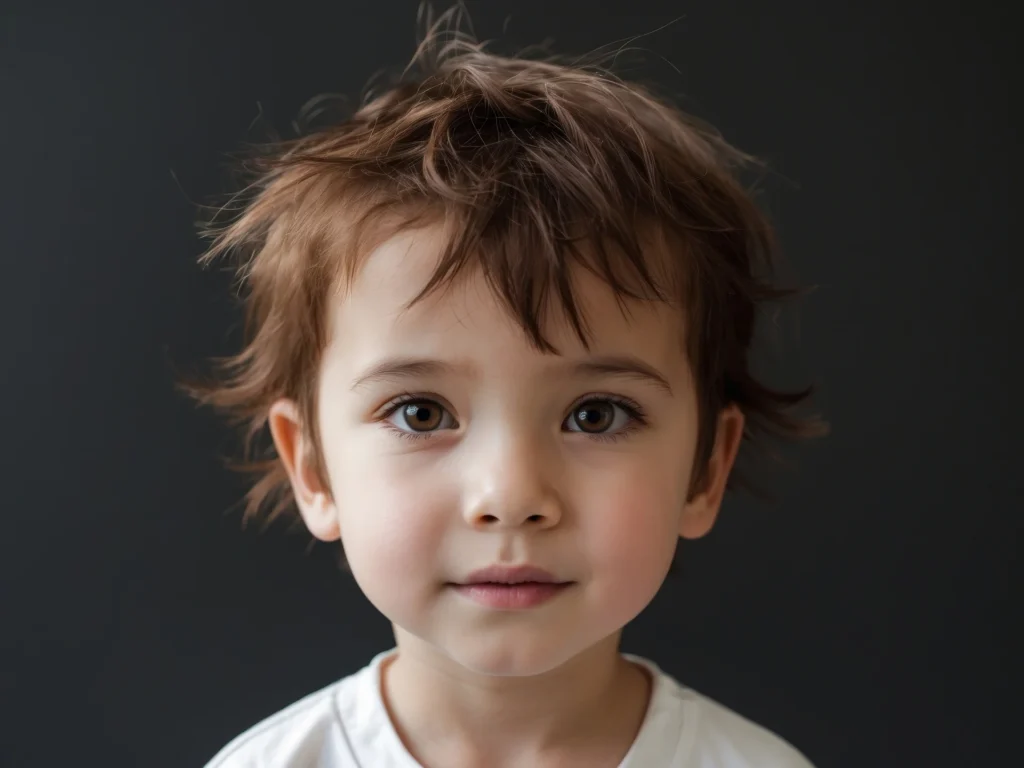
At this age, kids usually:
- Play together for a long time
- Be better at controlling your emotions
- Work out small disagreements on your own
- Make strong friends
- Show that you care and understand
They also start to understand fairness and the rules of society much better.
Timeless Ways to Help Toddlers Grow and Learn
These methods work for people of all ages and don’t depend on technology or trends.
1. Make Daily Plans
Routines that are always the same help:
- Feeling safe emotionally
- Predictability
- Freedom
- Improved behavior
Kids do better when they know what’s going to happen next.
2. Promote Play That Has No End
For example:
- Blocks
- Make-believe play
- Art supplies
- Exploring the outdoors
This kind of play helps kids become more creative, learn how to solve problems, and learn new words.
3. Read Every Day
Reading helps:
- Growth of vocabulary
- Emotional connection
- Reading and writing skills
- Understanding and listening
A difference that lasts a lifetime can be made in just 10 minutes a day.
4. Show How to Act in a Healthy Way in Social Situations
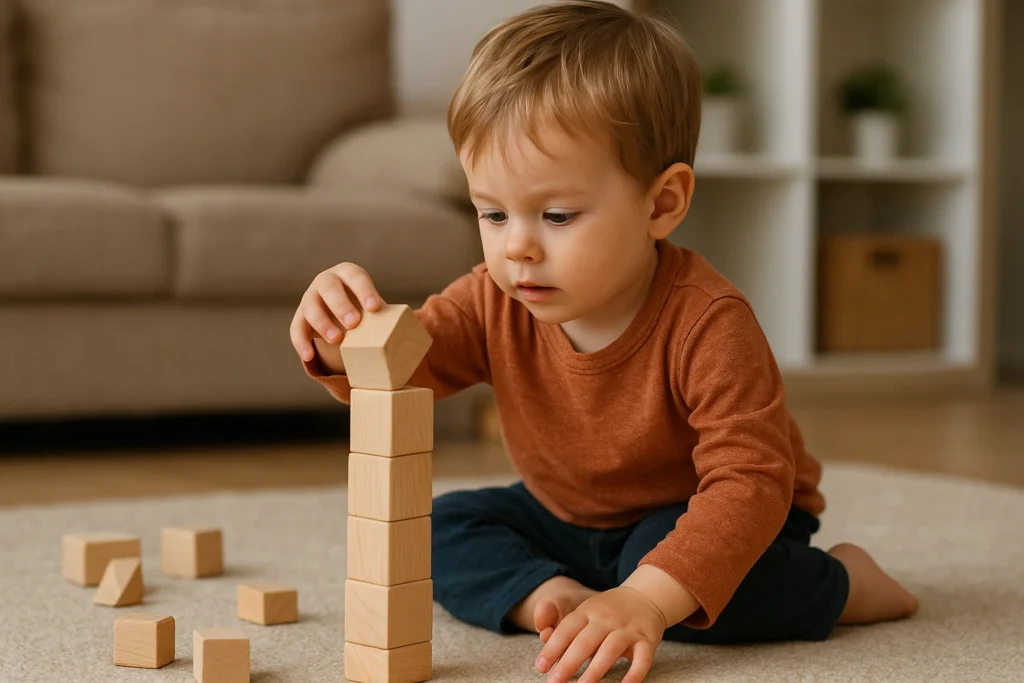
Kids learn by watching:
- How you deal with stress
- How you talk to other people
- How you deal with disagreements
- How you treat yourself
You are the most important teacher to them.
5. Use Positive Reinforcement
Compliment certain actions:
- “I love how you shared your blocks.”
- “You really put a lot of effort into that puzzle.”
This boosts confidence and encourages people to keep doing good things.
6. Give People Chances to Be Independent
For example:
- Let them pick out their own clothes
- Give them options (two snacks, two outfits)
- Get them to help with chores
Independence is the first step toward becoming strong and confident.
7. Talk to Each Other in a Clear and Calm Way
Talk:
- Slowly
- Clearly
- At their level
- With visual aids when needed
This helps people understand and work together.
When to Get Professional Help: Warning Signs
It is normal for kids to develop at different rates, but you should see a doctor if:
At Age 2
- No words that mean anything
- Not interested in playing with others
- Doesn’t often look you in the eye
At Age 3
- Speech that is very unclear
- No make-believe play
- Having trouble following simple directions
At Age 4
- Can’t jump, run smoothly, or use hands well
- Can’t make sentences or tell stories
At Age 5
- Finding it hard to get along with other kids
- Can’t follow clear instructions
- Has strong emotional outbursts that don’t get better
Early intervention can have a big effect.
How to Help Kids Grow from Age 2 to 5
These principles that never go out of style are in line with what pediatricians, child psychologists, and early development specialists say:
- ✔ Pay attention to what your child says and does
- ✔ Encourage curiosity over perfection
- ✔ Help them express their feelings by naming them often
- ✔ Ask open-ended questions
- ✔ Limit passive screen time in favor of active play
- ✔ Make sleep, nutrition, and outdoor activity a priority
These basic habits help kids grow and stay healthy for the rest of their lives.
Examples from the Real World That Parents See Every Day
Example 1: The “Why?” Phase
A three-year-old keeps asking “Why?”
- Meaning: They’re learning how to think and talk.
- What to do: Give a short answer, then move on to hands-on learning.
Example 2: Having Trouble Sharing
A child who is 2 or 3 years old won’t share toys.
- Meaning: Sharing is something you learn, not something you do naturally.
- How to do it: Show how to share and teach turn-taking.
Example 3: Tantrums in Public
A 2-year-old is screaming in the store.
- Meaning: Too much stimulation or anger.
- What to do: Stay calm, listen to their feelings, and help them through it.
Example 4: Fear of the Dark
A 4-year-old wants a nightlight.
- Meaning: The mind is getting bigger.
- What to do: Give them comfort, set up routines, and make sure they know what to expect at bedtime.
Example 5: Making Deals on Everything
A 5-year-old tries to make a deal before bed.
- Meaning: Cognitive and language skills are getting better.
- What to do: Set clear limits and follow through with warmth and consistency.
How Parents Can Use Milestones Without Getting Stressed
Milestones are not tests; they are helpful guides.
Avoid:
- Putting your child next to others
- Development that happens too quickly
- Expecting things to be perfect
- Overthinking every action
Instead:
- Help growth
- Celebrate progress
- Encourage curiosity
- Ask for help when needed
Conclusion
Knowing about your toddler’s developmental milestones can help you help them with confidence.
From ages 2 to 5, kids learn a lot, grow emotionally, and make new friends. Knowing about toddler developmental milestones helps parents help their child grow, spot problems early, and make a supportive environment that encourages learning for life.
Parents can confidently help their toddler reach each milestone by focusing on consistent routines, healthy communication, open-ended play, reading, and emotional connection. They don’t have to rely on short-lived trends or complicated strategies.
Every child grows and develops in their own way, but with awareness, patience, and intentional support, you can help your child do well during these important years.