
It can feel like a puzzle every day to feed a toddler. One day they love a food, and the next day they won’t eat it for no reason. During this time, kids grow quickly, their tastes change, and they have strong opinions. This means that parents often need a reliable set of healthy, easy-to-make meals that kids will like. Trends in food come and go, but the basics of balanced nutrition, age-appropriate textures, and simple ingredients stay the same.
Inside The First Year bundle:
- The 4th Trimester
- Baby Sleep Decoded
- Feeding Your Baby
- Milestones Month-by-Month
- Postpartum for Parents
- + 20 printables
This guide gives you 30 meal ideas for toddlers that are based on expert nutrition principles, real-life parent experience, and useful tips that will always work. Every recipe is quick, healthy, and good for your child’s growth. Plus, they keep mealtime stress to a minimum.
Why It’s Important to Give Toddlers Simple, Balanced Meals

Toddlers need steady nutrition to help their brains grow, their muscles grow, their immune systems work, and their motor skills develop. Pediatric nutrition experts say that toddlers do best on:
- A regular meal schedule
- A mix of whole foods, like fruits, vegetables, proteins, grains, and healthy fats
- The right amount of food
- Textures that are easy to hold and encourage self-feeding
- Trying a lot of different flavors to stop picky eating habits from becoming permanent
The goal is not to be perfect, but to be consistent. Parents and toddlers both feel better when they know they will get a variety of meals that have worked in the past.

A bedtime that's finally
boring.
Fix the room, build the routine, learn the eight scripts. No sleep training, no crying it out — just a sequence that stops needing your patience.
Get The No-Fight Bedtime$17 · 70 pages · instant PDF · yours forever
Timeless Rules for Feeding Young Children
No matter what the trends are, these feeding tips still work:
1. Give Options Without Putting Pressure on Them

If you keep changing the foods you give your toddler, they will be more open to trying new ones. Even if they say no to something today, they will be more likely to accept it in the future if they are gently exposed to it again.
The loud, wonderful years — calmed, in one bundle.
2. Use the “Parent Provides, Child Decides” Method
An expert-approved method that has been around for a long time:
You decide what and when.
They decide whether and how much.
Almost every mealtime fight is one person doing the other's job. The No-Fight Table turns that one idea into the exact words for every refusal you'll hear.
Read what's inside$17 · 70 pages · instant download

- Parents make sure their kids eat healthy, balanced meals at regular times.
- Kids choose what and how much to eat from what’s available.
This helps people eat well and stops power struggles.
Seventy pages. Six script tables.
What to do, and exactly what to say, when it happens in the supermarket, the restaurant, the car, or in front of everyone.


Instant PDF · 24 photographs · yours forever
3. Make Whole, Minimally Processed Foods Your Top Priority
Oats, eggs, beans, yogurt, fruits, vegetables, whole grains, and lean proteins are all good for growth without relying on fads.
4. Make Sure the Textures Are Right for the Age
Soft, small pieces help kids become more independent and lower the risk of choking.
5. Expose Again Without Forcing
Getting to know something makes you feel more at ease. A child might need to try a new food 10 to 20 times before they like it.
All feelings are allowed. Some behaviors aren't. That line is the whole method.
Explore The Preschool Years bundle →5 calm ebooks + 20 printables · $27
6. Add Healthy Fats
Toddlers need more fat than adults do to help their brains grow. Avocado, nut butters, olive oil, salmon, and full-fat dairy are all foods that will always be around.
30 Quick, Healthy, and Picky-Eater-Friendly Meal Ideas for Toddlers
Here is a list of different breakfast, lunch, dinner, and snack choices. Each one is full of nutrients, cheap, and easy to make, so they’re good for busy families.
1–10 Breakfast Ideas for Toddlers
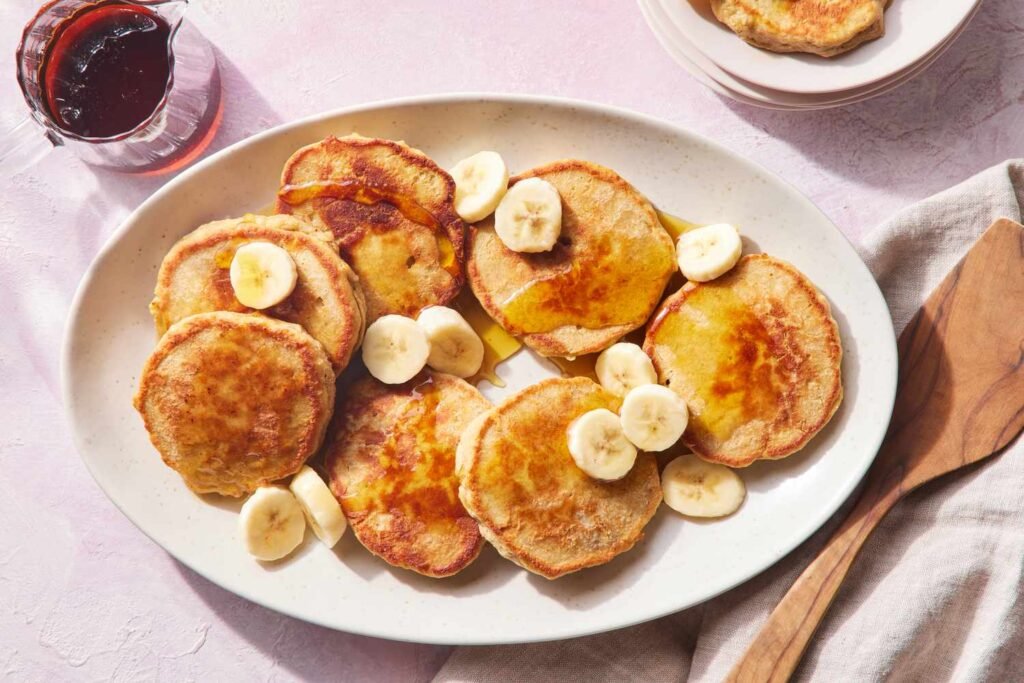
1. Pancakes with Bananas and Oats
A mix of rolled oats, a ripe banana, an egg, and cinnamon cooked like little pancakes. Soft, sweet, and easy to hold. Put yogurt on top for protein.
2. Spinach and Scrambled Eggs
Soft-cooked eggs with finely chopped spinach. Rich in vitamins and ready in minutes. Serve with strips of whole-grain toast.
3. Oats with Berries That You Soak Overnight
Oats that have been soaked in whole milk or yogurt and mashed berries. Rich, creamy, and filling.
The School-Age Years — all 5 guides
- Big Feelings, Bigger Kids — the calm response to meltdowns
- The Homework Truce — end the nightly battle
- The Friendship Years — friends, fallouts & fitting in
- Screens Without the Standoff — boundaries that hold
- Raising a Capable Kid — real independence, step by step
4. A Bowl of Cottage Cheese and Fruit
Cottage cheese with diced peaches, pears, or bananas on top. A lot of protein and easy on the stomach for young eaters.
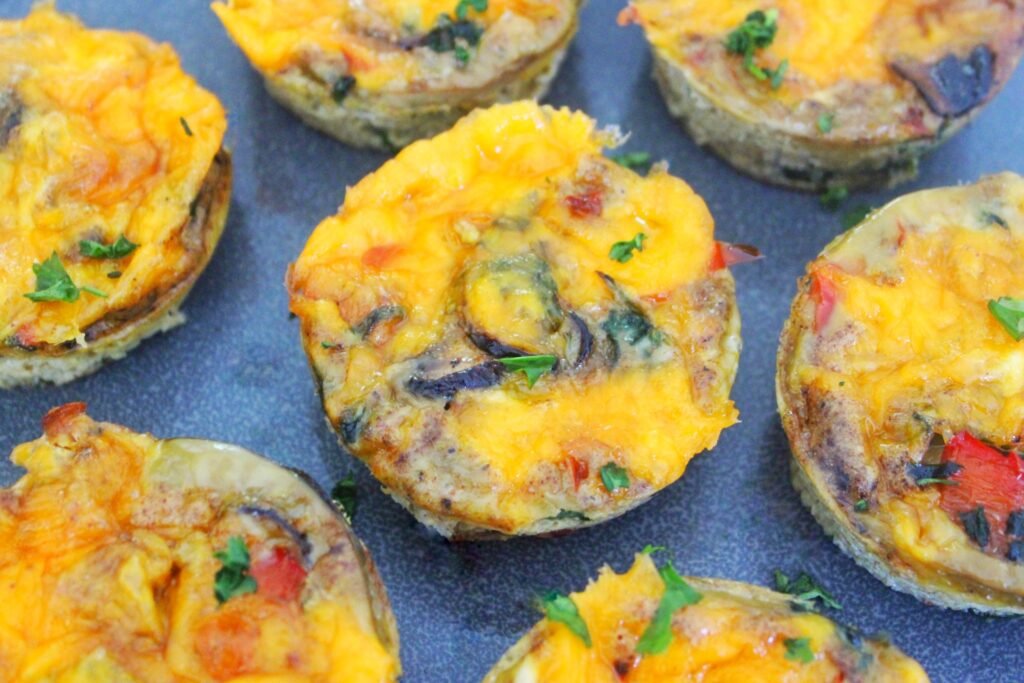
5. Muffins with Mini Veggie Omelets
Eggs and diced bell peppers or zucchini baked in a muffin tin. They freeze well and heat up quickly.
6. Soft Granola Yogurt Parfait
Put whole-milk yogurt, mashed berries, and softened granola or crushed graham crackers on top of each other.
7. Strips of Avocado Toast
Avocado mashed on top of whole-grain toast. For fiber, add some chia seeds.
My Day, My Way — The Complete Toddler Routine System
6 ready-made picture charts, 36 cut-out cards, a First–Then board, trackers & a parent guide — everything to help your toddler run their own day. 24 pages, instant download.
8. Oatmeal with Apples and Cinnamon
Oatmeal cooked with grated apple, cinnamon, and a little bit of milk. Not too hard for little kids.
9. Roll-Ups with Peanut Butter and Banana
A whole-grain tortilla with peanut butter on it and banana slices inside, rolled up, and cut into spirals.
The hard talks don't have to be a war.
Five short, practical guides — phones, moods, risks, independence, and letting go. The words to say when it counts, minus the lecture.
Explore The Teen Years →Instant PDF set · read on any device · yours forever
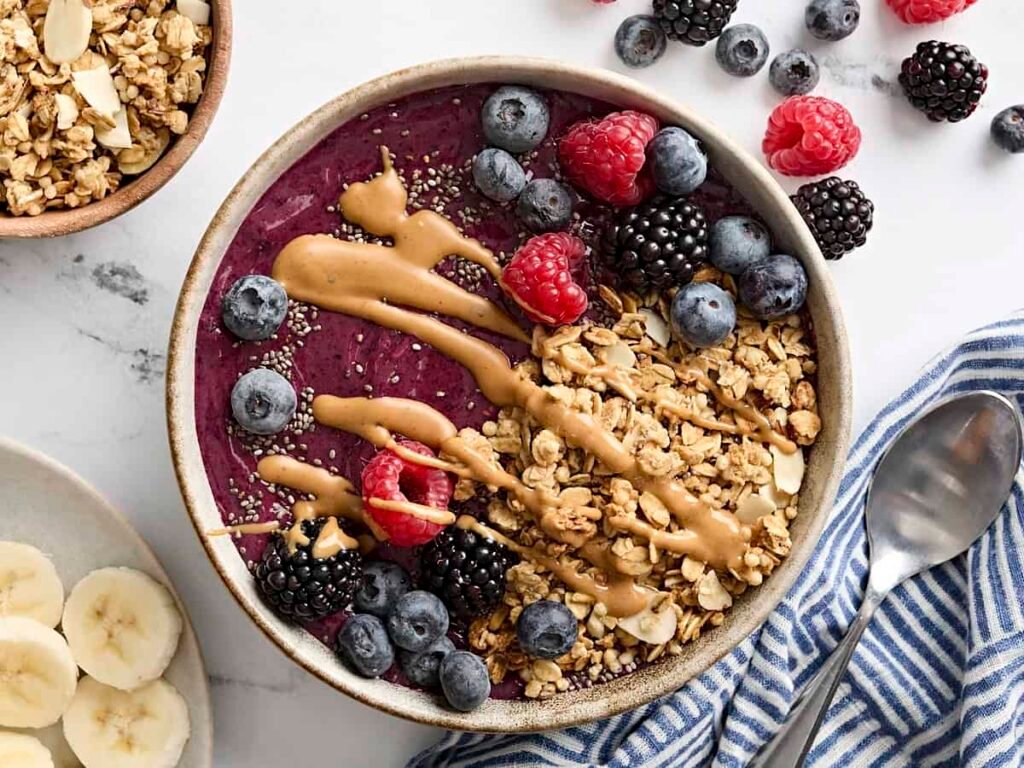
10. Bowl of Smoothie
A thick mix of yogurt, banana, spinach, and frozen berries, with little pieces of fruit on top that toddlers can feed themselves.
11–20 Lunch Ideas for Toddlers
11. Pinwheels with Turkey and Cheese
A tortilla with thin slices of turkey and soft cheese on top, rolled up tightly, and cut into pieces. Simple to hold and bite.
12. Mini Pita Pockets with Hummus
Pita wedges that are small and filled with smooth hummus and shredded cucumber. A lot of fiber and plant protein.
13. Macaroni with a Sauce That Hides Vegetables
Pasta with a sauce made from tomatoes, carrots, and onions. Comforting and good for you.
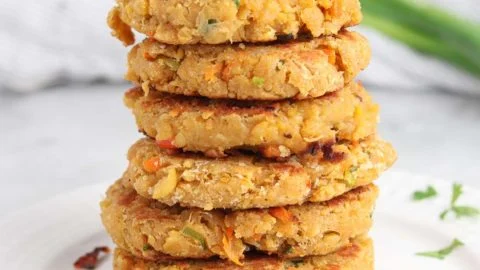
14. Patties Made with Chickpeas
Chickpeas that have been mashed and mixed with breadcrumbs, spices, and an egg, then fried in a pan until they are golden brown. Iron-rich, soft, and easy to hold.
15. Quesadilla with Cheese and Broccoli
A tortilla with melted cheese and chopped broccoli inside. Cut into wedges to make it easier to handle.
16. Mash of Tuna and Avocado
Tuna flakes, ripe avocado, and a little lemon juice. Put it on crackers or toast strips.
17. Fried Rice with Vegetables
Rice with peas, carrots, scrambled egg, and a little bit of mild soy sauce. Full of nutrients and safe for toddlers.
18. Soup with Lentils
Lentils that are soft and cooked with carrots and potatoes until they are tender. A classic, filling meal that keeps well in the freezer.
19. Meatballs with Chicken and Vegetables
Ground chicken mixed with grated zucchini, breadcrumbs, and herbs. For quick reheating, make small, soft meatballs.
20. Tomato Pasta with Cream
Short pasta mixed with a light cream and tomato sauce. For texture, add peas or finely chopped vegetables.
21–30 Dinner Ideas for Toddlers
21. Salmon Bites in the Oven
Small pieces of salmon brushed with olive oil and baked until they fall apart. Soft and full of omega-3s.
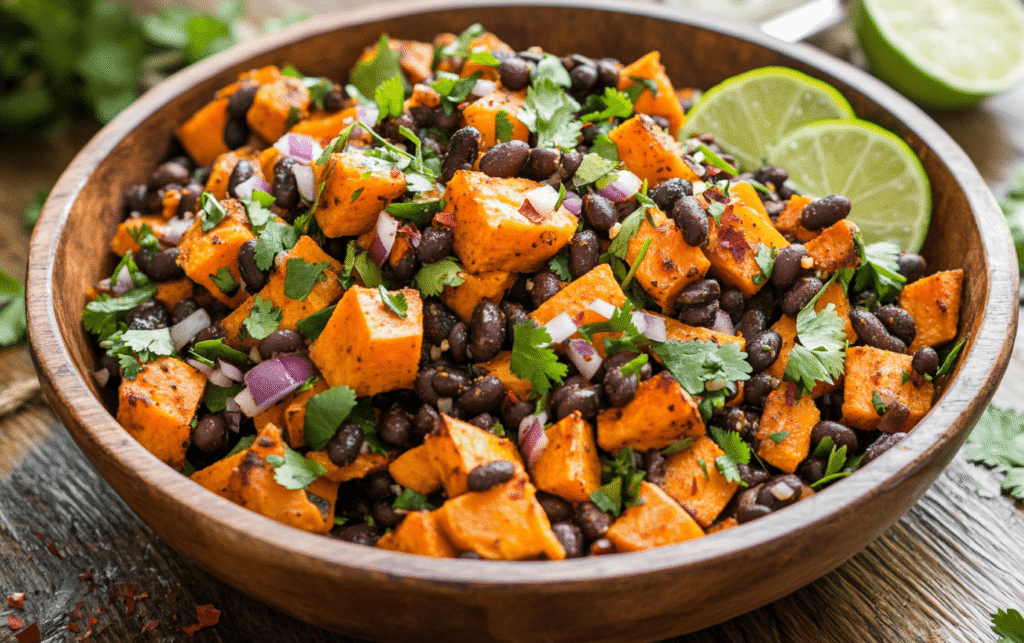
22. Bowl of Black Beans and Sweet Potatoes
Soft black beans, shredded cheese, and mild salsa (optional) on top of mashed sweet potatoes.
23. Curry with Rice and Chicken That Isn’t Too Spicy
A mild curry made with coconut milk and diced vegetables.
24. Pasta Bake with Beef and Veggies
Ground beef, tomato sauce, and small pasta pieces are cooked together and then baked with cheese until soft and creamy.
25. Tofu and Vegetable Stir-Fry
Soft vegetables that have been sautéed and cubed tofu. Contains a lot of iron and plant protein.
26. Risotto with Creamy Vegetables
Slow-cooked Arborio rice with broth, peas, carrots, and shredded chicken or cheese.
27. Small Cups of Shepherd’s Pie
Muffin tins with mashed potatoes on top of ground beef or lentils and vegetables. Perfectly sized.
28. Chicken Tenders Baked
Chicken strips that have been rolled in crushed whole-grain cereal or breadcrumbs and baked until they are soft.
29. Boats with Stuffed Bell Peppers
Half of a bell pepper filled with rice, beans, and mild spices. Soft-bake until soft.
30. Vegetable Soup That Everyone Loves
A classic meal made with soft noodles or rice, potatoes, carrots, and zucchini. Soft and moisturizing.
How to Make a Balanced Meal for Your Toddler Every Time
The base of any toddler meal idea stays the same, no matter which one you choose. A plate that is balanced has:
1. A Source of Protein
- Eggs
- Chicken, turkey, or beef
- Lentils and beans
- Fish
- Yogurt or cheese
Proteins help muscles and tissues grow.
2. A Fruit or Vegetable
Add colorful fruits and vegetables for fiber, vitamins, and minerals.
3. A Food That Is Whole Grain or Starchy
- Oats
- Pasta
- Rice
- Bread made with whole grains
- Potatoes
These keep your energy up and help your digestion.
4. A Good Fat
- Avocado
- Oil from olives
- Nut butters
- Dairy with full fat
Important for the growth of the brain.
When parents stick to these building blocks, toddlers get the nutrients they need without having to plan too much.
How to Get Kids to Try New Foods Without Making Them Feel Bad
Toddlers often don’t like new tastes or textures. These classic methods help them try new foods:
- Try “One New Food + Two Foods You Know” – Add one new food to the mix with foods they already like. Knowing something makes you less anxious.
- Give small amounts of new foods – A single piece that is the right size feels easy to handle. Big portions can be too much.
- Model Eating – Kids do what they see. To make them more curious, eat the same new food yourself.
- Don’t try to bribe or negotiate – Studies show that pressure always makes people less likely to accept. Give the food in a neutral way and move on.
- Make rejected foods normal – Just because a toddler says no to something doesn’t mean they don’t like it forever. Calmly bring up another day.
Tips for Busy Parents on How to Save Time When Making Meals

Make Simple Staples in Batches
Make big batches of things like:
- Rice
- Vegetables that have been roasted
- Turkey or chicken
- Pasta
- Lentils
Put in the fridge for quick meals that you can mix and match.
Keep Freezer Options That Work
Put it in the freezer:
- Mini muffins
- Meatballs
- Soups
- Pancakes
- Patties made of vegetables
Thawing and reheating saves time.
Use the Idea of a “Three-Component Plate”
Pick one thing from each group:
- Proteins
- Fruit and vegetable
- Carbs or whole grains
Keeps meals balanced and decision fatigue low.
Get Fruits and Vegetables Ready Ahead of Time
Cut and wash fruits and vegetables like cucumbers, berries, and melons so they are ready for quick meals.
How to Feed a Picky Toddler

Even the best toddler meal ideas can be met with resistance.
- Stick to your regular meal times – Regular meal times help control hunger and cut down on snacking.
- Cut down on distractions – Make the room calm by turning off screens.
- Serve meals in a family style – Let toddlers pick what they want to eat from a group of dishes.
- Dip new foods in dips – Yogurt, hummus, mild salsa, or cream cheese.
- Pay attention to hunger signals – Don’t force food. Kids naturally control intake.
- Give different textures – Some toddlers like crunchy foods, others soft. Variety helps acceptance.
Important Nutrients for Toddlers
To ensure your toddler gets a balanced diet:
- Iron – Helps the brain grow. Sources: beans, meat, fortified cereals, spinach, lentils
- Protein – Important for growth and the immune system. Sources: eggs, dairy, chicken, fish, tofu
- Vitamin D and Calcium – Good for bones. Sources: yogurt, cheese, fortified plant milk, dairy
- Fibre – Helps with digestion. Sources: fruits, vegetables, beans, whole grains
- Good Fats – Important for brain growth. Sources: salmon, avocado, olive oil, nut butters
Healthy Snacks That Go Well with Toddler Meals
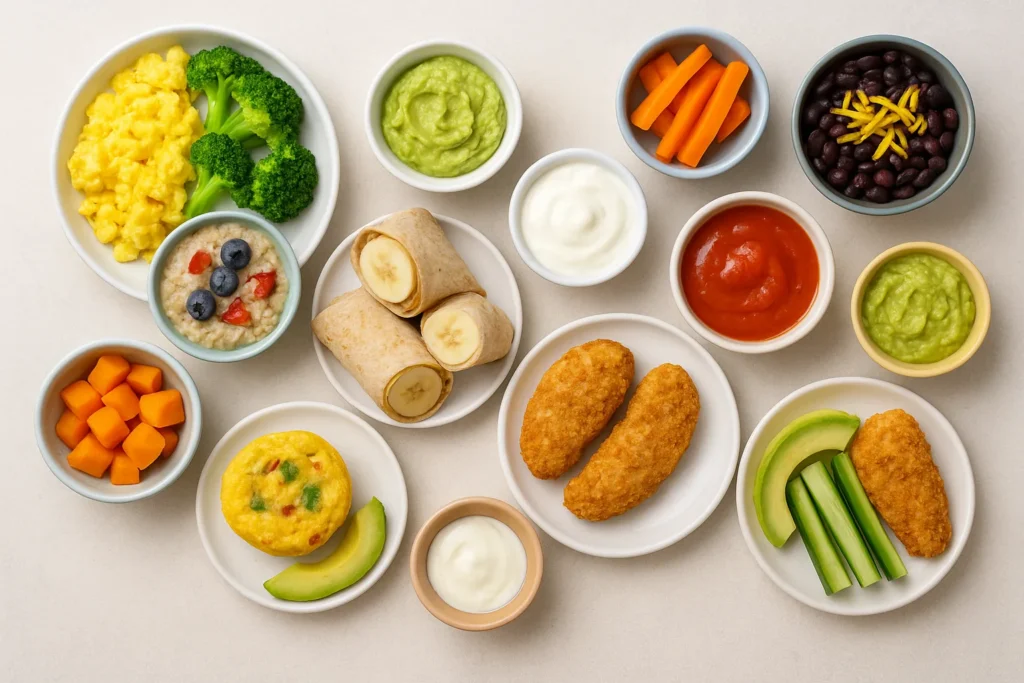
Toddlers usually need two snacks each day. Options that never go out of style:
- Almond butter and apple slices
- Strawberries mashed into yogurt
- Cubes of soft cheese with whole-grain crackers
- Small banana muffins
- Hummus and carrot sticks (for older toddlers)
- Pineapple and cottage cheese
- Halves of hard-boiled eggs
- Pudding with chia
These give energy and fill you up without relying on processed snacks.
How to Safely Change Meals for Allergies or Sensitivities
- Talk About Common Allergens Before – Introduce foods like eggs, peanut butter, dairy, wheat, and fish early under guidance.
- Watch for Reactions – Rashes, swelling, vomiting, breathing issues require medical attention.
- Give Options – Dairy-free: coconut milk, almond milk yogurt, dairy-free cheese; Gluten-free: rice, gluten-free oats, corn tortillas.
- Talk to a Pediatric Nutritionist When Needed – Especially for multiple food allergies.
Making the Mealtime Environment Positive
- Small Age-Appropriate Portions – Toddlers usually eat only a few tablespoons per food group.
- Involve Toddlers in Meal Prep – Washing fruit or stirring batter increases curiosity and reduces mealtime resistance.
- Don’t Use Food as a Reward or Punishment – Supports a healthy long-term relationship with food.
- Be Patient – Developing eating habits takes time. Consistency matters.
Conclusion: Making Meals for Toddlers Fun and Stress-Free
Finding reliable meal ideas for toddlers takes the guesswork out and cuts down on fights at the table. Parents can make meals toddlers enjoy without relying on trends or complicated recipes by using simple ingredients, balanced meals, and gentle feeding approaches.
Rotating these 30 quick, healthy, and timeless meals gives toddlers the nutrients they need during this important stage of growth. Eating becomes a learning process, and mealtimes turn into opportunities to explore, connect, and build lifelong healthy habits.
Parenting, from "I do" to "they're grown."
A free 13-page guide: 8 life stages, one calm method, and exactly what matters at each step. Enter your email to get it instantly.
Instant PDF · join the Sunday Note · unsubscribe anytime.