

Friday night, the plan is always the same: no schedule, no rules, just a slow, easy weekend. By 6:15 Saturday morning, your toddler is standing at your bedside fully dressed for a day nobody’s decided yet — and by 4 PM, the “relaxing” weekend has produced more meltdowns than a regular Tuesday. A toddler weekend routine isn’t about running Saturday like a school day. It’s about keeping just enough structure that the whole thing doesn’t fall apart by lunchtime.
Every safe, sufficient feeding method is a full success. The whole first year, without the guilt.
Explore The First Year bundle →5 calm ebooks + 20 printables · $27
A good toddler weekend routine keeps wake time, naps, and bedtime close to the weekday schedule while letting almost everything else flex. That consistency is what actually makes a weekend feel relaxed, because it protects your toddler from the overtiredness and dysregulation that turns “no schedule” into a day of meltdowns. Structure the sleep, loosen the rest.
✓ Key Takeaways
- ✓Toddlers do better with a loose weekend rhythm than with either a rigid schedule or none at all.
- ✓Wake time, naps, and bedtime should stay within about an hour of the weekday schedule — nearly everything else can flex freely.
- ✓Early Saturday waking is circadian, not stubbornness — a toddler’s internal clock doesn’t know it’s the weekend.
- ✓Errands and family visits are the two transitions most likely to unravel an otherwise smooth weekend.
- ✓A short Sunday-evening wind-down routine measurably eases Monday morning meltdowns.
Why Toddlers Need Some Weekend Structure, Even Though It’s Supposed to Be Relaxing
It feels backwards. The whole point of a weekend is to drop the schedule, sleep in, and let the day unfold. For toddlers, that instinct usually backfires. A toddler’s sense of security comes largely from predictability — knowing roughly what happens next, in what order, at what time. Strip that out for two days straight, and you don’t get a relaxed kid. You get a dysregulated one, because the framework that normally helps them manage their own big feelings has quietly disappeared.
This doesn’t mean the weekend has to look like the week. It means the parts of the day that regulate a toddler’s body — sleep, food timing, some sense of what’s coming — need to stay roughly intact, while everything else (where you go, what you do, who’s driving) is free to be as loose as you want. Think of it less as a schedule and more as a rhythm: predictable enough that your toddler’s nervous system can relax into it, flexible enough that it still feels like a break for everyone.
The payoff shows up by Sunday night. Families who protect the sleep and food rhythm over the weekend tend to walk into Monday with a toddler who’s rested and regulated, instead of one who’s spent two days running on an inconsistent schedule and is now paying for it at drop-off.

Warm on the feeling.
Firm on the limit.
Boring on the drama.
That's the whole method — and The No-Fight Bedtime turns it into a routine you can run on the nights you have nothing left to give.
Read what's inside$17 · 70 pages · instant download
In practice, “loose but predictable” is less about the clock and more about order. A toddler doesn’t need breakfast at exactly 7:42 — they need to know that waking up is followed by breakfast, that breakfast is followed by getting dressed, that getting dressed is followed by something fun. The sequence is the anchor, not the minute hand. That’s actually good news for weekends, because it means you can swap Tuesday’s oatmeal for Saturday’s waffles, trade the walk to daycare for a walk to the park, and still keep the underlying rhythm your toddler is relying on completely intact. The content of the day can change. The shape of it shouldn’t.
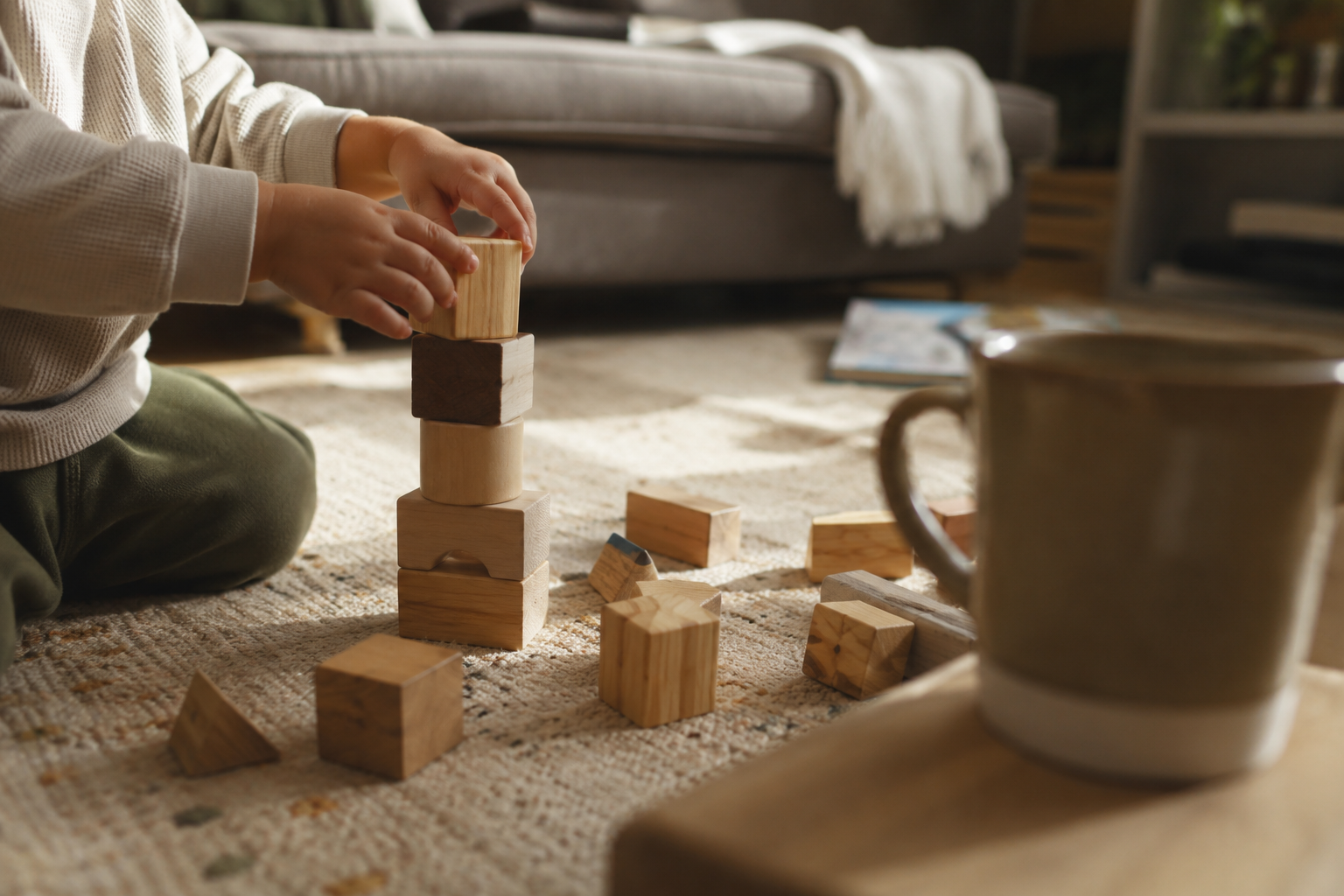
Tip: If Saturdays consistently feel harder than weekdays, the schedule — not the day itself — is usually the culprit. A slightly loose but predictable weekend almost always beats a completely open one.
The 80/20 Rule: What Stays Fixed and What Can Flex
Not every part of the day carries the same weight. Roughly 20% of a toddler’s schedule — the sleep and food anchors — does about 80% of the work in keeping them regulated. Protect that 20%, and the rest of the weekend has a lot more room to breathe.
The loud, wonderful years — calmed, in one bundle.
| Keep close to fixed | Free to flex |
|---|---|
| Wake time (within ~1 hour) | Breakfast menu and timing |
| Nap timing and length | Activities and outings |
| Bedtime (within ~1 hour) | Who’s around (grandparents, friends) |
| Bedtime routine steps | Clothes, screen choices, snack order |
This lines up with standard pediatric sleep guidance: children’s sleep experts at Children’s Hospital of Philadelphia’s Sleep Center specifically advise against drastic changes to a child’s sleep schedule on weekends, recommending kids wake up and go to sleep within one to two hours of their typical time — even on non-school days. Toddlers ages 1 to 2 generally need 11 to 14 hours of sleep in a 24-hour period, and preschoolers ages 3 to 5 need 10 to 13 hours. Weekends don’t lower that number; they just make it easier to accidentally shortchange.

The No-Fight Table
Every meal, without the battle. The setup that works without you saying anything, word-for-word scripts for the eight refusals, and a fourteen-day plan.
Get the guide — $1770 pages · instant PDF · yours forever
Sleep carries outsized weight in this equation because it’s the one input a toddler can’t compensate for in the moment. Skip the “wrong” breakfast and a toddler will just eat more at lunch. Miss twenty minutes of sleep, on the other hand, and there’s no equivalent catch-up mechanism — the deficit shows up directly as shorter fuses, harder transitions, and a lower threshold for everything from a dropped toy to a “no” from a sibling. That’s why protecting nap timing and bedtime does more heavy lifting than any other single decision you’ll make about the weekend, even the ones that feel like bigger deals in the moment, like whether to skip the park or cut a visit short.
Breathe out.
Get down.
Two sentences.
That's the four-step response — and it works in the supermarket, the restaurant, the car park and the departure gate. The Public Meltdown Field Guide gives you the exact words for each one.
Read what's inside$17 · 70 pages · instant download


Built for This Exact Stage
The Toddler Years Bundle
Tantrums, sleep, picky eating, potty training, and the language leap — five calm guides for ages 1–3, including routines built to hold up on the hardest days.
See The Toddler Years →A Real Toddler Weekend Schedule, Hour by Hour
This isn’t a schedule to follow to the minute — it’s a shape to adapt. The point is the rhythm: wake, eat, move, rest, eat, wind down, sleep, in roughly the same order every day, with the specifics changing freely.
- 6:30–7:30 AM — Wake and connect. Same rough window as weekdays. A few unhurried minutes before the day starts helps set the tone.
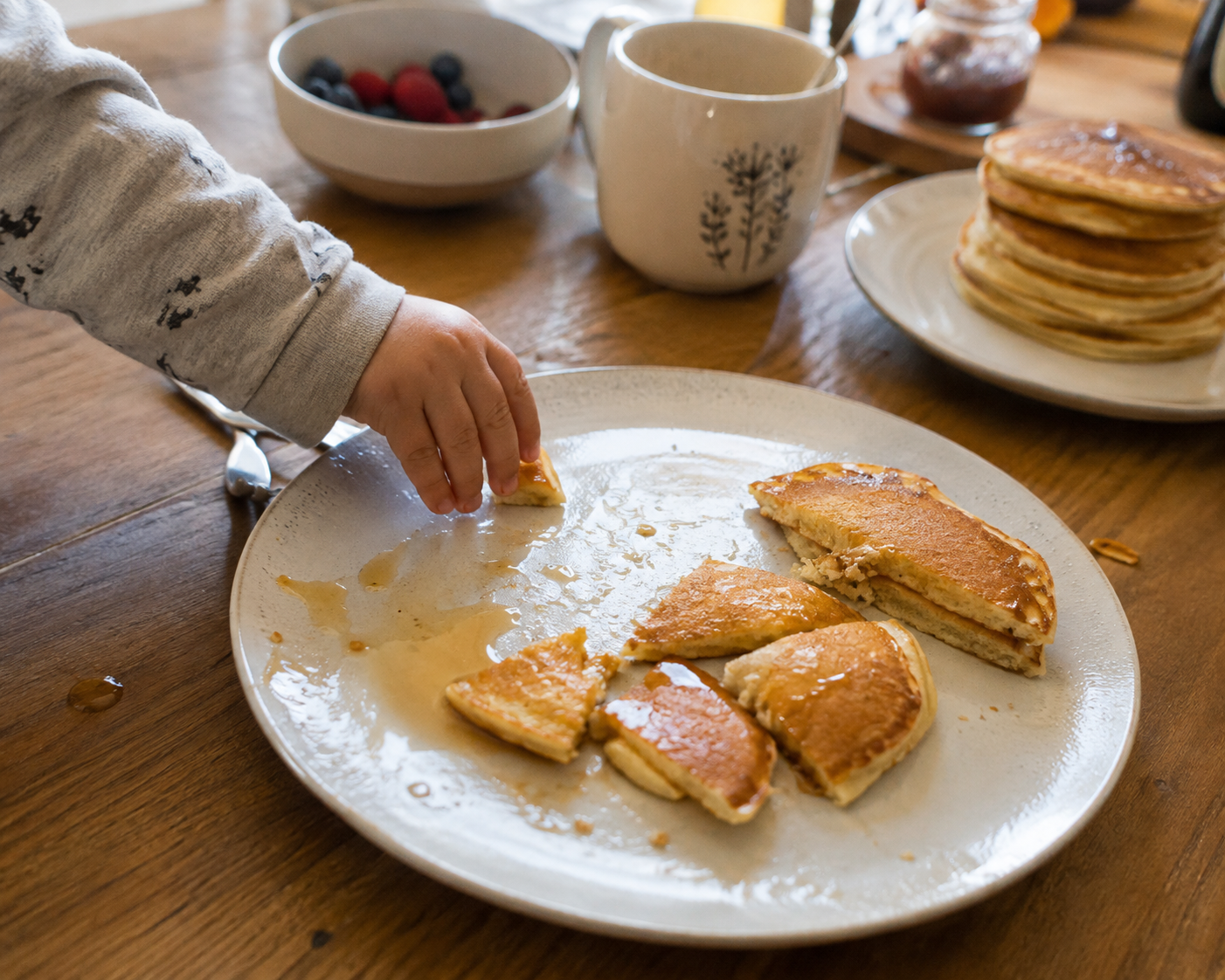
- 7:30–8:30 AM — Breakfast, unhurried. This is where the flex lives. Pancakes, a slower pace, no rush to get anywhere.
- 9:00 AM–12:00 PM — The big activity block. Park, errands, a family visit, free play at home. Whatever the plan, this is the window with the most give.
- 12:00–1:00 PM — Lunch. Try to land lunch close to its weekday time, even loosely — it protects the nap that follows.
- 1:00–3:00 PM — Nap. Same window as weekdays where possible. This is one of the non-negotiables from the 80/20 rule above.
- 3:00–5:30 PM — Second activity block. Lower-key than the morning one, since energy and patience are both starting to dip.
- 5:30–6:30 PM — Dinner and wind-down begins. Same general shape as a weeknight, even if the food or company is different.
- Bedtime, within an hour of the weekday time. The same steps, in the same order, land the day the way they always do.
Households with more than one child, or a toddler who’s already dropped to one nap, will need to bend this shape rather than copy it exactly — and that’s fine. The two blocks worth protecting no matter what else changes are the midday nap window and the run-up to bedtime. Everything else on this list is a suggestion, not a requirement, including the specific activities. A toddler who spends the 9-to-noon block at home in pajamas building a blanket fort is following this schedule just as much as one who’s at the park, because the part that actually matters is the rhythm underneath it, not the itinerary on top.

Why Your Toddler Still Wakes Up at 6 AM on a Saturday
This is the part that trips up almost every parent at least once: you stay up late, sleep in as much as you can, and your toddler is still up at their usual weekday time, wide awake and ready to go. It isn’t defiance, and it isn’t a sign they don’t need the extra sleep. A toddler’s circadian rhythm — the internal clock that regulates sleepiness and wakefulness — runs on light exposure and consistency, not on the calendar. It genuinely does not register that it’s Saturday.
Big feelings & the leap to school — calmed, in one bundle.
There’s also a practical trap hiding in this: pushing bedtime later on Friday or Saturday night rarely buys a later wake-up. It usually just produces a shorter night and an overtired toddler, since the wake time barely budges either way. If you’re chasing a later Saturday morning, the more reliable lever is an earlier bedtime the night before, not a later one.
Light is the other big lever, and it’s an easy one to underuse. A room that’s brightening with early-morning sun by 5:45 is sending a toddler’s brain a very clear “time to wake up” signal, regardless of how tired they still are. Blackout curtains or a simple blackout liner won’t guarantee a later wake-up, but they remove one of the strongest environmental cues telling a toddler’s body it’s morning. Pair that with a wake-up light or clock some families use for slightly older toddlers — a light that changes color when it’s officially “okay” to get up — and you’re working with the circadian system instead of against it. It’s also worth letting go of the idea that a toddler will simply “adjust” to a later weekend wake time with enough repetition. For most toddlers, that adjustment never really arrives, because the clock driving it isn’t a habit — it’s biology, and biology doesn’t take weekends off.
⚠️ Don’t chase it: Trying to “fix” early waking by keeping a toddler up later almost always backfires, since it just stacks overtiredness onto an already-early wake time. Protect the bedtime instead of the wake time.

The Two Hardest Weekend Transitions (and How to Handle Them)
Most weekend meltdowns cluster around two specific moments, and both are predictable enough to plan around.
Errands. A grocery run at 11 AM sounds harmless, but it lands right in the window where hunger, heat, and overstimulation stack up fast. Feed your toddler before you go, not after, keep the trip shorter than feels necessary, and build in one small win — picking out a fruit, holding the list — so they have a job instead of just a cart to sit in. If the errand list is long, split it: run the loud, bright, crowded stop (the big box store) separately from the quick, quiet one (the pharmacy pickup), rather than stacking them back to back. A toddler who’s held it together for one stop often has nothing left for a second.
Family visits. New people, new environment, different rules from a well-meaning grandparent, and a toddler who’s already off their usual rhythm. Give a heads-up beforehand about what to expect (“We’re going to Grandma’s, then we’ll have lunch there, then we’ll come home for nap”), and don’t be surprised if the ride home is rockier than the visit itself — that’s often just the accumulated effort of a full, different day finally catching up. It also helps to agree with the other adults ahead of time on the one or two things that matter most — nap timing, screen limits, whatever it is — and let smaller stuff go for the afternoon. Relatives who see a toddler occasionally often want to spoil the visit a little, and that’s fine; the goal isn’t perfect consistency everywhere, just protecting the handful of anchors that actually keep the day from tipping over.

The School-Age Years
Big feelings, the homework truce, friendship drama, screens & raising a capable kid — the words to say, minus the lectures.
✨ Quick win: Before any outing, ask yourself one question: does this toddler currently have food in their stomach and sleep in the bank? If the honest answer is no to either, the outing is far more likely to end in a meltdown regardless of how well you plan the rest of it.

Sunday Scaries Are Real for Toddlers Too — Here’s the Fix
Adults aren’t the only ones who feel the Sunday-evening shift. Toddlers pick up on the change in mood around the house — busier prep, an earlier bedtime push, a general sense that something’s about to change — and it can show up as extra clinginess, stalling, or a harder bedtime than usual. It’s not a coincidence, and it’s not something to push through with more firmness. It responds well to the same tool that works everywhere else in a toddler’s day: a short, predictable routine.
A simple Sunday-evening wind-down — bath a little earlier than usual, laying out Monday’s clothes together, one calm, low-stimulation activity before the regular bedtime routine — gives the transition back into the week a soft landing instead of an abrupt one. It also means Monday morning starts with one less decision to make while everyone’s still half-asleep.
A version of this that works for a lot of families: bath around 6:30 instead of the usual 7, ten quiet minutes picking out Monday’s outfit together (this doubles as tomorrow’s dressing battle prevention), one short book, then the same bedtime routine that runs every other night of the week. None of this needs to feel like a big production — the goal is a slightly earlier, slightly calmer version of a completely normal evening, not a special ritual with its own name.
Not every toddler shows Sunday-evening strain the same way, or as visibly. Some get clingy. Some suddenly “forget” how to do things they’ve done independently for months, like brushing their own teeth. Some just get quietly more irritable without any obvious trigger. None of these are regressions in a lasting sense — they’re a temporary response to a mood shift they’ve picked up on but can’t name, and they tend to resolve within an hour or two of a calm, predictable evening.

My Day, My Way — The Complete Toddler Routine System
6 ready-made picture charts, 36 cut-out cards, a First–Then board, trackers & a parent guide — everything to help your toddler run their own day. 24 pages, instant download.

Common Mistakes Parents Make With Weekend Routines
Dropping the nap “just this once” because the weekend feels less strict. One skipped nap rarely stays contained to one day — it usually shows up as an early bedtime meltdown that evening and a rough, extra-early wake-up the next morning too, which means the “one exception” quietly costs you most of two days instead of just the afternoon it happened in.
Packing both weekend days with activities. A toddler who’s been to a birthday party, a playdate, and the grocery store by Sunday afternoon isn’t relaxed — they’re depleted, even if every individual activity was fun. Leave real unstructured time in at least one block each day, ideally at home, with nothing scheduled and nowhere to be. That empty space is doing real work, even when it looks like nothing is happening.
"You can't control the teen years. You can stay close through them."
The Teen Years is five calm, practical guides for ages 13–18 — pulling away, the hard talks, independence, moods, and letting go.
Read more about The Teen Years →Pushing bedtime later to “make up for” a busy day. It feels logical — a full day should mean a later, more tired bedtime — but an overtired toddler put to bed late usually sleeps worse, not better, and wakes up just as early regardless. The math that works for adults doesn’t transfer to toddler sleep, where overtiredness tends to make falling and staying asleep harder, not easier.
Treating Sunday like a normal Saturday. Cramming one more outing into Sunday afternoon leaves no runway for the wind-down that makes Monday easier. Sunday deserves its own, slightly calmer shape — not a third full day of activities, but a gentler taper toward the week ahead.
Abandoning the routine the first time it feels rigid. A little structure on a weekend isn’t the opposite of rest, even though it can feel that way the first few times you hold a nap time steady instead of letting a fun outing run long. The families who stick with a loose rhythm for a few weekends in a row, rather than reinventing the plan every Saturday, are usually the ones who report the calmest Mondays and, somewhat unexpectedly, the most genuinely restful weekends too.
FAQ
Before you go
A calmer weekend starts with the same rhythm
The Toddler Years bundle includes calm, practical routines built for exactly this stage — the loud years, made a little quieter.
See The Toddler Years →A toddler weekend routine was never about running Saturday like a school day — it’s about protecting the handful of things that actually keep your toddler regulated, so the rest of the day genuinely gets to be a break. Hold the line on sleep, let everything else flex, and give it a few weekends before judging whether it’s working. The version of a “relaxing weekend” that actually feels relaxing usually has more structure hiding inside it than it looks like from the outside.
Related reading: Toddler Routine Chart: How to Build One That Sticks · 30 Quick and Healthy Toddler Meal Ideas · More Toddler Guides
Sources: Children’s Hospital of Philadelphia, “Healthy Sleep Habits,” reviewed by psychologists in the CHOP Sleep Center. This article offers general, practical guidance and isn’t a substitute for advice from your child’s pediatrician, particularly around persistent sleep difficulties.
The Calm Parent Roadmap
Your whole journey — from "I do" to "they're grown." 8 stages, one calm method, 13 beautiful pages. Free when you join the Sunday Note.
📥 Instant PDF · no spam · unsubscribe anytime