
Part one
Why bedtime becomes a fight
The overtired spiral, and why a tired child gets faster, not sleepier. How to find your child's real sleep window — and the three-night log that shows you exactly where it is.


A calm, repeatable system for ending the nightly battle — in fourteen nights, without crying it out.
Instant PDF download · 70 pages · yours forever · all sales are final
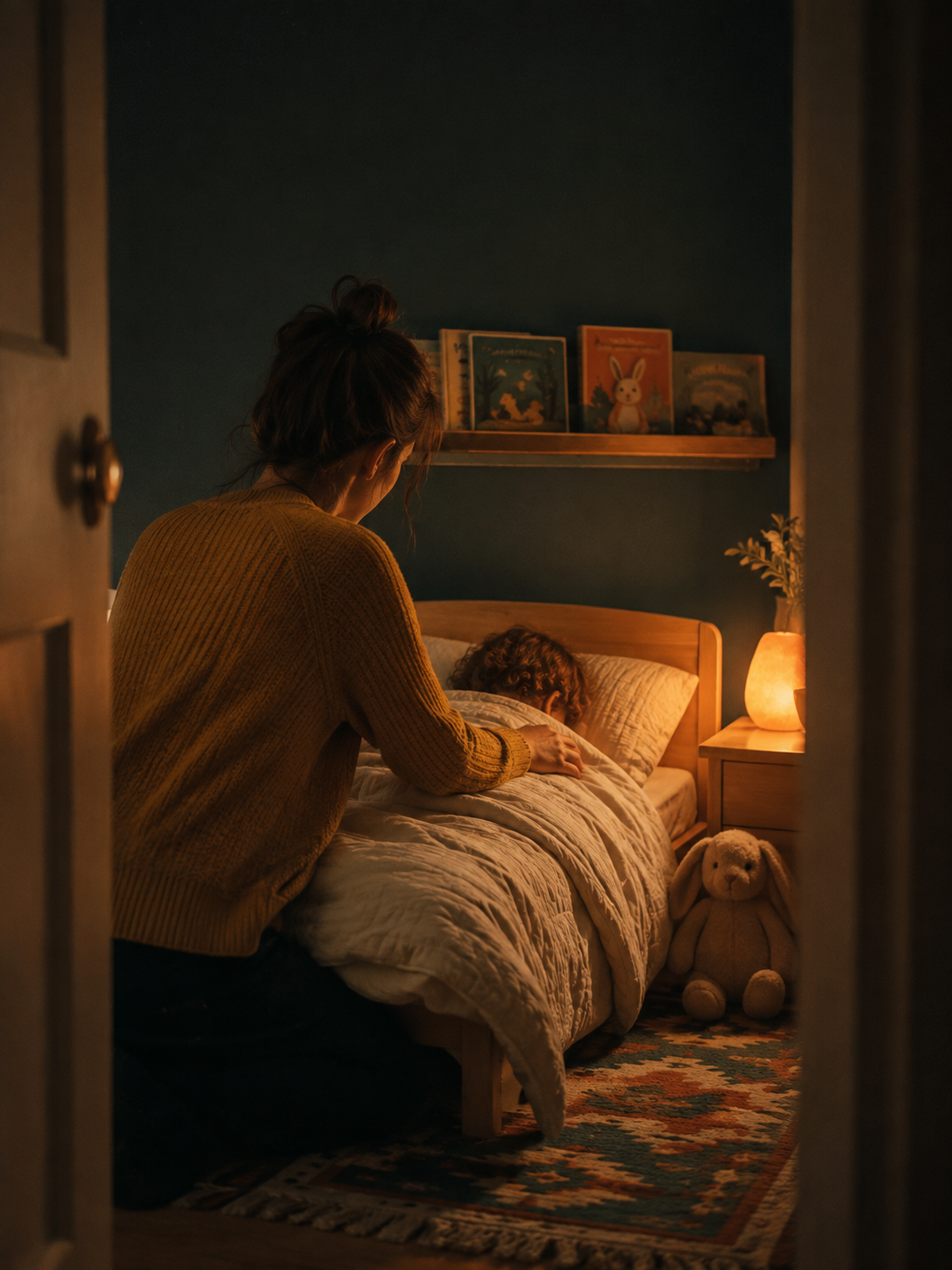
None of that means you're doing it wrong. Bedtime asks a small child to do the one thing they cannot do on command: stop. This guide is about making that easier — for them, and for you.
The goal of the next fourteen nights isn't a happier bedtime. It's a duller one — a routine so consistent it stops needing your patience, on the exact evenings when you have none left.
The overtired spiral, and why a tired child gets faster, not sleepier. How to find your child's real sleep window — and the three-night log that shows you exactly where it is.

Light, sound, temperature, and what the bed means. The ten-minute room reset you do once, on a Saturday, that then helps every night without asking anything of you.

The five-step spine — wash, pajamas, teeth, books, song — in thirty minutes. Plus the closing script for the last ninety seconds, word for word.

The exact words for eight stalls — one more book, I need a drink, I'm scared, stay with me, I'm not tired — plus the quiet return, for the child who keeps coming back.
When they ask for one more book — the most common stall of all.
"I know you want another one. Two books is what we do. We'll read two more tomorrow night."
"Two books is what we do. Tomorrow night."
"Night night. Tomorrow."
Warm on the feeling. Firm on the limit. Boring on the drama.
Eight stalls. Every one scripted the same way.

Not a philosophy — a schedule. Every night tells you the one thing to change and the things to leave alone.
The guide also tells you which night usually falls apart, and why that isn't a sign it's failing.
Instant download · 70 pages · yours forever
Laid out like a magazine — short pages, scripts you can find in seconds at 8pm, and nothing you have to wade through.


No. Nothing in the guide asks you to leave a distressed child alone to cry, or to withdraw comfort as a consequence. It's a routine-and-environment system, plus scripts for the stalling that happens after lights out. There's a whole page on telling protest crying apart from real distress, and what to do about each.
Roughly 18 months to 6 years — old enough to negotiate and climb out, too young to talk themselves into sleep. Parts of it (the room reset especially) apply more widely.
70 pages, designed to be read in about 40 minutes — or skimmed in five. There's a "if you only have ten minutes and it's already 7pm" route on page 7 that sends you straight to the scripts.
One PDF, 70 pages, delivered instantly after purchase. Readable on a phone, tablet, computer, or printed at home. No app, no account, no subscription.
No, and the guide is explicit about that throughout. It doesn't diagnose anything and it isn't a substitute for your child's doctor. If your child snores loudly, seems to stop breathing during sleep, wakes gasping, is unusually sleepy in the daytime, or if you have any concern at all, speak to your pediatrician first.
Being straight with you: some children settle easily and some don't, and a good share of that has nothing to do with what you're doing. This guide reliably makes bedtimes better — it can't make all children the same, and it doesn't claim to. Because it's an instant digital download, all sales are final.
Seventy pages. Twenty-six photographs. Five steps, eight scripts, and a plan that tells you exactly what to do for the next fourteen nights.
Get The No-Fight Bedtime — $17Instant & yours forever · lifetime access · all sales are final
For general information and support only. Not medical advice, and not a substitute for consultation with a qualified healthcare professional.