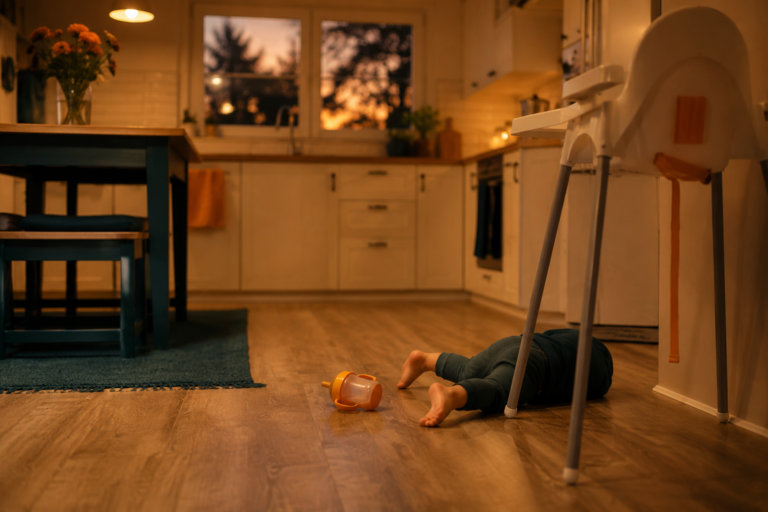
A toddler overstimulated at family gatherings is one of the most common reasons a lovely day ends in tears. There’s noise, new faces, rich food, cousins running everywhere and a nap that never happened. Then, all at once, your sweet child is screaming under the table. This guide gives you a calm plan for before, during and after the next get-together, plus the exact words to use with your toddler and with well-meaning relatives.
The short answer
When a toddler is overstimulated at family gatherings, their brain is getting more noise, touch and people than it can sort out. So the fix is less input, not more talking. Protect the nap before you go, bring a small calm kit, and find a quiet room first. Then watch for early signs, take short breaks before the meltdown, and leave while things are still good.
Key takeaways
- ✓Overstimulation is a nervous system overload, not bad behavior or a parenting fail.
- ✓The best time to prevent a meltdown is before you arrive: rest, food and a plan.
- ✓Early signs like clinginess, loud silliness or glassy eyes mean “break now,” not “push through.”
- ✓A short, quiet break of about 10 minutes often saves the whole visit.
- ✓You can protect your child kindly and still keep relatives happy with a few ready phrases.
What a Toddler Overstimulated at Family Gatherings Looks Like
Overstimulation happens when a child takes in more sound, light, touch and activity than they can handle. Toddlers have very little “filter,” so a busy room hits them much harder than it hits us.
According to the Raising Children Network’s guide to overstimulation, overstimulated children may get cranky, tired or upset, and some cry or have tantrums. In other words, the big feelings are a signal, not a choice.

The Public Meltdown Field Guide
What to do, and exactly what to say, when a meltdown happens in public.
Instant download · Digital download · All sales final| Early sign | What it often means | What to do |
|---|---|---|
| Clinging to your leg | The room feels too big | Hold them, step to the edge of the room |
| Very loud, wild silliness | Their body is revving up | Offer a quiet job or a walk outside |
| Glassy eyes, staring | They are shutting down | Quiet room now, before tears |
| Rough play, hitting | Too much input, no words | Calm limit, then a break together |
| Refusing food or hugs | Overloaded senses | Don’t push; try again later |
❗ Important
Many parents only notice overstimulation at the meltdown. However, the early signs show up 20 to 40 minutes before. Catch them, and you can often skip the meltdown entirely.
Why Family Gatherings Leave a Toddler Overstimulated So Fast
Family gatherings stack lots of triggers at once. Then again, each one alone might be fine.
- Missed or short naps: a tired brain overloads much faster.
- Lots of new faces: each greeting asks a toddler to cope with someone close and new.
- Noise: many conversations at once, music, TV, kids screaming with joy.
- Different food and late meals: hunger makes every feeling bigger.
- Pressure to perform: “Give Auntie a kiss!” and “Say thank you!” over and over.
- Your stress: toddlers read our faces. If you’re tense, they feel it too.
So a toddler overstimulated at family gatherings isn’t “bad at parties.” Instead, the day simply asks for more than their body has left. The ZERO TO THREE guide to co-regulation explains why your calm presence helps them settle.
Before You Go: Keep Your Toddler From Getting Overstimulated at Family Gatherings
Most of the work happens before you walk in the door, because a toddler overstimulated at family gatherings usually started the day tired or hungry. A little planning gives your toddler a much bigger “coping cup.”
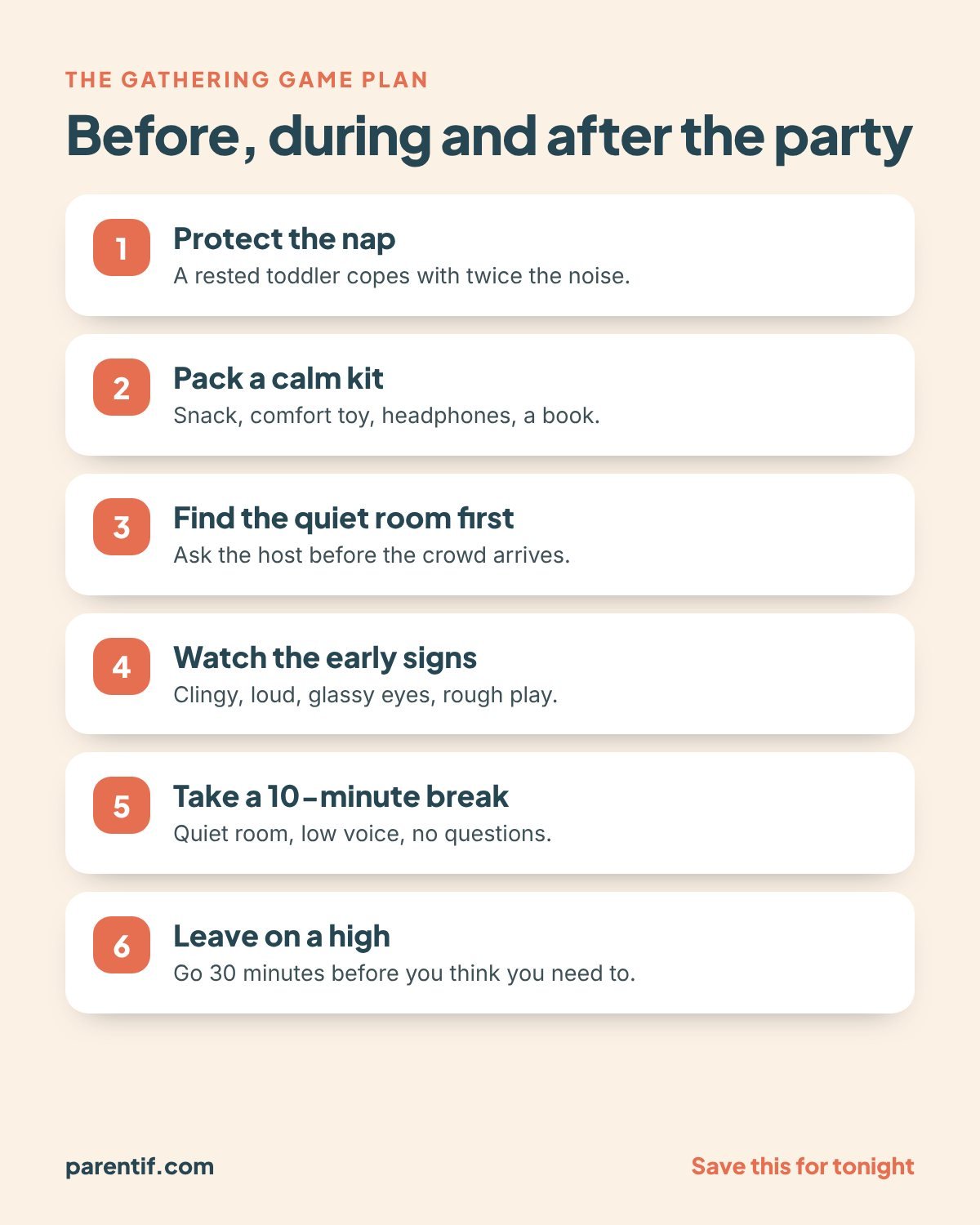
Protect the nap
Plan travel around the nap, or let them nap in the car on the way. A rested toddler copes with far more.
Feed them first
Give a normal, familiar meal or snack before you go. Party food may come late or feel strange.
Tell the story
In simple words, say who will be there, what will happen and when you’ll go home.
Pack a calm kit
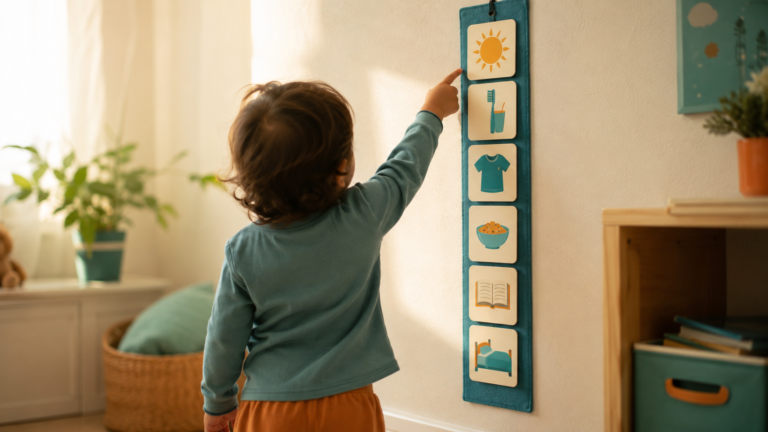
A comfort toy, a favorite snack, a book, and ear defenders or headphones if you have them.
Plan your exit
Agree with your partner on a leave time and a signal that means “we go now.”
💡 Tip
Show your toddler photos of the relatives a day before. “This is Grandpa Joe. He has a big voice and loves trains.” Familiar faces feel less scary.
Arriving: The First 15 Minutes Matter Most
Arrival is often the hardest part. Everyone rushes to say hello at the same time, and a toddler can feel swamped in seconds.
So slow it down. Stay at the edge of the room for a few minutes and let your child watch from your arms or your lap. Then ask the host, quietly, which room is free for a break. Finding that quiet spot first is one of the most useful things you’ll do all day.
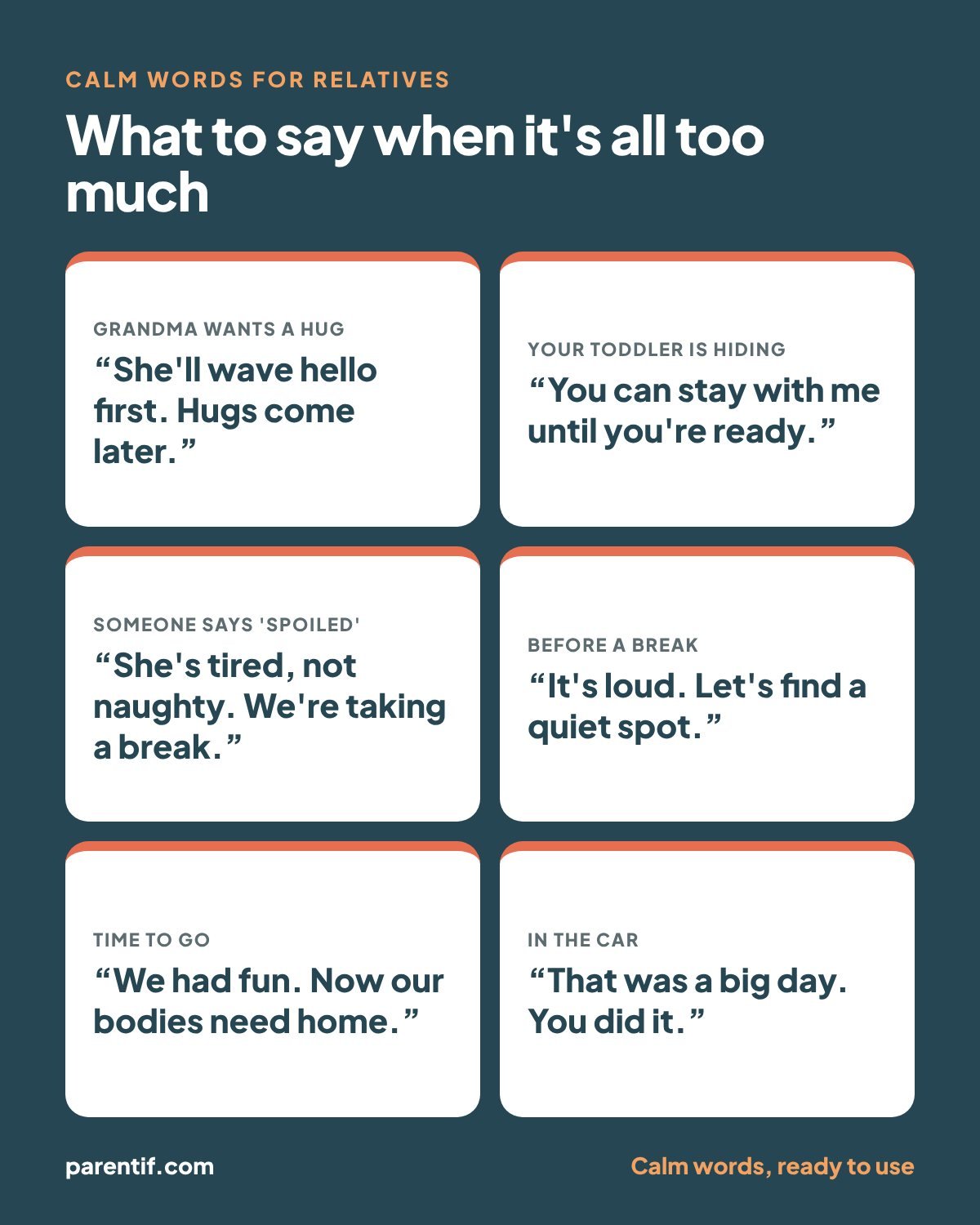
Grandma rushes in for a hug
Say: “She’ll wave hello first. Hugs come later.”
Skip: “Come on, give Grandma a big hug, don’t be rude!”
Your toddler hides behind you
Say: “You can stay with me until you’re ready.”
Skip: “Stop being shy, everyone wants to see you.”
A relative picks them up
Say: “Let’s put them down and let them come to you.”
Skip: “Fine, just go with Auntie.”
⚠️ Watch out
Forcing hugs and kisses often adds to the overload. You can teach kindness with a wave or a high five instead, and most relatives understand when you say it warmly.
During the Gathering: Breaks Before Meltdowns
The secret is to take breaks early, before your toddler is overstimulated at family gatherings and past the point of no return. Waiting until your toddler is screaming is like waiting until the car is out of fuel before you look for a gas station.
Every 45 to 60 minutes, take your toddler somewhere quiet for about 10 minutes. Sit on the floor, read a book, have a snack or just cuddle. Keep your voice low and skip the questions. Then go back in if they seem ready.
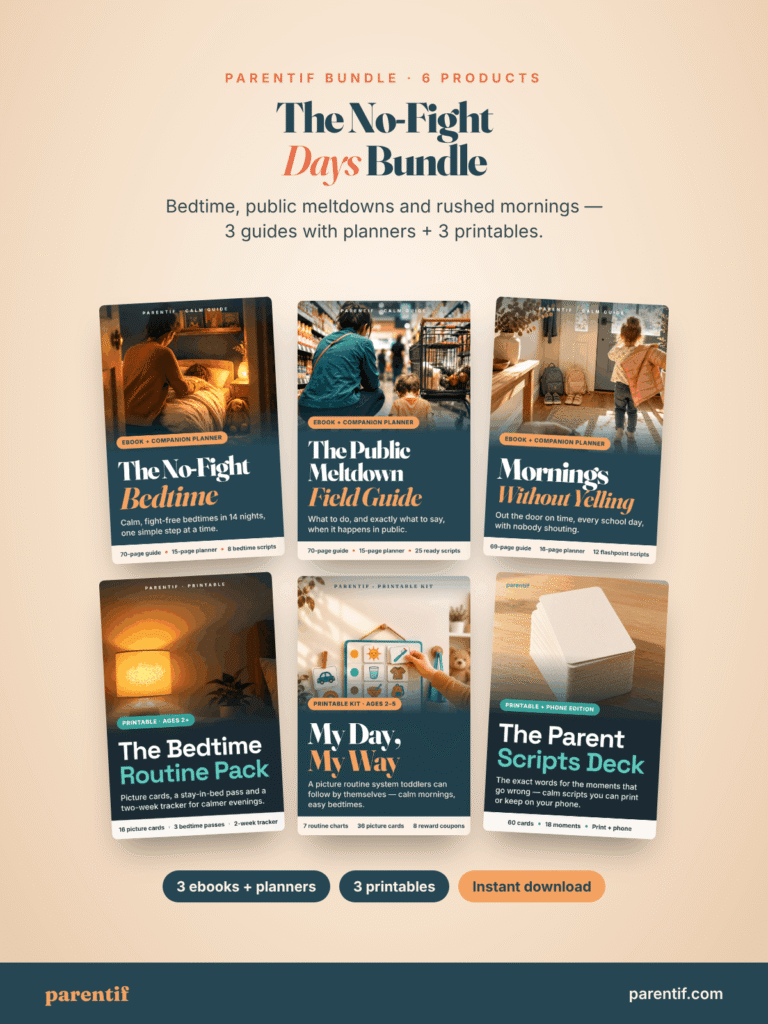
The No-Fight Days Bundle
Bedtime battles, public meltdowns and rushed mornings, in one calm bundle.

Quiet-break ideas that work
- Read one familiar book in a bedroom with the lights low.
- Step outside and look for birds, cars or leaves for five minutes.
- Do “heavy work”: carry the napkins, push a laundry basket, help stack chairs.
- Put on headphones with a favorite song.
- Squeeze a soft toy or do slow “smell the flower, blow the candle” breaths together.
✨ Quick win
Give your toddler a job. “Can you hand out the napkins?” A clear task makes a busy room feel safer, and it gives them something to do with all that energy.
When a Toddler Is Overstimulated at Family Gatherings: The Meltdown Plan
Sometimes the meltdown comes anyway. That’s okay. You can handle it calmly, even with the whole family watching.
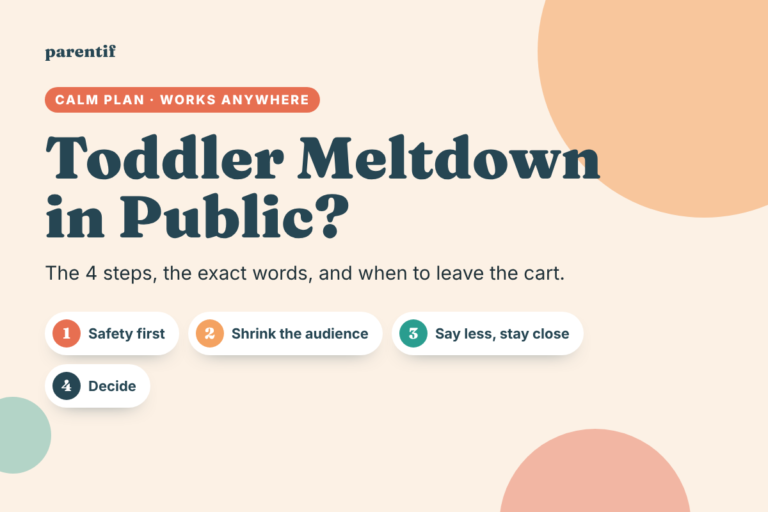
- Move first, talk later. Pick your child up gently and go to the quiet room or outside.
- Lower everything. Lights, voice, words. Fewer words work better than more.
- Stay close. Sit nearby and say, “I’m here. You’re safe.” Then wait.
- Keep them safe. If they hit or throw, hold a calm limit: “I won’t let you hit.”
- Reconnect. When the storm passes, offer a cuddle, water or a snack.
- Decide. Either go back in for a short time, or start your goodbyes.
For a deeper look at the steps, see our guide to a toddler meltdown in public. It works for busy living rooms too. Our article on toddler tantrums also explains what is going on in their brain.
They’re not giving you a hard time. They’re having a hard time.
Handling Relatives Kindly (And Protecting Your Toddler)
Relatives usually mean well. Still, comments like “In my day, kids just behaved” can sting when you’re already stressed.
Have a few short, warm phrases ready. That way, you don’t need to argue or explain. You simply protect your child and move on.
- “She’s tired, not naughty. We’re taking a little break.”
- “He warms up slowly. Give him a few minutes and he’ll come to you.”
- “We’re trying something new for hugs. A high five works great.”
- “Thanks for understanding. We’ll head off a bit early so the evening stays happy.”
If a grandparent asks how to help, give them a job too. For example, they can read in the quiet room or take your toddler for a walk around the garden. That turns a critic into a helper.
Leaving the Gathering on a Good Note
Leave earlier than you think you need to. A toddler overstimulated at family gatherings often looks fine right up to the last ten minutes. Going 30 minutes before the “danger zone” means everyone remembers the fun, not the meltdown.
Give a five-minute warning, and then a one-minute warning. Let your toddler say a simple goodbye, such as a wave from the door. On the way home, keep the car calm: soft music or quiet. Then give them a slow, familiar bedtime, even if it’s late. The next day, plan a quiet morning, because overstimulation often shows up again as a tired, wobbly day after.
💡 Tip
Many toddlers fall apart after the gathering, not during it. If your child melts down at home that evening, that’s normal. They held it together all day, and now they feel safe enough to let it out.
Different Ages, Different Needs
Not every toddler reacts the same way. Age and temperament both matter.
| Age | What overstimulation looks like | Best support |
|---|---|---|
| 12–24 months | Crying, arching back, turning away, not settling | Carry in a quiet room, rock, dim lights, feed |
| 2–3 years | Clinging, hitting, running off, sudden meltdowns | Early breaks, a calm kit, simple words |
| 3–5 years | Silly, loud, bossy or tearful; may say “I want to go home” | A job, a quiet corner, a clear plan to leave |
Some children are naturally more sensitive to noise and crowds. Others are slow to warm up. Neither is wrong. However, knowing your child helps you plan the day around them, not around everyone else’s expectations. Our tantrum trigger finder is a free two-minute check that can help you spot your toddler’s pattern.
Common Mistakes Parents Make
These mistakes are completely understandable. Still, avoiding them can save a lot of tears.
- Skipping the nap “just this once.” A tired toddler has far less room for noise and people.
- Waiting for the meltdown to take a break. By then, it’s much harder to calm down.
- Talking too much during a meltdown. More words add more input. Instead, use fewer words and more calm.
- Forcing greetings. A wave is enough. Pressure often leads to hiding or hitting.
- Staying “just one more hour.” It’s often the hour that ruins the day.
If you’d like the words ready in your pocket, The Parent Scripts Deck has calm phrases for tantrums, limits and tricky moments. For public and party meltdowns, The Public Meltdown Field Guide gives you a full plan with a companion planner.
When to Talk to Your Pediatrician
Most overstimulation is a normal part of being a toddler. Even so, some patterns are worth discussing with a professional.
🩺 When to talk to your pediatrician
- Meltdowns are very frequent, very long, or happen in almost every new place.
- Your child is very upset by everyday sounds, textures or lights, beyond what seems typical.
- Your toddler often hurts themselves or others during meltdowns.
- You notice delays in talking, playing or connecting with people, or you feel worried for any reason.
Trust your gut: if something feels off, a quick call is always fine.
FAQ: Toddler Overstimulated at Family Gatherings
How do I know if my toddler is overstimulated or just tired?
Often it’s both, because tiredness makes overstimulation more likely. Overstimulation tends to look wired: loud, silly, clingy or rough, often with glassy eyes. Plain tiredness looks more like yawning, rubbing eyes and slowing down. In both cases, a quiet break and rest help, so you don’t need to be sure before you act.
How long does it take an overstimulated toddler to calm down?
Many toddlers settle within 10 to 20 minutes in a quiet, dim space with a calm adult nearby. Some need longer, especially if they are very tired. The key is reducing input: fewer words, less light, less noise. Afterwards, offer water or a snack, because hunger and thirst can make big feelings last longer.
Should I leave the party if my toddler melts down?
Not always. First, take a quiet break and see how your child feels afterwards. If they bounce back, a short return can end the day well. However, if they melt down again soon or seem exhausted, leaving is usually kinder for everyone. Leaving early is not a failure. It’s good planning.
How can I stop relatives from forcing hugs on my toddler?
Tell them before the gathering, in a warm way: “We’re letting her choose hello. A wave or high five is great.” On the day, step in kindly and offer an alternative. Most relatives want a connection, not a hug specifically, so a high five, a shared book or a game usually makes them happy.
Is it okay to bring a tablet to calm an overstimulated toddler?
A short, quiet video can help some children in a pinch. Still, screens add light and sound, so for many toddlers they don’t really calm the brain. A quiet room, a book, a snack or a cuddle often works better. If you do use a screen, keep the volume low and the time short.
Why does my toddler melt down after the family gathering instead of during it?
Many toddlers hold it together in a busy place, then release all those feelings once they feel safe at home. It’s common and usually a sign of trust, not a problem. Plan a calm evening and a quiet next morning after big events, so your child has time to recover.
A toddler overstimulated at family gatherings isn’t being difficult. They’re overloaded. So protect the nap, find the quiet room first, take breaks early and leave while the day is still sweet. With a calm plan, the next family get-together can be one your whole family actually enjoys.
Calm help for the hard parts of family life
Seven bundles of guides, planners and printables. Six products each, $37 per bundle.
 No-Fight Days Bundle
 Family Organizer Bundle
 Family Table Bundle
 Family Money & Home Bundle
 Family Adventures Bundle
 Parent Reset Bundle
 Bump-to-Birth Bundle