A road trip with a toddler can feel like the scariest part of a family trip. Hours strapped in a car seat, no room to move and a tiny person who doesn’t understand “we’re nearly there.” Still, with the right timing and a simple rhythm, long drives can be calm, and even fun. This guide gives you an hour-by-hour plan, a packing list, the snack system, car seat safety reminders and the exact words to use when things get loud.
The short answer
The calmest road trip with a toddler starts at nap time or bedtime, so the first long stretch is a sleeping one. After that, stop about every two hours for running and changing, bring out one “new” toy or activity each hour, serve small snacks on a schedule, and save screens for the hardest stretch. Finally, always keep the car seat fitted correctly and skip bulky coats under the straps.
Key takeaways
- ✓Timing beats gear: leaving at nap time or bedtime can turn hours of driving into hours of sleep.
- ✓A steady stop rhythm, about every two hours, keeps a toddler from reaching breaking point.
- ✓Rotating one new activity per hour works better than handing over the whole bag at once.
- ✓Small snacks on a schedule prevent both hunger meltdowns and sugar crashes.
- ✓Car seat safety comes first: correct fit, harness snug, no bulky coats under the straps.
Before You Go: Plan a Road Trip With a Toddler Around Sleep
The single biggest decision is when you leave. Most toddlers sleep well in a moving car, so use that.
There are three good options. First, leave right at nap time for a long midday stretch. Second, leave very early, around their normal wake-up time, and let them doze for the first hour. Third, for very long drives, leave after dinner and bath, in pajamas, so the car becomes a moving bedroom. Each family is different, so think about which one suits your child and your energy.

Stress-Free Family Travel
Flights, hotels and holidays with kids, planned so everyone enjoys it.
Instant download · Digital download · All sales final| Leave time | Works best for | Watch out for |
|---|---|---|
| Nap time | Drives of 3–6 hours | The nap may be shorter, so plan an early bedtime |
| Early morning | Early risers and short trips | A cranky first stop if they wake too soon |
| After bedtime | Very long drives, calm sleepers | Driver fatigue: you must be well rested |
⚠️ Watch out
A tired driver is a real safety risk. If you drive at night, take turns, stop when you feel sleepy and never push on. Arriving later is always better than not arriving safely.
The Hour-by-Hour Rhythm for a Road Trip With a Toddler
A rhythm gives a toddler something to expect. It also gives you a plan, so you aren’t reacting to every cry.
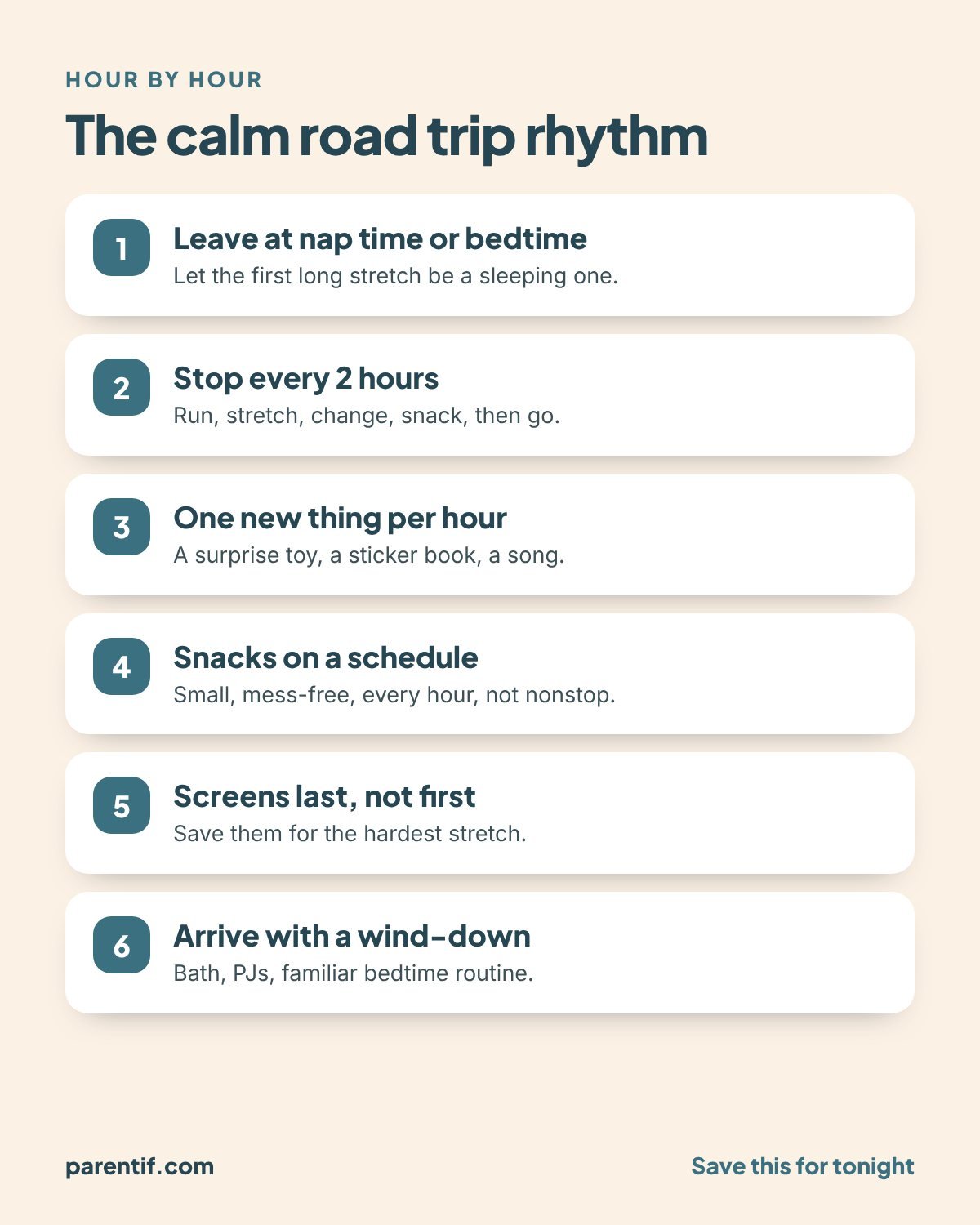
Hour 1: settle in
Familiar music, comfort toy, quiet. Let them look out the window or doze.
Hour 2: first new thing
Bring out one new activity, like a sticker book or a small toy. Then a snack.
Stop 1 (about 2 hours in)
Run, stretch, change the diaper or use the toilet, and give water.
Hour 3: songs and games
Sing together, play “spot the red car” or tell a story about where you’re going.
Hour 4: second new thing
Another surprise from the bag, then a snack.
Stop 2 and beyond
Repeat: stop, move, snack, new activity. Save screens for the hardest stretch.
💡 Tip
Write your rough stop plan on your phone before you leave. Parks, big service areas and playgrounds near the highway make the best stops, because your toddler can actually run.
Car Seat Safety on Long Drives
Safety comes before any boredom hack. A long trip is exactly when a correctly fitted car seat matters most.
The American Academy of Pediatrics travel safety tips and NHTSA’s guidance on keeping kids safe on the road are good places to check your seat and your child’s stage.
- Check the fit before you go. The seat should be tight, and the harness snug enough that you can’t pinch extra strap at the shoulder.
- No bulky coats under the straps. Puffy coats can leave the harness too loose. Instead, buckle up in normal clothes and lay a blanket or the coat over the top.
- Keep loose items low. Heavy bags and hard toys can become dangerous in a sudden stop. Store them in the trunk or footwell.
- Never leave your child alone in the car, not even for a minute, and in any weather.
- Take them out at every stop. Long stretches in a car seat aren’t great for little bodies, so breaks matter for comfort too.
❗ Important
If your child is due to move up to a new car seat stage, do it a week or two before the trip, not the night before. A new seat on a long drive can add stress you don’t need.
Packing List for a Road Trip With a Toddler
Pack two bags: a car bag within your reach and a main bag in the trunk. The car bag is your survival kit.
The car bag (within reach)
- Diapers or a spare set of clothes (plus a second spare set)
- Wipes, a small trash bag and a towel
- Water bottle and pre-portioned snacks
- Comfort toy and a small blanket
- The “surprise bag”: 4–6 small new or forgotten toys, wrapped or in paper bags
- Headphones sized for children, if you use screens
- A travel potty, if you’re potty training (our guide on potty training a toddler has tips for trips)
The main bag (in the trunk)
- Pajamas and the bedtime book for the first night
- Sleep things: sleep bag, white noise, night light from home
- A basic first aid kit and any regular medicines your child already uses
- Spare clothes for the first full day
The printable Vacation Packing Lists cover every member of the family, so nothing important is left at home.
The Snack System: Calm Bellies, Calm Car
Food in the car is a tool. However, nonstop snacking leads to spills, sugar highs and a toddler who won’t eat a proper meal later.
So serve snacks on a schedule, roughly every hour, in small portions. Choose mess-free foods: crackers, cheese cubes, sliced fruit, small sandwiches, rice cakes. Avoid very sugary snacks for long stretches. Then offer water often, especially if the car is warm.
The Family Adventures Bundle
Trips, road trips and weekends with kids, planned so everyone enjoys them.

✨ Quick win
Use a muffin tin or a divided container as a “snack tray.” Fill each cup with a different small snack. Toddlers love choosing, and it takes longer to eat.
For more ideas that travel well, our list of quick toddler meal ideas includes several easy, packable options.
Boredom Busters That Actually Work in the Car
The trick is rotation, not quantity. Hand over everything at once and the bag is “boring” within 20 minutes.
- Surprise bag: one small wrapped item per hour. Unwrapping is half the fun.
- Sticker books and window clings: cheap, quiet and mess-free.
- Spotting games: red cars, cows, trucks, bridges. Keep score out loud.
- Audiobooks and songs: familiar songs calm; new stories pass the time.
- Busy boards and lacing cards: good for little fingers that need something to do.
- Snack “picnics”: a planned snack time feels like an event.
- Screens, last: save them for the hardest stretch, near the end.
The Kids Travel Activity Book is a printable full of games and activity pages for long drives and waiting rooms.
💡 Tip
Download shows and audiobooks before you leave. Signal often drops on long roads, and a buffering video at hour five is nobody’s friend.
What to Do When Your Toddler Melts Down in the Car
Meltdowns happen, even on the best-planned trips. You can’t always stop the car right away, so have a calm plan.
First, check the basics: hungry, thirsty, hot, cold, wet or uncomfortable straps? Then lower the input: quiet the music, dim the screen, speak softly. Next, if it’s safe, plan an earlier stop. Sometimes 10 minutes of running is the whole fix.
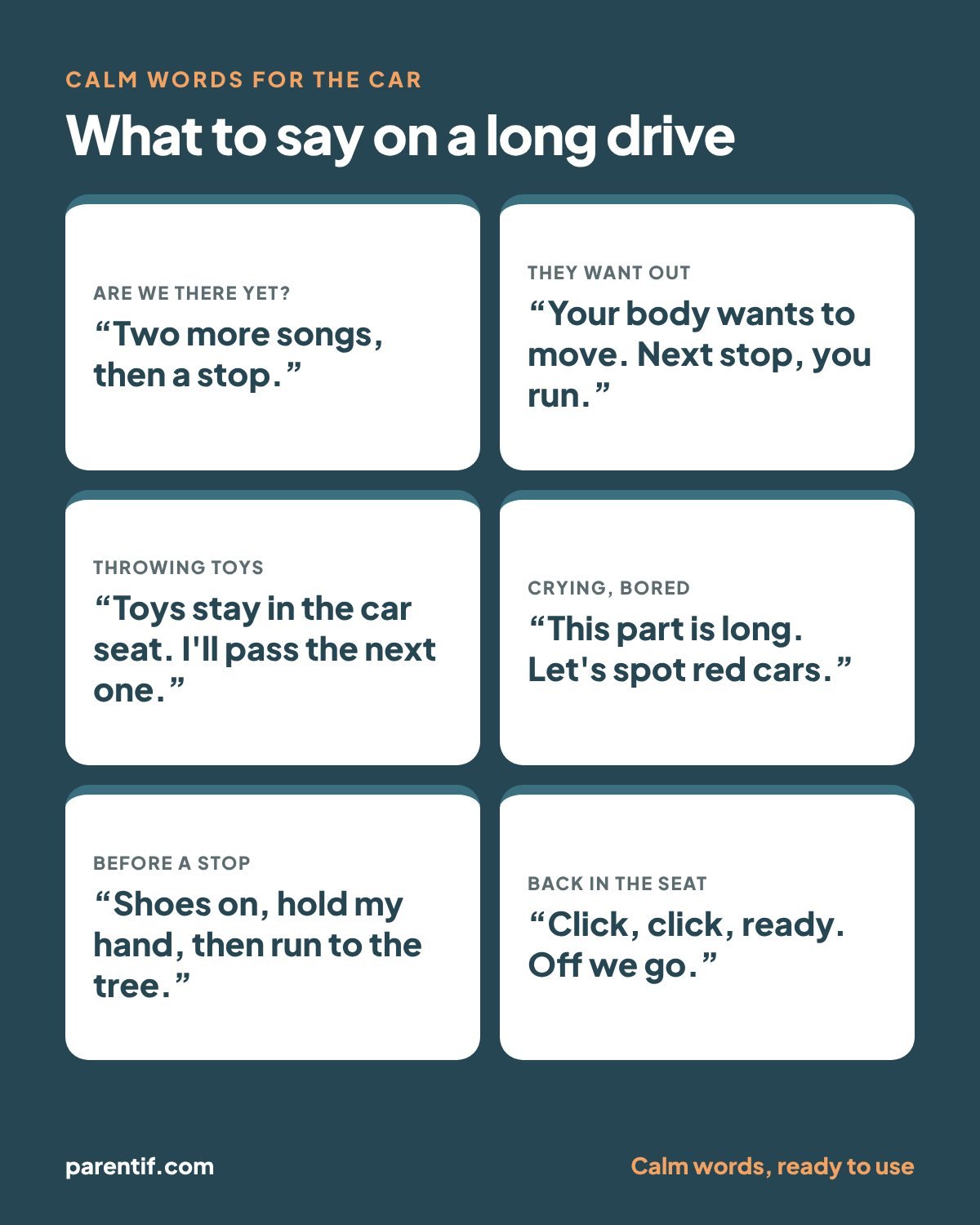
“Are we there yet?”
Say: “Two more songs, then a stop.”
Skip: “Stop asking! We’ll get there when we get there.”
They want out of the seat
Say: “Your body wants to move. At the next stop, you run.”
Skip: “No, sit still, you’re fine.”
Throwing toys
Say: “Toys stay in the car seat. I’ll pass the next one at the stop.”
Skip: “If you throw that again, I’m taking everything.”
For more on calming big feelings away from home, see our guide to a toddler meltdown in public.
A calm road trip isn’t about a perfect toddler. It’s about a good plan and lots of stops.
Arriving: Protect the First Night
The drive ends, but the trip doesn’t. A smooth first night sets up the whole holiday.
So keep the bedtime routine as close to home as you can: bath, pajamas, the same book and the same song. Bring their night light and sleep bag from home. If you arrive late, skip the big unpacking and go straight to the wind-down. Our toddler bedtime routine works just as well in a new room.
Common Mistakes on a Road Trip With a Toddler
Most of these mistakes come from wanting to “just get there.” Still, they often make the drive longer.
- Driving straight through. Skipping stops saves 20 minutes and can cost two hours of crying.
- Starting with screens. Then nothing else feels exciting. Save them for later.
- Packing the snacks in the trunk. Hunger always strikes far from the next exit.
- Bulky coats in the car seat. They’re a safety risk. Use a blanket on top.
- Over-scheduling the first day. Plan a quiet arrival, not a big outing.
If you want the full plan with checklists, The Road Trip Survival Guide covers timing, games, food and safety for every age, with a companion planner. The whole set lives in The Family Adventures Bundle.
When to Talk to Your Pediatrician
Most travel worries are about comfort and boredom. However, some questions are best asked before you leave.
🩺 When to talk to your pediatrician
- Your child often gets carsick, and you’re wondering what might help.
- You’re unsure which car seat stage is right for your child’s age, weight and height.
- Your child has a health condition, allergy or regular medicine and you’re traveling far from home.
- Your child seems unwell before the trip or develops a fever, vomiting or other symptoms on the road.
Trust your gut: if something feels off, a quick call is always fine.
FAQ: Road Trip With a Toddler
How often should you stop on a road trip with a toddler?
A good rule is a stop about every two hours, or sooner if your toddler is upset. Use each stop for running, a diaper change or toilet, water and a snack. Many families find that 15 to 20 minutes of real movement at a park or open area keeps the next stretch much calmer.
What is the best time to start a long drive with a toddler?
Many parents leave at nap time or bedtime, so the first long stretch is spent sleeping. Others leave very early in the morning. The best choice depends on how well your child sleeps in the car and how rested the driver is. Night driving only works if the adult behind the wheel is fully alert.
How many hours can a toddler be in a car seat?
There’s no single number, but long, unbroken stretches aren’t ideal for comfort. That’s why regular breaks, about every two hours, help so much. Take your toddler fully out of the seat at each stop to move and stretch. If you have questions about your child’s car seat, your pediatrician or a certified car seat technician can help.
How do I keep my toddler entertained on a long drive without screens?
Rotate small activities: a surprise bag with one new item per hour, sticker books, window clings, spotting games, songs and audiobooks. Planned snack times help too. The key is rotation. When each item comes out one at a time, it stays new and exciting much longer.
Should my toddler wear a coat in the car seat?
Bulky winter coats can leave the harness too loose, which isn’t safe. Instead, dress your child in normal layers, buckle the harness snugly, and lay the coat or a blanket over the top. Safety groups like the American Academy of Pediatrics share the same advice for colder weather.
What snacks are best for a road trip with a toddler?
Choose small, mess-free foods: crackers, cheese cubes, rice cakes, sliced fruit, small sandwiches and soft vegetables. Serve them on a schedule, about every hour, rather than all day. Offer water often. If your child has allergies or food needs, plan and pack those snacks first.
A road trip with a toddler doesn’t have to be a test of survival. Leave at nap time, stop every two hours, rotate one new thing at a time and keep safety first. With that rhythm, the drive becomes part of the adventure, not the price you pay for it.
Calm help for the hard parts of family life
Seven bundles of guides, planners and printables. Six products each, $37 per bundle.
 No-Fight Days Bundle
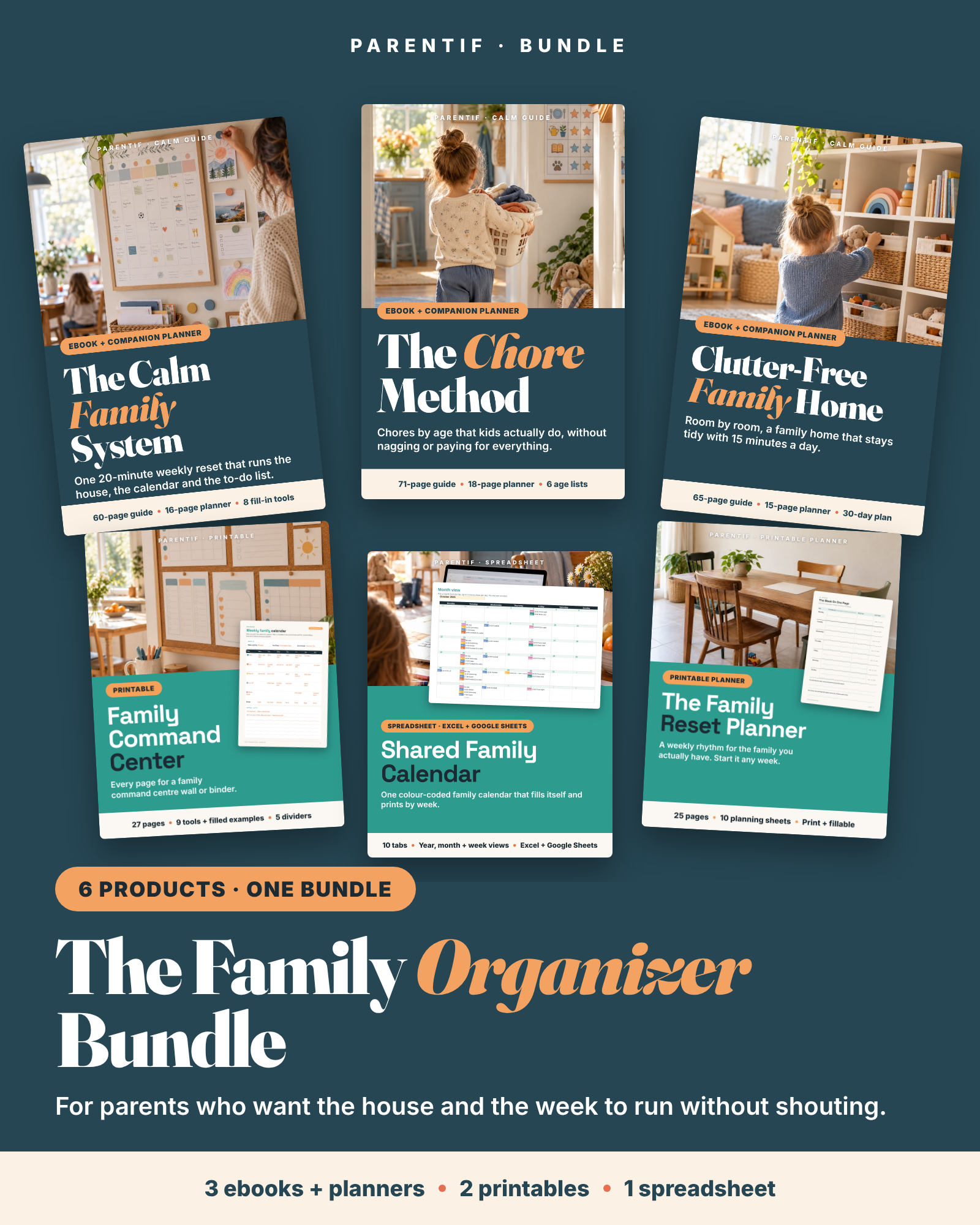 Family Organizer Bundle
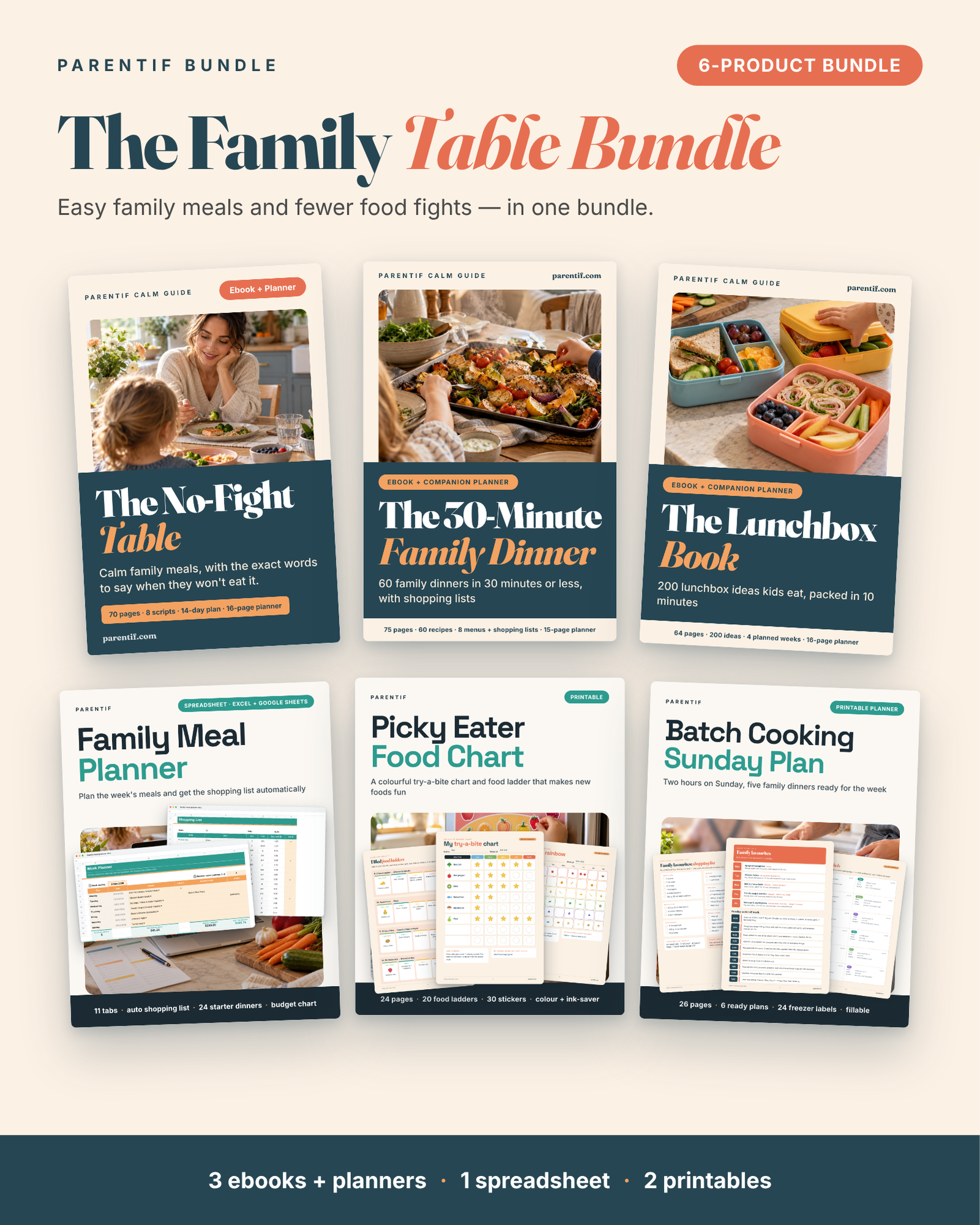 Family Table Bundle
 Family Money & Home Bundle
 Family Adventures Bundle
 Parent Reset Bundle
 Bump-to-Birth Bundle