General information, not medical advice. Talk to your pediatrician, midwife or doctor about your child.
Potty training can feel like a race when everyone around you seems to have finished in a weekend. In real life, most toddlers learn in steps, with good days and accident days along the way. This guide gives you a calm, practical plan for potty training a toddler: how to spot readiness, how to prepare, what the first days look like, and how to handle accidents without stress.
Is your toddler ready?
Readiness matters more than age. Many toddlers show signs somewhere between 18 months and 3 years, but every child is different. Look for a few of these:

The Chore Method
Chores by age that kids actually do, without nagging or paying for everything.
Instant download · Digital download · All sales final| Body signs | Understanding | Feelings and behaviour |
|---|---|---|
| Stays dry for longer stretches | Follows simple instructions | Shows interest in the toilet or in big-kid pants |
| Has fairly regular poos | Can tell you or show you they need to go | Wants to do things ‘by myself’ |
| Can walk to and sit on the potty | Notices a wet or dirty diaper | Not in the middle of a big change (new sibling, move) |
If your toddler isn’t ready, it’s fine to wait a few weeks and try again. If you have concerns about toileting, constipation or development, talk to your pediatrician.
Get ready before you start
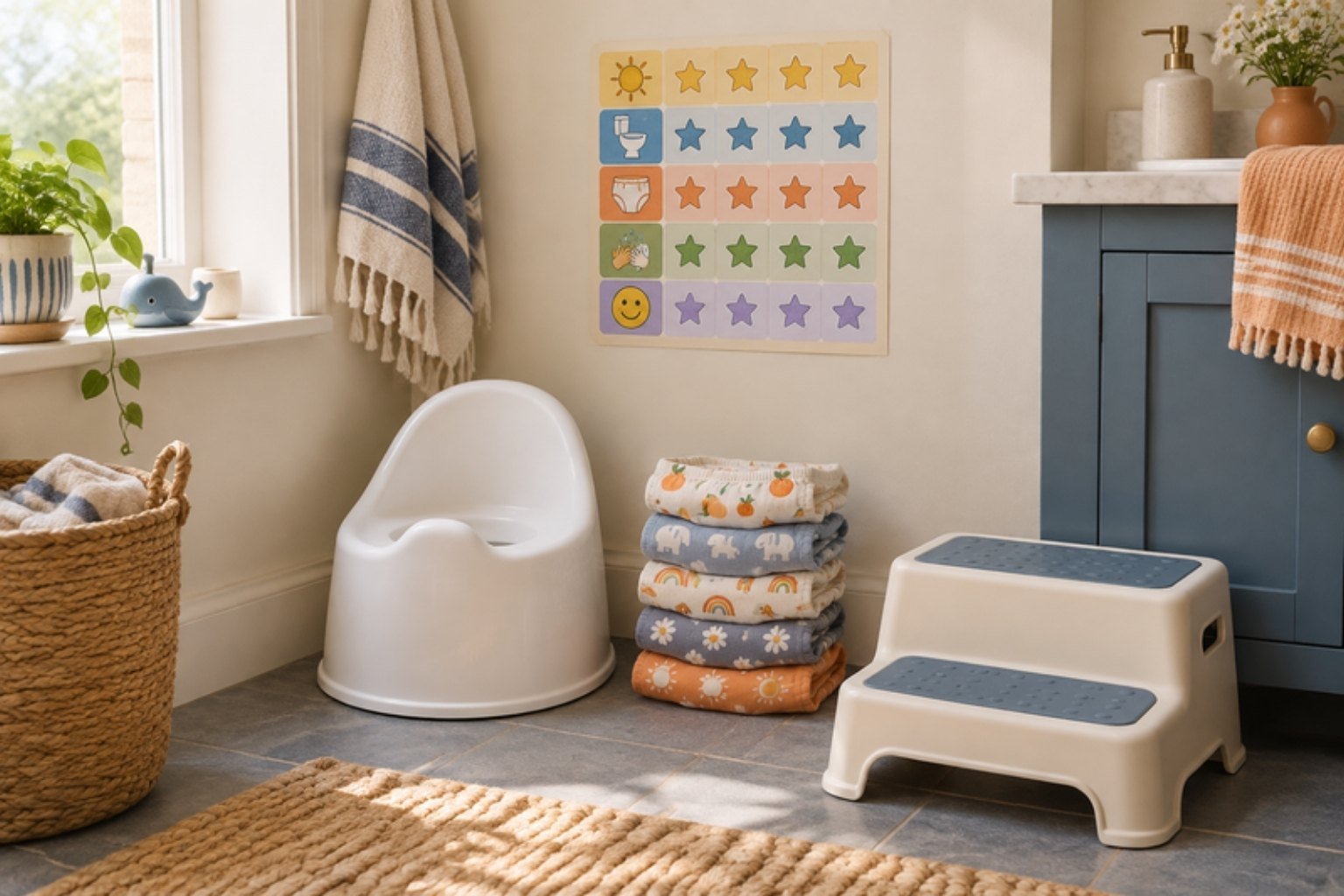
- A potty or a toilet seat reducer with a step stool.
- Several pairs of pants and easy clothes (elastic waists, no tricky buttons).
- A simple picture chart or sticker sheet.
- Wipes, spare clothes and a bag for outings.
- A few quiet days at home when you can be close by.

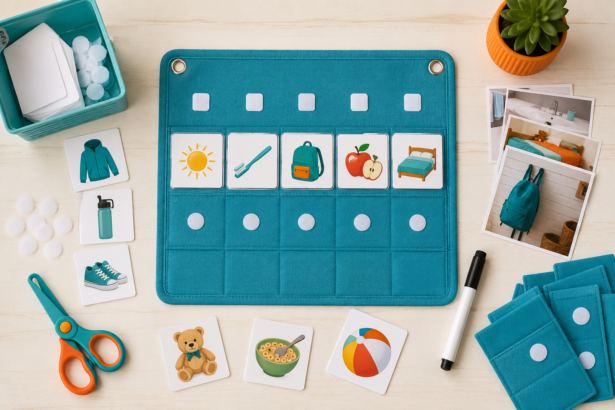
Picture routines help here too. My Day, My Way lets your toddler see the steps of the day, including potty times.
A calm step-by-step plan
Step 1: Talk and play first
A week before you start, read a potty book, let your toddler sit on the potty with clothes on, and talk about where wee and poo go. Keep it light and positive.
Step 2: Start with pants at home
On day one, swap diapers for pants during awake time at home. Offer the potty often: after waking, after meals and drinks, before going out and before bath. Use a timer if it helps you remember.

Step 3: Watch for signals
Wriggling, going quiet, crossing legs or hiding are common signs. Calmly say ‘Potty time’ and walk to the potty together. Keep it quick and matter-of-fact.
Step 4: Celebrate the effort, not just the result
Praise sitting, trying and telling you, not only success. A sticker on the chart or a high five is plenty. Big rewards can add pressure.
Step 5: Practise outings
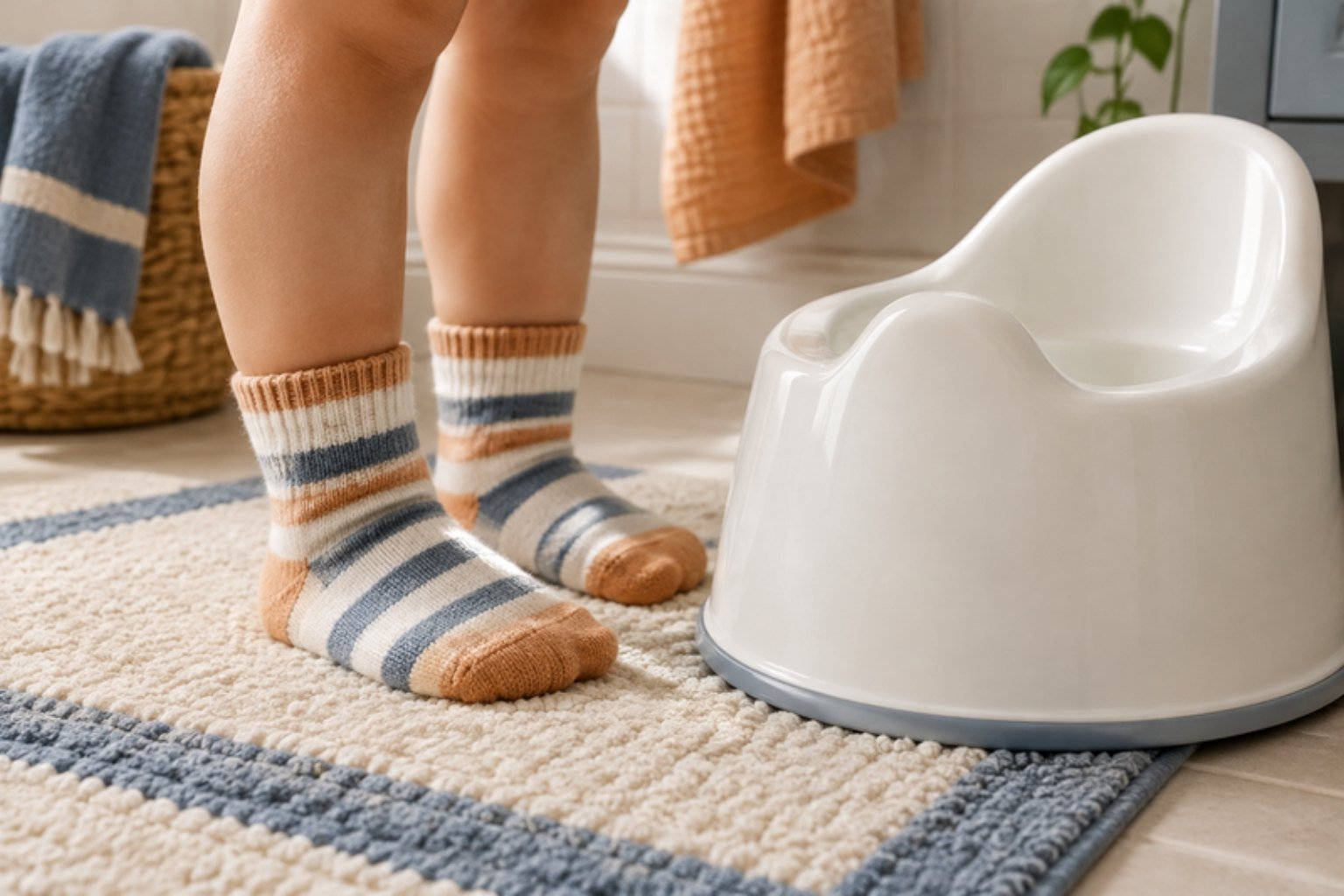
Once your toddler has some successes at home, try short trips. Use the potty before you leave, bring spare clothes, and know where the nearest toilet is.
The School-Age Years
Big feelings, homework, friendships, screens and independence, with the exact words to say.

- “Wee goes in the potty. Let’s try.”
- “Oops, that’s okay. We’ll clean up together.”
- “You told me! That was great listening to your body.”
Handling accidents calmly
Accidents are part of learning, even weeks in. A calm reaction helps your toddler keep trying.
- Stay neutral: ‘Oops, wee goes in the potty. Let’s get clean pants.’
- Involve your toddler in cleaning up, without blame.
- Offer the potty more often if accidents cluster at certain times.
- If accidents suddenly increase, look for changes: illness, stress, a busy week.
Common bumps and what to try
| What’s happening | What to try |
|---|---|
| Refuses to sit on the potty | Take a short break, then try a toilet seat instead, or let your toddler choose the potty. |
| Wees in the potty, poos in pants | Very common. Keep calm, offer the potty after meals, and talk to your pediatrician if your toddler seems constipated. |
| Was going well, now lots of accidents | Check for changes or stress, offer more reminders, and keep your reaction calm. |
| Won’t use toilets away from home | Practise in a quiet public toilet, bring a travel seat, and keep trips short at first. |
Night-time dryness
Staying dry at night often comes later than daytime training and can take months or years. Many families keep night-time diapers or pull-ups until mornings are dry for a while. Ask your pediatrician if you have questions about night-time wetting.
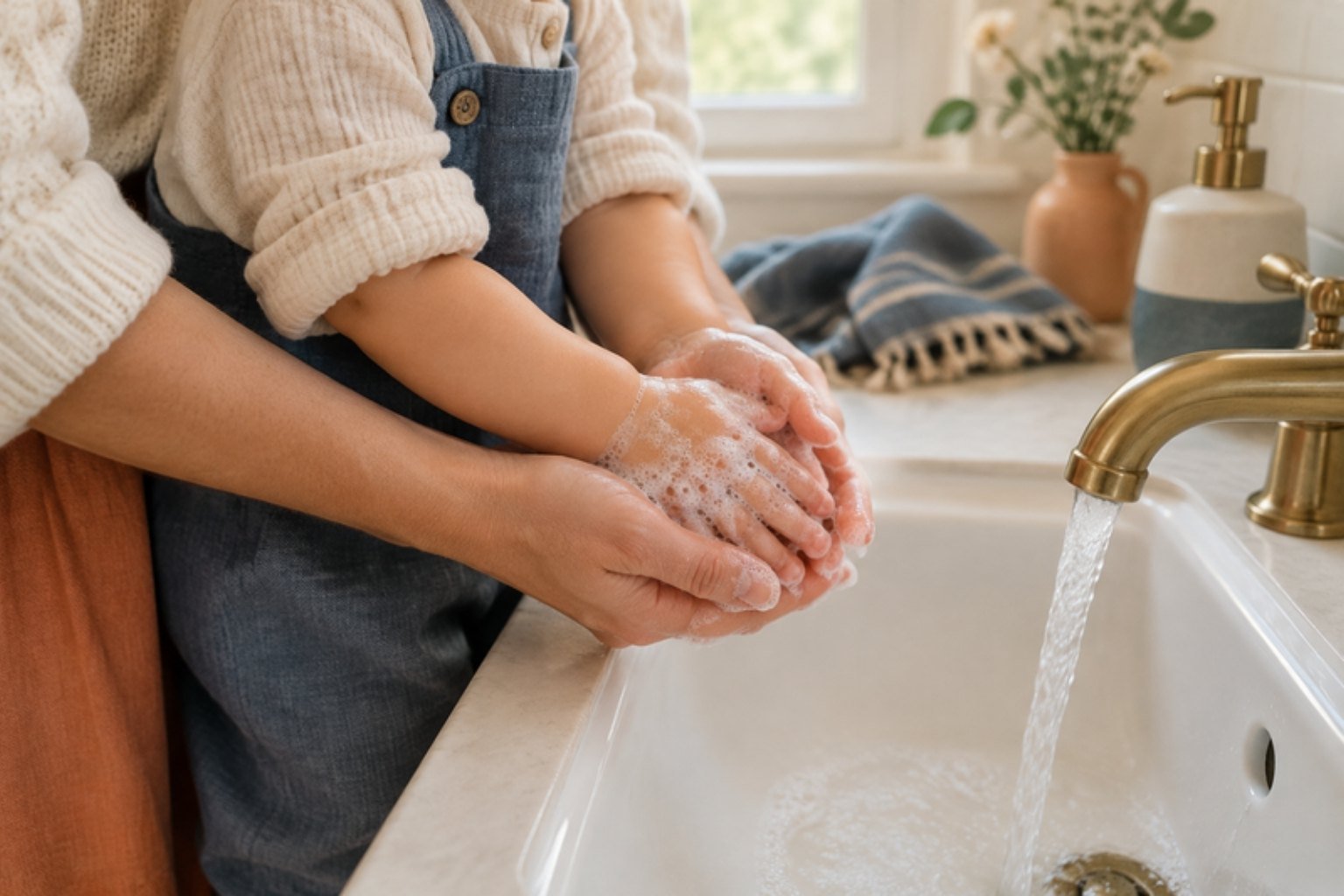
Washing hands: part of the routine
Make handwashing the last step every time: step stool, soap, a short song, rinse and dry. It builds a habit and gives your toddler something to feel proud of.
Questions parents ask
How long does potty training take?
It varies a lot. Some toddlers get the idea in days, others take weeks or months. Steady progress is what counts.
Should I use rewards?
Small, simple rewards like stickers or praise work well for many toddlers. Keep them small so the potty doesn’t become a big deal.
What if my toddler is scared of the toilet?
Start with a potty on the floor, let them flush with you, and never force sitting. Fear usually fades with calm practice.
When should I talk to a doctor?
If your toddler has pain, frequent constipation, blood in the stool, or you have concerns about development or toileting, talk to your pediatrician.
The calm next step
Potty training is one of many toddler milestones. For calm, practical help across the toddler years, from tantrums and sleep to potty training and limits, see The Toddler Years bundle. And for big feelings along the way, The Parent Scripts Deck gives you calm words for hard moments.
Calm help for the hard parts of family life
Seven bundles of guides, planners and printables. Six products each, $37 per bundle.
 No-Fight Days Bundle
 Family Organizer Bundle
 Family Table Bundle
 Family Money & Home Bundle
 Family Adventures Bundle
 Parent Reset Bundle
 Bump-to-Birth Bundle