Flying with a toddler can make even calm parents nervous. There’s packing, security lines, cramped seats, ear pressure and the fear of a meltdown with a hundred people watching. The good news: a plan makes a huge difference. This guide walks you gate to gate, from booking to landing, with a carry-on list, a simple activity rhythm and the words to use when your toddler gets loud.
The short answer
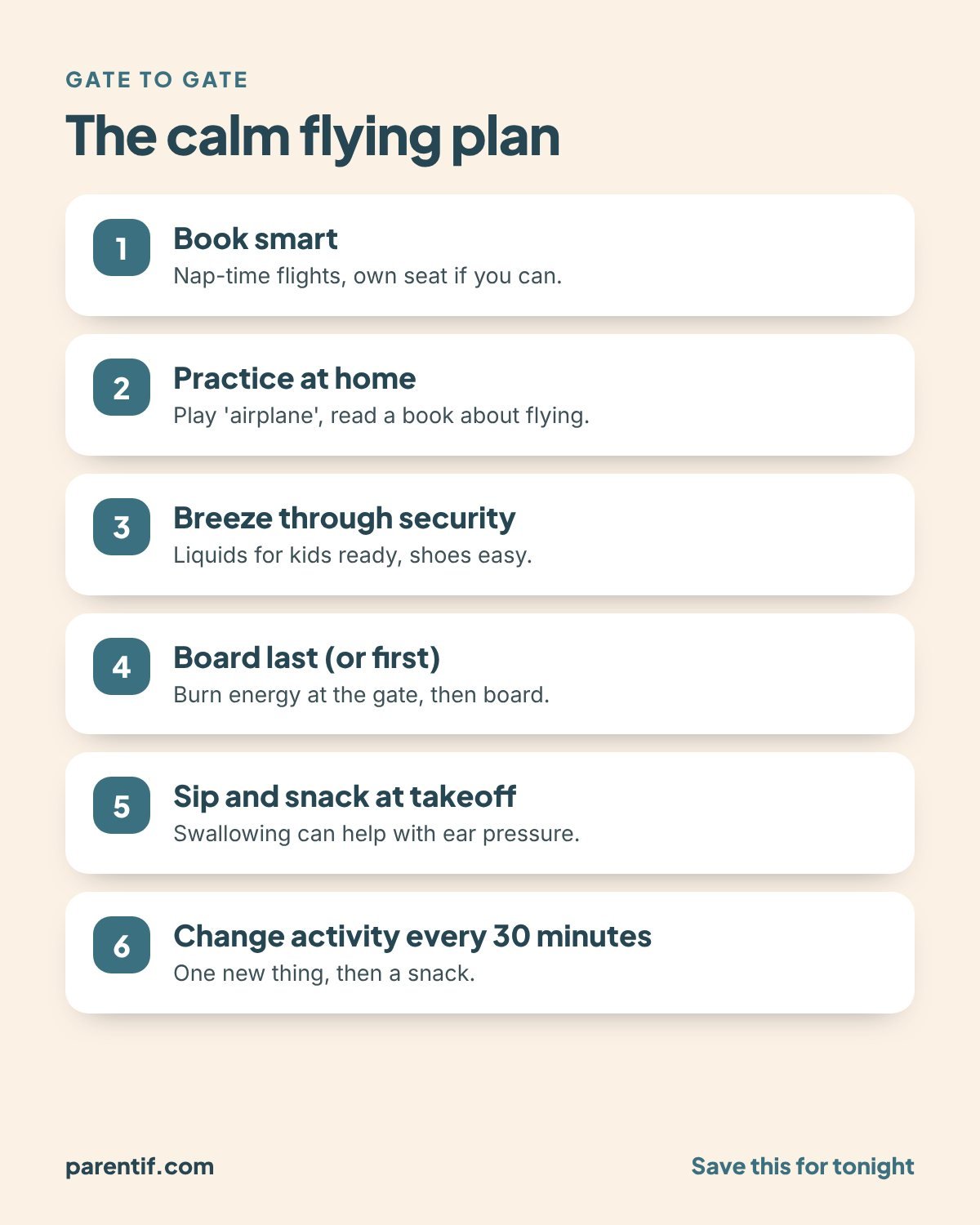
Flying with a toddler goes best with a plan. Book a flight around nap time and, if you can, a seat of their own with an approved car seat. Practice at home, prepare snacks and drinks for security, and let your toddler burn energy at the gate. During takeoff and landing, offer a drink or snack, because swallowing can help with ear pressure. Then change activity about every 30 minutes.
Key takeaways
- ✓Booking around nap time and choosing the right seat solve many problems before you leave home.
- ✓The FAA recommends children fly in their own seat with an approved car seat or child restraint.
- ✓A drink or snack during takeoff and landing can help with ear pressure, since swallowing helps many children.
- ✓A 30-minute activity rhythm keeps a toddler busy without emptying the bag in the first hour.
- ✓Kind, calm words for your child (and neighbors) matter more than a perfectly quiet flight.
Booking: Set Up Flying With a Toddler to Go Well
Good decisions at booking time make the whole trip easier. So think about timing, seats and connections before you look at the price.
| Choice | Good option | Why it helps |
|---|---|---|
| Flight time | Around nap time, or early morning | A sleeping toddler is a calm toddler |
| Direct or connecting | Direct when possible | One takeoff, one landing, no running between gates |
| Own seat vs lap | Own seat with an approved car seat | Safer, more familiar and more space |
| Seat location | Window, near the front | Something to look at, quick to get off |
| Connection time | At least 90 minutes | Time for toilets, diapers and a run around |
The FAA’s child safety guidance recommends that children have their own seat and use an approved car seat or child restraint system. In the US, children under two can often fly on a parent’s lap. Still, a seat of their own is the safer choice, and many toddlers sleep better in their familiar car seat.
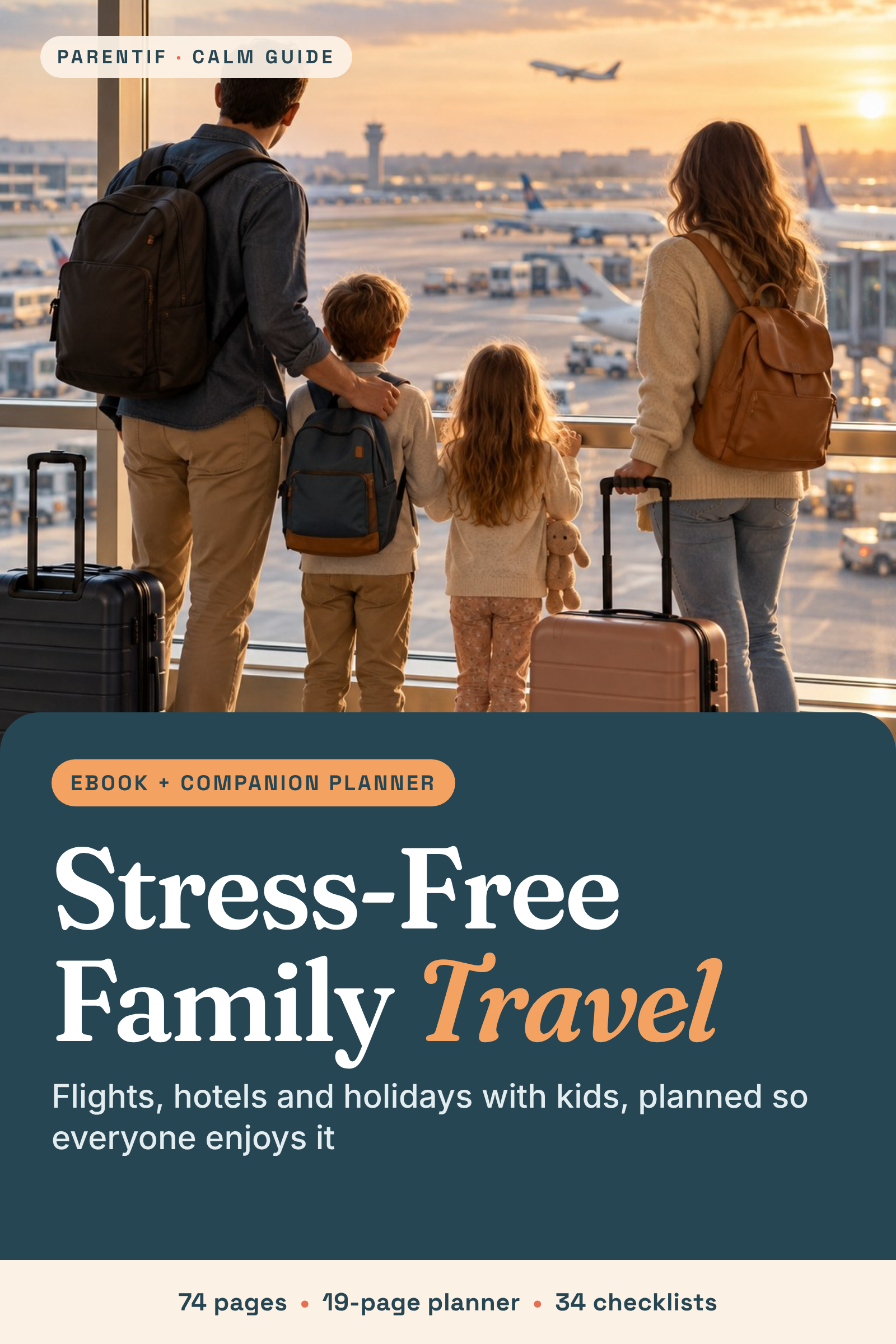
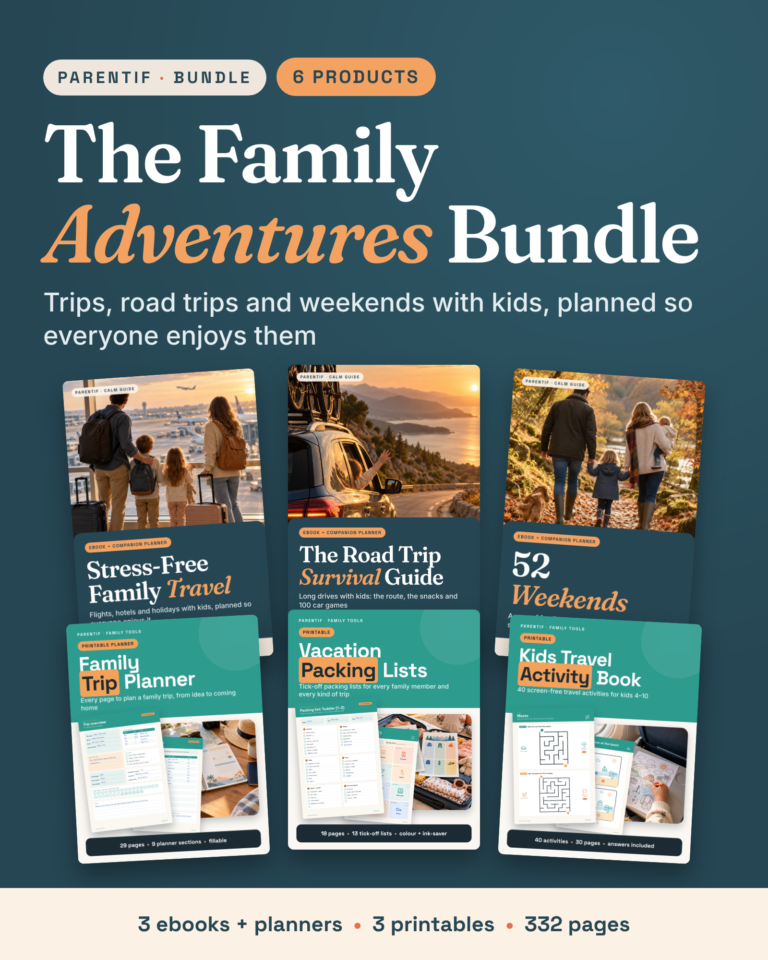
Stress-Free Family Travel
Flights, hotels and holidays with kids, planned so everyone enjoys it.
Instant download · Digital download · All sales final💡 Tip
Check that your car seat is labeled for aircraft use, and measure it against the airline’s seat width before you fly. A quick look at the airline’s website saves stress at the gate.
Before the Trip: Practice Flying With a Toddler at Home
Toddlers cope better with things they know. So make flying familiar before the day comes.
Read a book about planes
Talk about the airport, the big windows and the “seatbelt light.”
Play airplane at home
Line up chairs, buckle up, pretend to take off and hand out “snacks.”
Practice sitting
Do short “flight” games at the table with a new activity.
Show the plan
Draw the day: car, airport, plane, Grandma’s house.
Pack together
Let your toddler choose two small toys for their own backpack.
✨ Quick win
Give your toddler their own small backpack with a few items they chose. Carrying it makes them feel big and involved, and it keeps them busy at the gate.
What to Pack in Your Carry-On When Flying With a Toddler
Your carry-on is your toolbox. Pack it for the longest possible delay, not the shortest flight.
The carry-on essentials
- Diapers for the whole travel day plus several extra, wipes and a changing mat
- Two full spare outfits for your toddler, and a spare top for you
- Snacks: lots of small, mess-free ones, plus an empty water bottle to fill after security
- Milk or drinks for your toddler
- Comfort toy, small blanket and the bedtime book
- The activity bag: 6–8 small new or forgotten items, each in its own bag
- Headphones made for children, and downloaded shows
- Any regular medicines your child uses, with a copy of the details
- A few sealable bags for wet clothes and trash
The TSA guide to traveling with children explains the rules for milk, formula and juice for little ones at security. Those items are usually allowed in reasonable amounts, but check the latest guidance before you go.
At the Airport: Security and the Gate With a Toddler
The airport is full of noise and waiting, so keep your toddler moving and your hands free.
First, dress your toddler in easy shoes and simple layers. Next, have their drinks and snacks ready to show at security. Then, once you are through, let them walk, climb safe spots and watch the planes. Many airports have play areas, too.
At the security belt
Say: “The bag goes on a ride. We walk through and meet it.”
Skip: “Hurry up, everyone’s waiting for us!”
At the gate
Say: “Let’s count the planes. Which one is ours?”
Skip: “Sit down and be quiet until we board.”
Waiting in line
Say: “Let’s play “I spy” while we wait.”
Skip: “Stop whining, it’s just a line.”
💡 Tip
Some families board early to set up the car seat calmly. Others board last so the toddler spends less time sitting. Choose based on your child: if setup takes time, go early; if your child hates waiting, go late.
Takeoff and Landing: Helping With Ear Pressure
Ear pressure is one of the biggest worries for parents. Many toddlers feel discomfort when the plane climbs or descends.
Swallowing can help many children. So offer a drink, a snack or a pacifier during takeoff and especially during the descent, which often starts about 30 minutes before landing. You can also play “big yawn” games or chew-and-swallow snacks. If your child has a cold or ear trouble before the flight, speak with your pediatrician first.
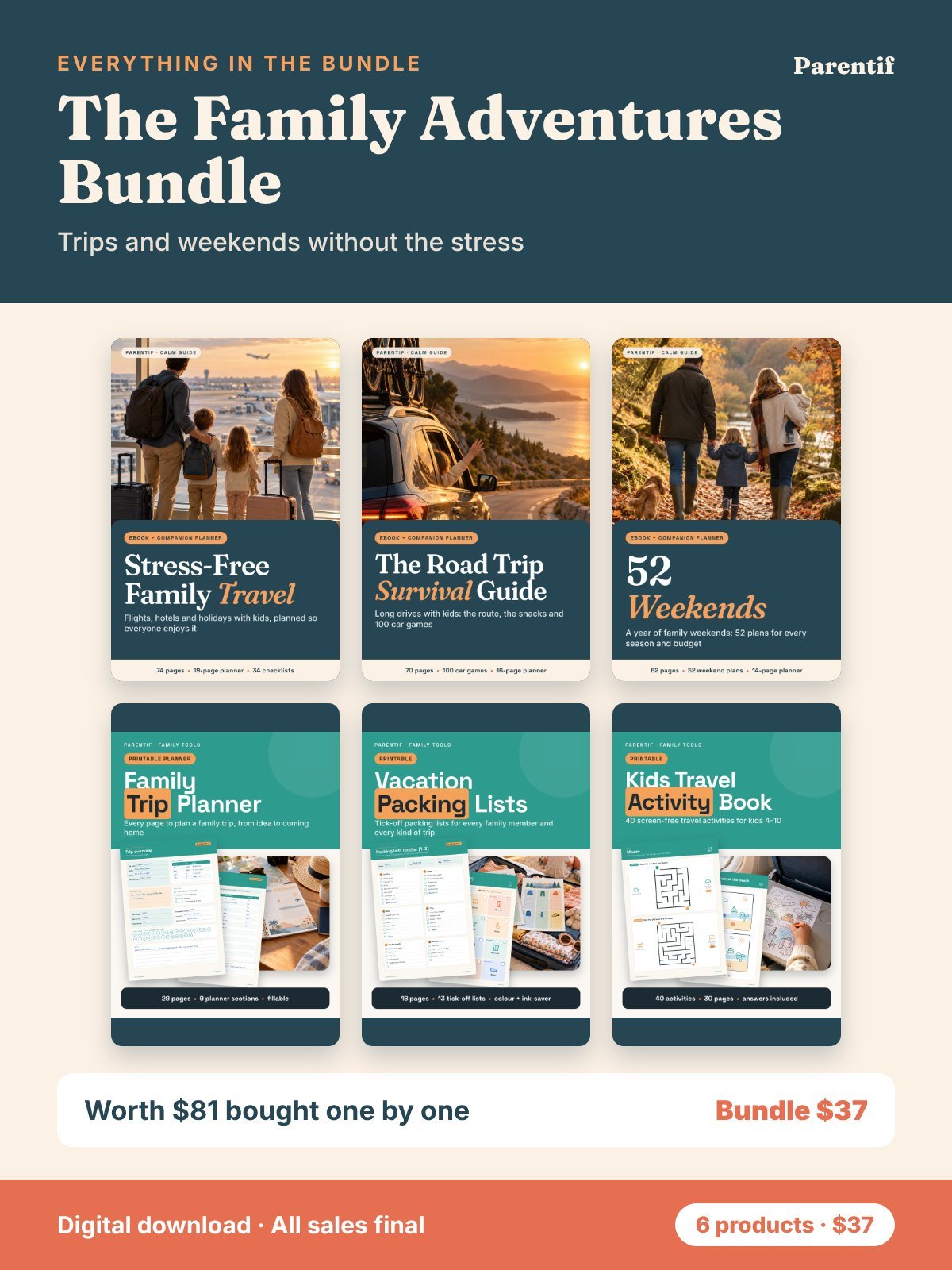
The Family Adventures Bundle
Trips, road trips and weekends with kids, planned so everyone enjoys them.
⚠️ Watch out
Don’t wake a sleeping toddler for takeoff just to give a drink. Many children sleep through pressure changes without trouble. Have the drink ready in case they wake.
The 30-Minute Rhythm for Flying With a Toddler
Long flights feel endless when you try to entertain for hours. So break the flight into 30-minute blocks.
- New activity: open one small bag (stickers, a busy book, play dough, a toy car).
- Snack break: a small snack and a drink.
- Movement: when the seatbelt sign is off, walk the aisle together.
- Quiet time: a book, a song with headphones or a cuddle.
- Screens: a show for the hardest stretch, not the first one.
Change activity before your toddler gets bored, not after. That way, you’re always one step ahead. For trips by car too, our guide to a road trip with a toddler uses a similar rhythm. The printable Kids Travel Activity Book is full of quiet games for planes and waiting rooms.
A calm flight isn’t a silent flight. It’s a parent with a plan and a bag full of small surprises.
When Flying With a Toddler Ends in a Meltdown
Even well-prepared toddlers cry on planes. That’s normal, and most passengers understand more than you think.
So first, check the basics: hungry, thirsty, tired, wet, too hot, or ears hurting? Then lower the input, speak softly, and offer something new. If you can, stand at the back for a minute with your child once the seatbelt sign is off. Above all, stay calm. Your calm helps your child far more than any trick.
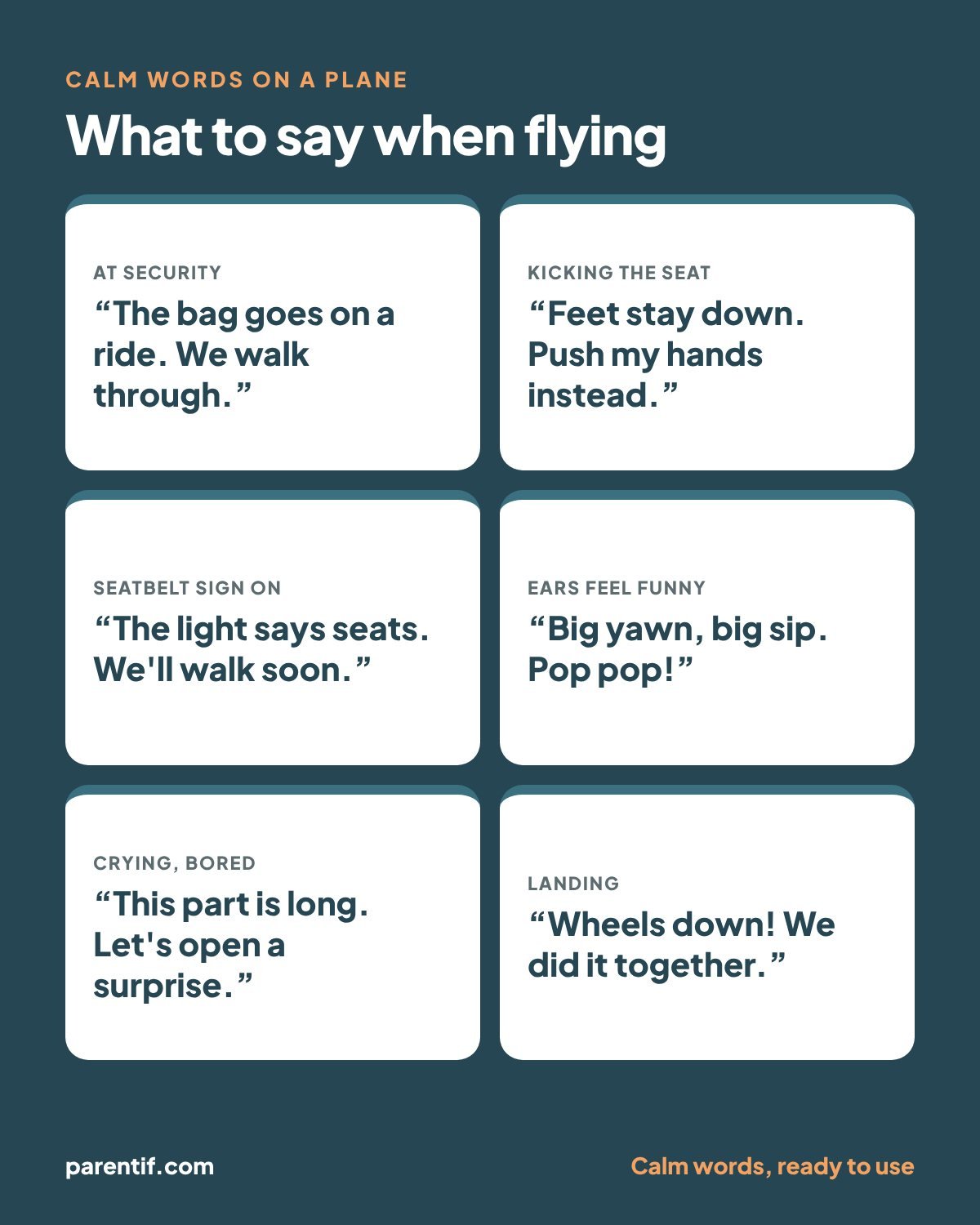
Our guide on handling a toddler meltdown in public has a full calm plan, and it works at 30,000 feet too. If you rely on screens and worry about ending them, read how to end screen time without a meltdown.
Talking to your neighbors
A smile and a short word go a long way. For example: “Hi! We’re flying with a toddler today. We’ll do our best to keep it calm.” Most people soften straight away. Then focus on your child, not on the faces around you.
After Landing: Protect the First Night
Travel days are long. So when you arrive, keep the evening simple and familiar.
Do the usual bath, pajamas, book and song, even in a new room. Bring their sleep bag and night light from home. If you crossed time zones, expect a few messy days. Our guide on how long a toddler takes to adjust to a new routine explains what’s normal, and a steady toddler bedtime routine helps their body clock settle.
Common Mistakes When Flying With a Toddler
These mistakes are easy to make on a busy travel day. However, avoiding them makes the trip much smoother.
- Packing for the flight time, not the travel day. Delays happen. Pack extra diapers, snacks and clothes.
- Using all the activities in the first hour. Then the rest of the flight is hard. Rotate slowly.
- Short connections. Running between gates with a toddler is stressful. Give yourself time.
- Skipping the airport run-around. A tired-out toddler at the gate sits much better on the plane.
- Worrying about every stranger. Your child needs your calm more than strangers need silence.
For a full plan with checklists for every stage of a trip, Stress-Free Family Travel covers flights, hotels and time zones, with a companion planner. The Family Trip Planner helps you organize bookings and packing, and The Family Adventures Bundle brings it all together.
When to Talk to Your Pediatrician Before Flying With a Toddler
Most toddlers fly without problems. Still, some situations are worth a quick check before you travel.
🩺 When to talk to your pediatrician
- Your child has a cold, ear infection or ear trouble shortly before the flight.
- Your child has a health condition, such as breathing problems, and you’re unsure about flying.
- You’re thinking about giving any medicine to help with sleep or travel sickness; always ask first.
- You’re traveling abroad and want to check vaccines or health advice for your destination.
Trust your gut: if something feels off, a quick call is always fine.
FAQ: Flying With a Toddler
What is the best age to fly with a toddler?
There’s no perfect age, and many families fly with toddlers successfully. Toddlers between 18 months and 3 years can find sitting still hard, so planning matters more at this stage. A good flight time, a seat of their own, small activities and plenty of snacks help at any age. Every child is different.
Should my toddler have their own seat on a plane?
The FAA recommends that children have their own seat and use an approved car seat or child restraint system. In the US, children under two can often fly on a parent’s lap, but a seat of their own is the safer choice. Many toddlers also sleep and sit better in their familiar car seat.
How do I help my toddler’s ears on a plane?
Swallowing helps many children with ear pressure. Offer a drink, snack or pacifier during takeoff and especially during the descent before landing. Yawning games can help too. If your child has a cold or ear problems before you fly, speak with your pediatrician before the trip.
Can I bring milk or snacks for my toddler through airport security?
In the US, the TSA usually allows milk, formula and juice for young children in reasonable amounts, even above the normal liquid limit. You may need to show them separately at security. Rules can change, so check the TSA’s latest guidance on traveling with children before you go.
How do I keep my toddler entertained on a long flight?
Break the flight into 30-minute blocks: a new small activity, a snack, a walk in the aisle when allowed, quiet time and, later, a show. Wrap or bag small toys so each one feels new. Save screens for the hardest stretch so they still work when you need them most.
What if my toddler cries the whole flight?
It’s stressful, but it’s not a failure. Check hunger, thirst, tiredness, comfort and ear pressure first. Then lower noise, speak softly and offer something new. If possible, stand at the back for a moment. Most passengers understand, and staying calm helps your child settle faster.
Flying with a toddler is easier with a plan than with luck. Book smart, practice at home, pack for the whole travel day and keep a calm 30-minute rhythm in the air. Before long, you’ll land with a happy toddler, a lighter bag and a story you’ll actually enjoy telling.
Calm help for the hard parts of family life
Seven bundles of guides, planners and printables. Six products each, $37 per bundle.
 No-Fight Days Bundle
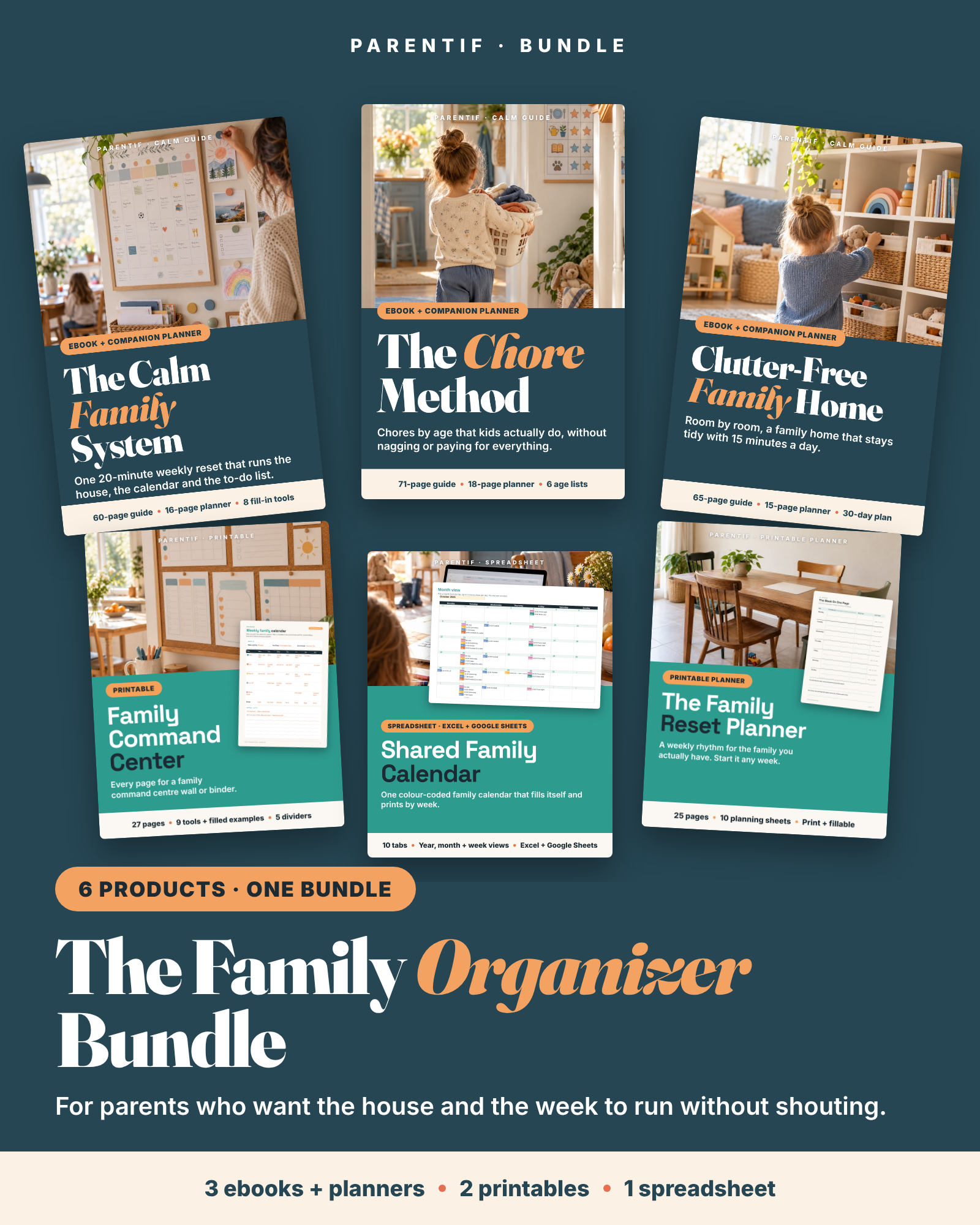 Family Organizer Bundle
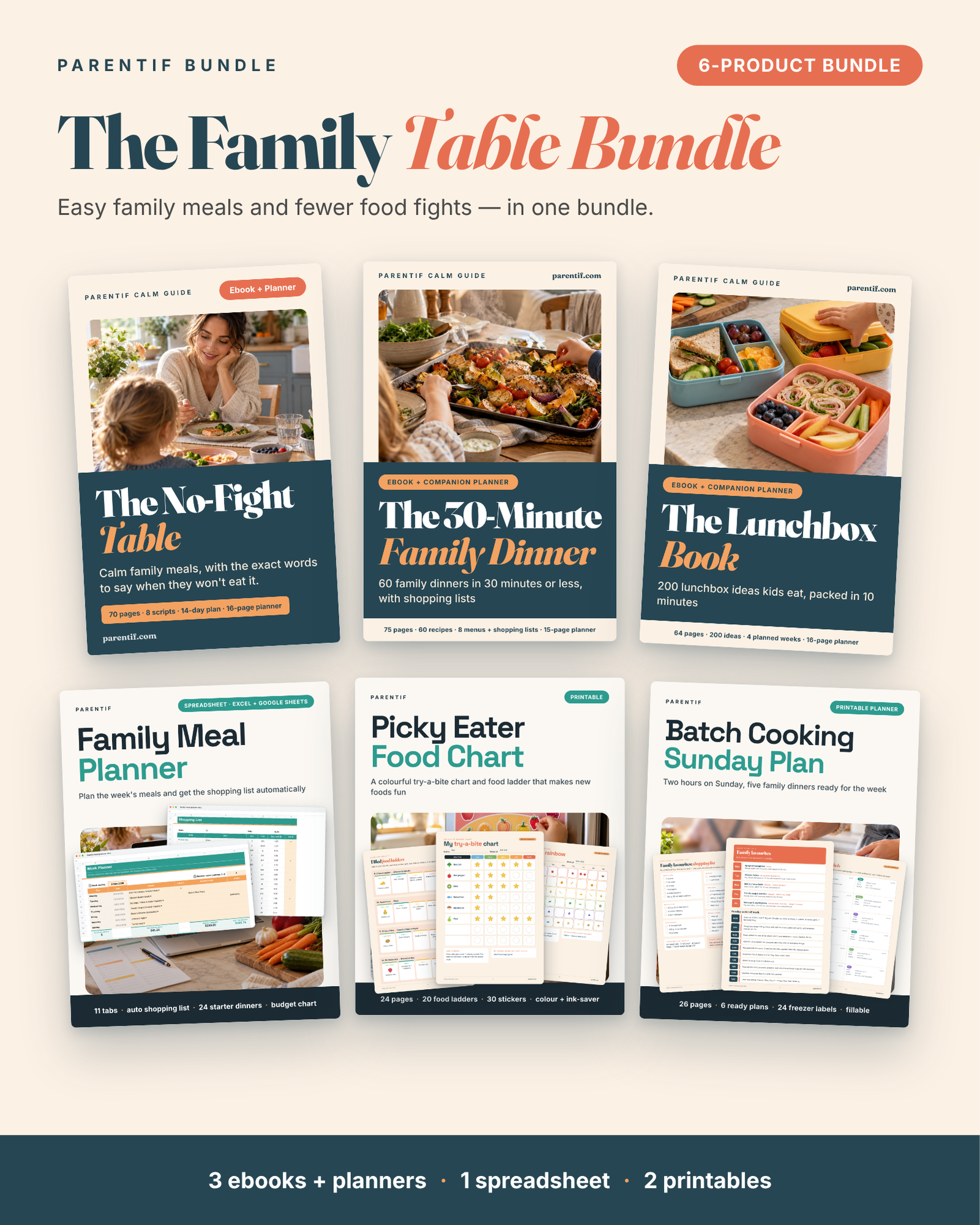 Family Table Bundle
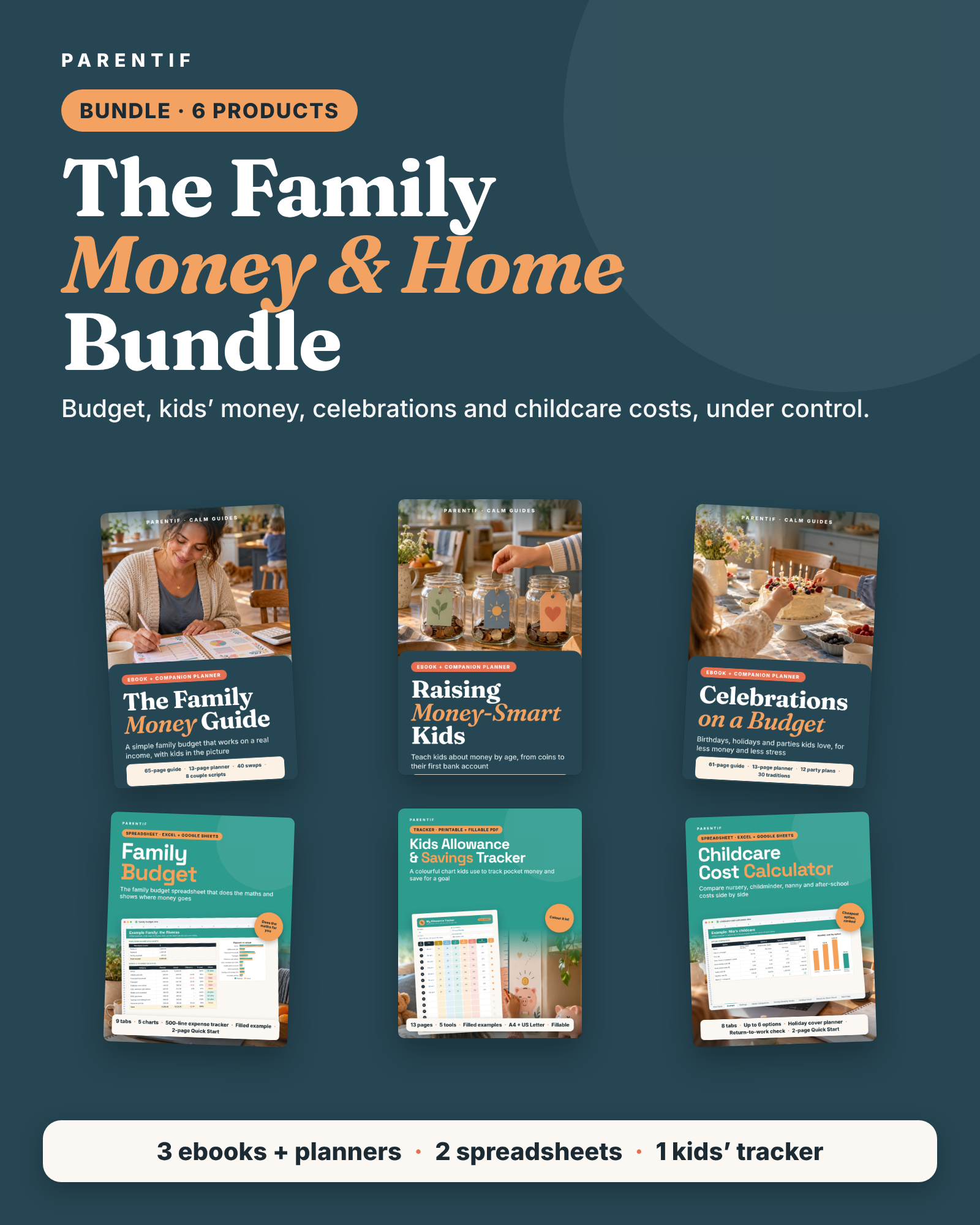 Family Money & Home Bundle
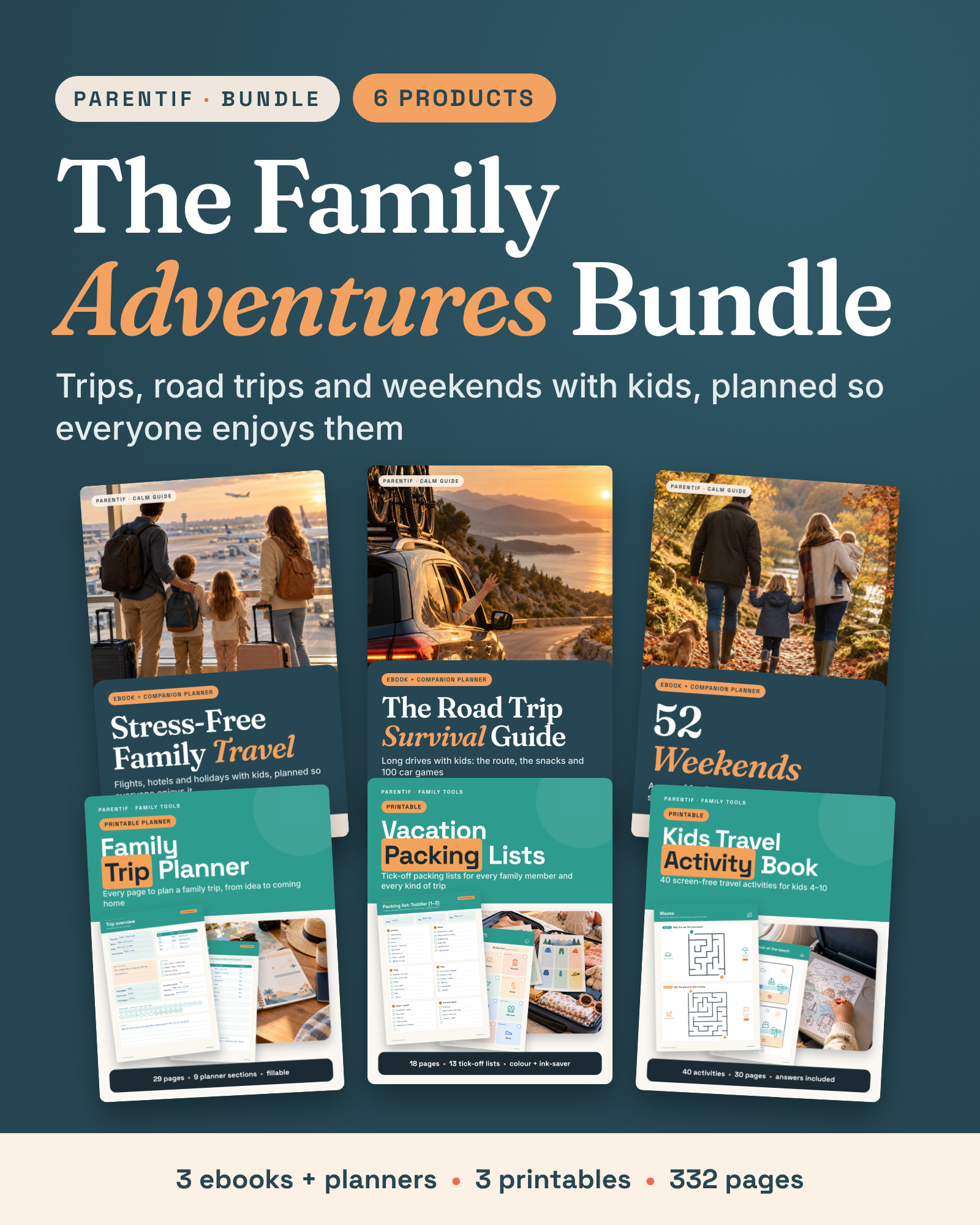 Family Adventures Bundle
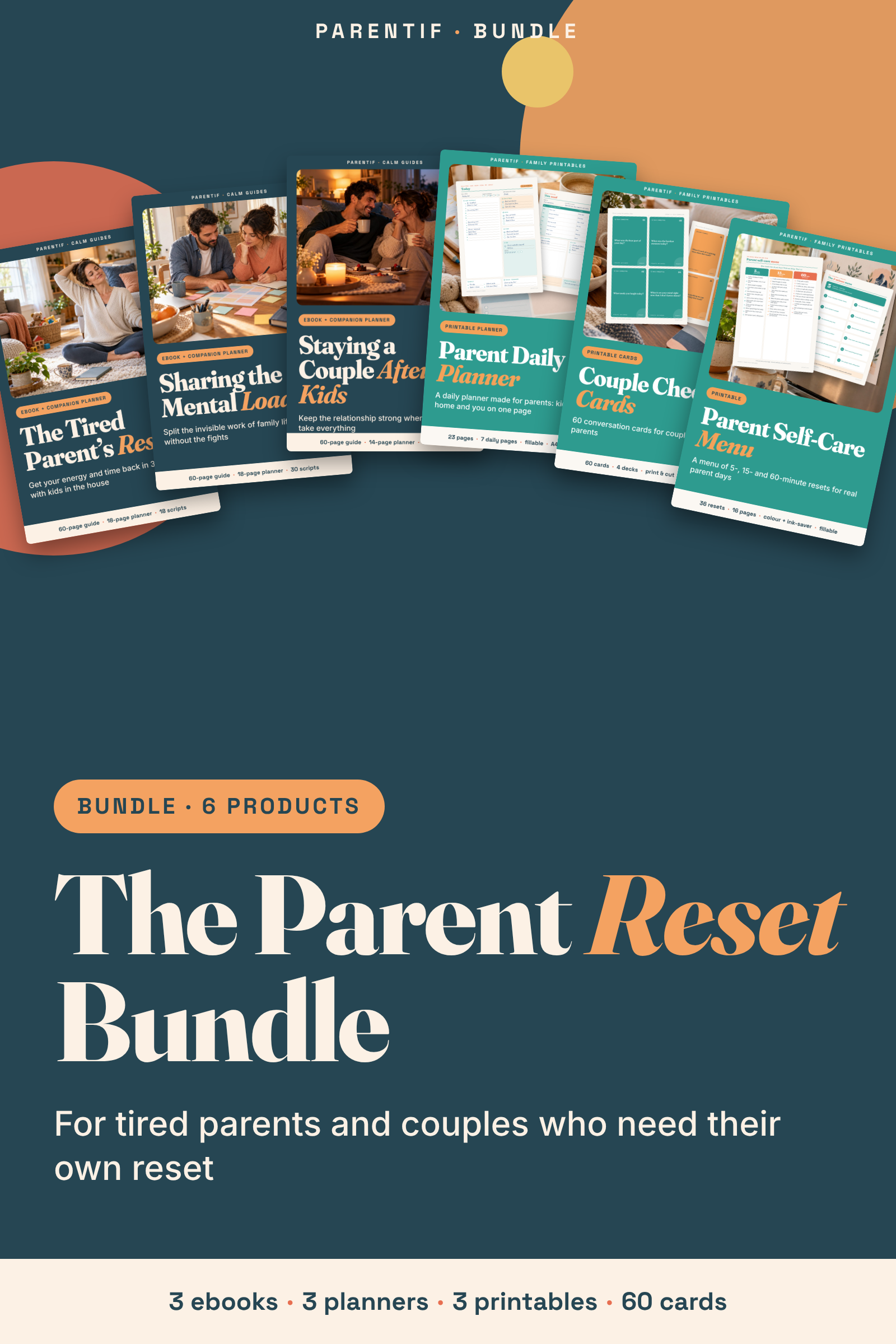 Parent Reset Bundle
 Bump-to-Birth Bundle