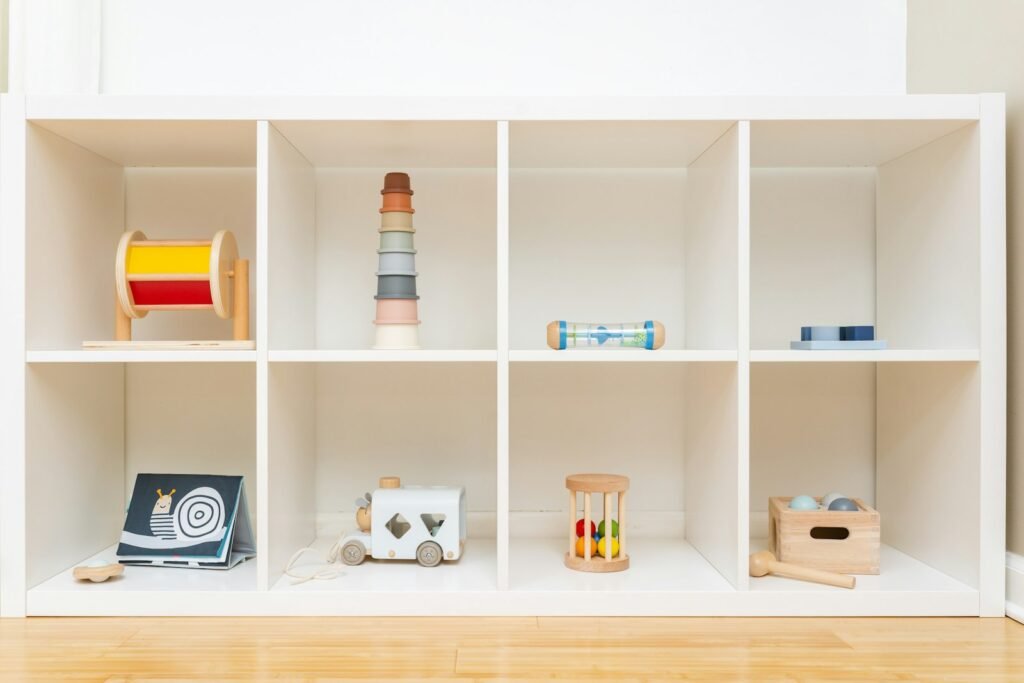
If you’re wondering how to declutter toys without a week of tears, you’re not alone. Toys spill out of baskets, hide under the sofa and somehow multiply overnight. Yet, oddly, your kids still say they’re bored. This guide shows you how to clear the playroom in one afternoon, what to keep at each age, how to involve your children kindly and how to stop the clutter from coming back.
The short answer
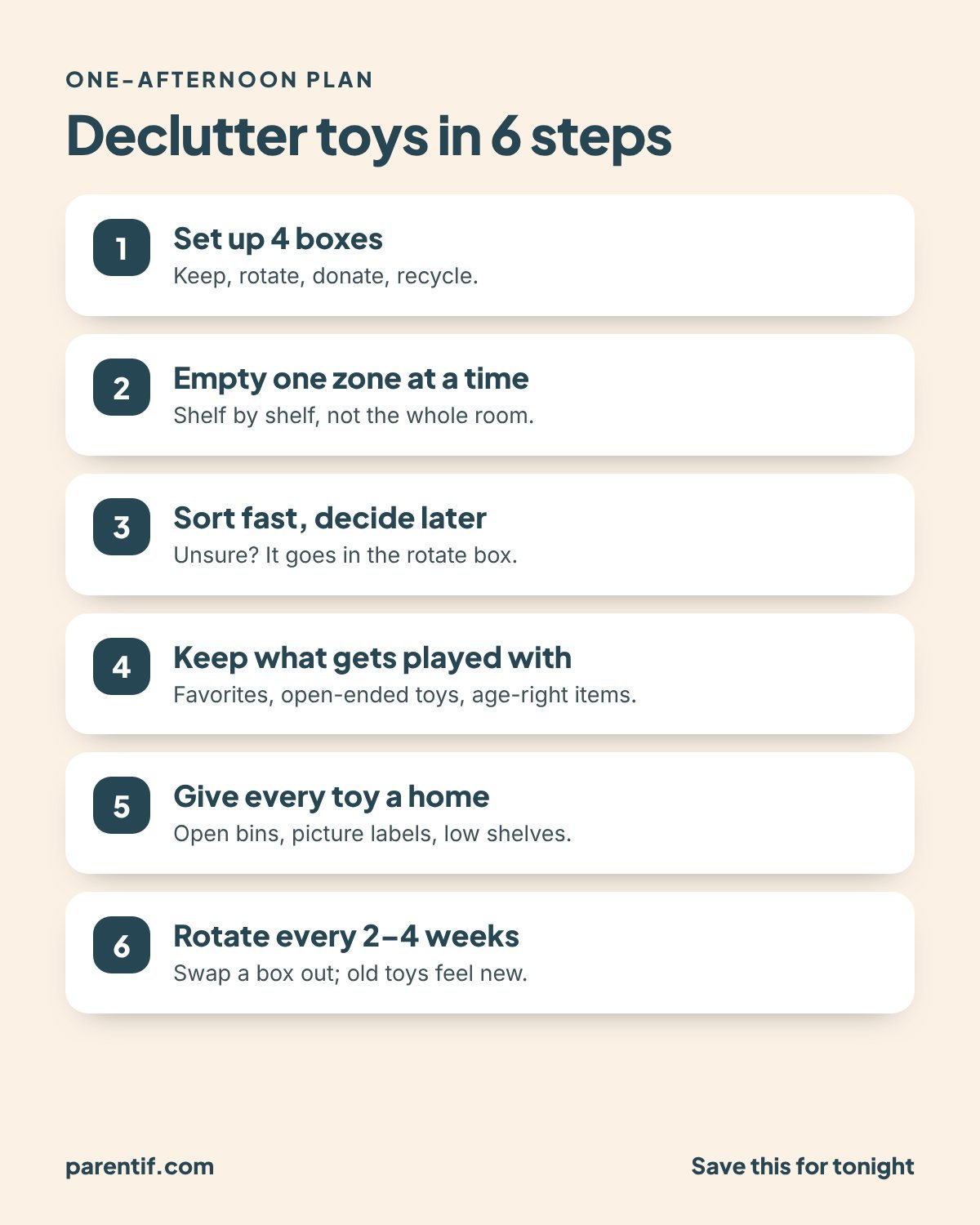
Here’s how to declutter toys in one afternoon: set up four boxes (keep, rotate, donate, recycle), then sort one shelf or zone at a time. Keep favorites and open-ended toys that suit your child’s age, put “maybe” toys in a rotation box, and pass on or recycle the rest. Finally, give every toy a simple home with picture labels, and swap the rotation box every two to four weeks.
Key takeaways
- ✓Fewer toys out at once often means longer, deeper play, not more boredom.
- ✓The 4-box method (keep, rotate, donate, recycle) turns hard decisions into quick ones.
- ✓A rotation box removes guilt: toys aren’t gone, they’re just resting.
- ✓Involving children gently, with choices, works better than secret purges or big lectures.
- ✓Simple homes for toys, like open bins with picture labels, keep the space tidy afterwards.
Why Learning How to Declutter Toys Helps Kids Play Better
It sounds backwards, but many children play better with fewer toys. When a room is packed, kids often jump from toy to toy without settling.
In a study from the University of Toledo, toddlers given fewer toys played longer with each one and used them in more creative ways. You can read the summary of the Toledo toy study for more detail. So learning how to declutter toys isn’t just about a tidy floor. It also gives your child space to focus.
The Calm Family System
One 20-minute weekly reset that runs the house, the calendar and the to-do list.
Instant download · Digital download · All sales final💡 Tip
Notice which toys your kids actually use for a week. Snap a photo each evening of what’s out on the floor. Those photos tell you exactly what to keep.
Before You Start: Set Up the 4 Boxes
Decluttering goes much faster when every toy has an obvious next stop. So grab four boxes, bags or laundry baskets and label them.
| Box | What goes in | What happens next |
|---|---|---|
| Keep | Favorites, open-ended toys, age-right items | Back on the shelf with a clear home |
| Rotate | Good toys that aren’t in use right now | Stored away, swapped back in later |
| Donate | Clean, complete, safe toys your kids have outgrown | Passed on to friends, family or charity |
| Recycle or bin | Broken, missing pieces, unsafe or worn out | Recycled where possible, otherwise thrown away |
✨ Quick win
The rotate box is the secret weapon. Whenever you’re unsure, put it there. No guilt, no arguments, and you can decide later with fresh eyes.
How to Declutter Toys in One Afternoon: Step by Step
First, work in zones, not the whole room. Clearing one shelf at a time keeps the mess small and your energy up.
Pick one zone
Start with the shelf or basket that bothers you most. Empty it completely.
Sort quickly
Hold each toy for two seconds. Keep, rotate, donate or recycle. Don’t overthink.
Group the keepers
Put similar toys together: cars, blocks, dolls, art, puzzles.
Check for missing pieces
Puzzles and sets with missing parts go to recycle unless they still work.
Give each group a home
One bin per group, with a photo or drawing on the front.
Repeat for the next zone
Move on only when this zone is fully done.
⚠️ Watch out
Don’t pull every toy into one giant pile in the middle of the room. It looks productive, but it often ends in overwhelm, and the pile can sit there for days.
What to Keep: A Simple Guide by Age
Of course, different ages need different toys. Use this as a gentle guide, not a strict rule.
| Age | Keep out | Good candidates to rotate or pass on |
|---|---|---|
| 0–2 years | Soft blocks, stacking cups, balls, board books, push toys | Baby toys they’ve outgrown, extra rattles |
| 2–4 years | Blocks, vehicles, pretend play, simple puzzles, crayons | Duplicate toys, noisy electronics, too-easy puzzles |
| 5–8 years | Building sets, art supplies, games, dress-up, books | Toys from younger years, broken sets |
| 9–12 years | Hobby kits, books, sports gear, strategy games | Collections they’ve lost interest in |
Open-ended toys usually earn their space. Blocks, play food, figures, art materials and balls can be played a hundred ways. The Raising Children Network’s guide to choosing toys explains why simple toys often support play best.
How to Involve Kids Without Tears
Children feel strongly about their things, and that’s normal. So when you declutter toys together, give them real choices and keep it short.
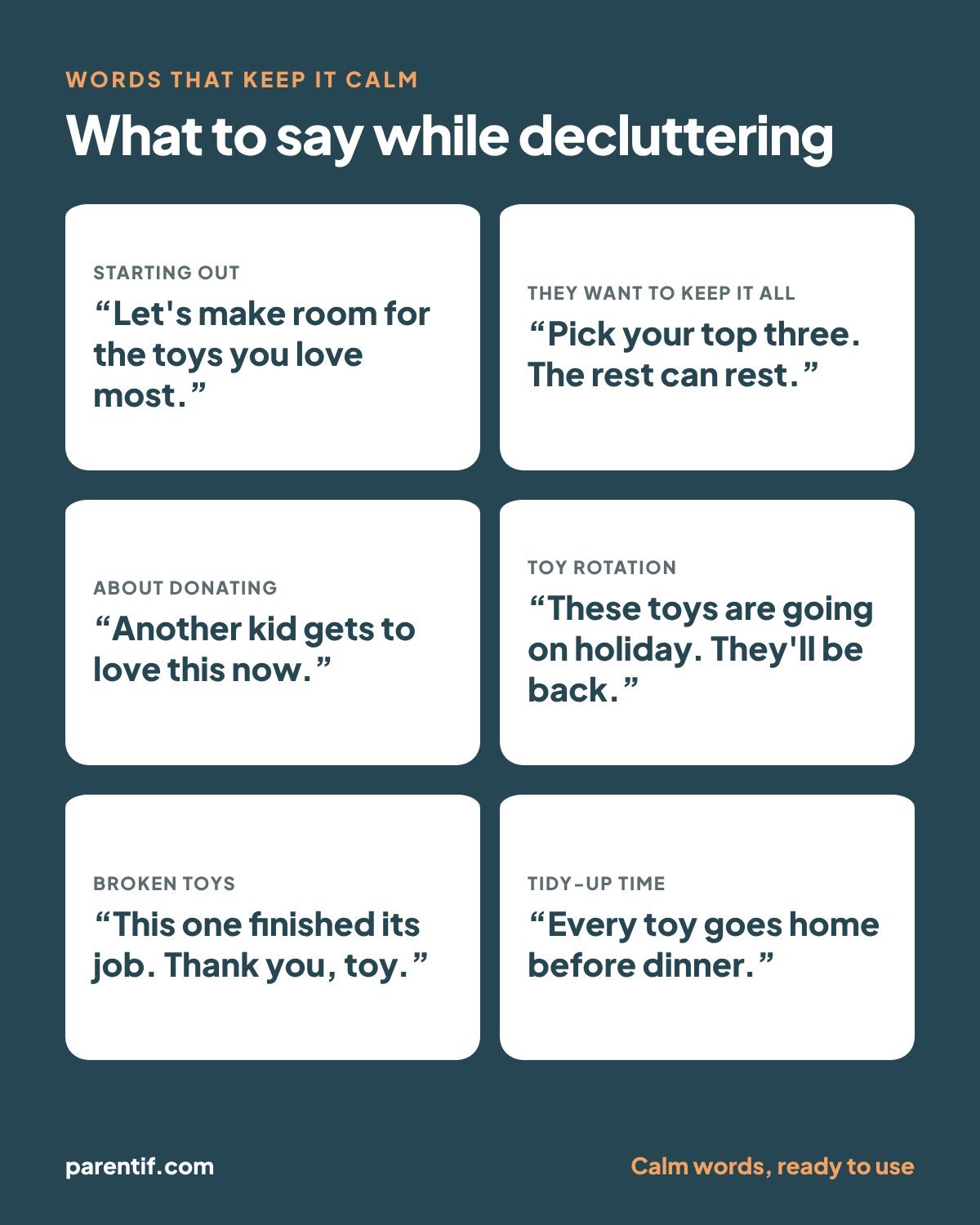
For toddlers, do most of the sorting yourself, then let them pick favorites from small groups. For preschoolers and older kids, invite them in with a clear, kind goal: “Let’s make room for the toys you love most.” Then offer limited choices, such as “pick your top three cars,” rather than “what do you want to get rid of?”
They want to keep everything
Say: “Pick your top three. The rest can rest in the rotation box.”
Skip: “You never play with these, they’re all going.”
About donating
Say: “Another kid gets to love this now.”
Skip: “You’re too old for this, it’s babyish.”
Broken toys
Say: “This one finished its job. Thank you, toy.”
Skip: “Ugh, you broke it again.”
❗ Important
Avoid secret purges of a child’s favorite things. If a child discovers a beloved toy gone without warning, it can hurt trust. Rotation is a gentler way to remove items you’re unsure about.
Toy Rotation: How to Declutter Toys and Keep Them Decluttered
Toy rotation means keeping only part of your toys out and storing the rest. Every few weeks, you swap some back in.
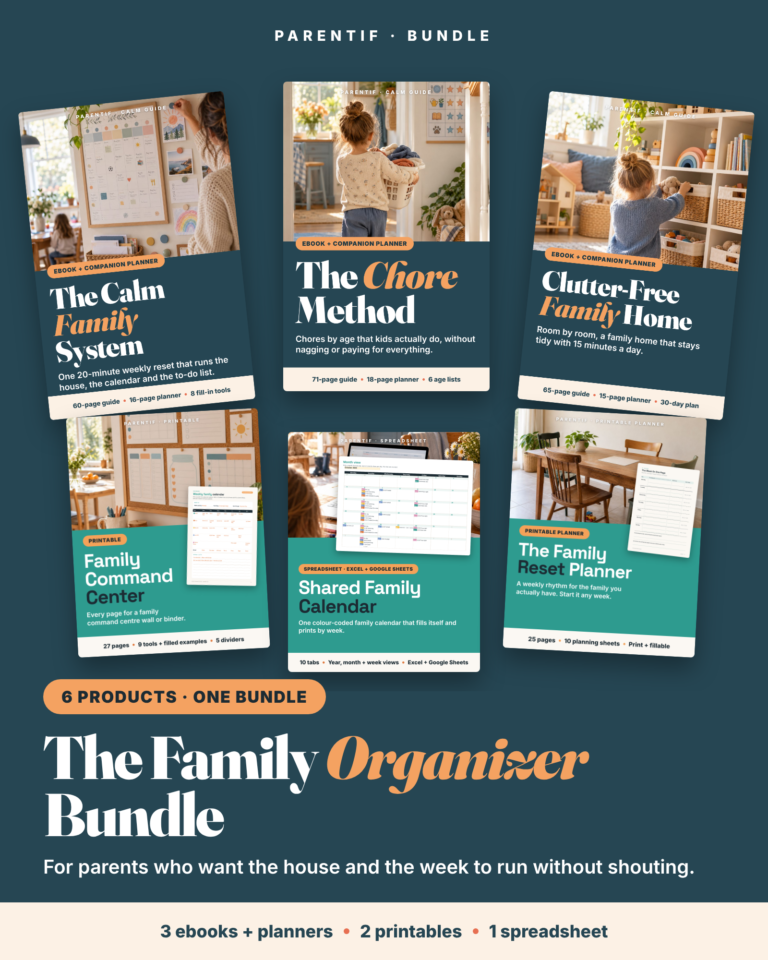
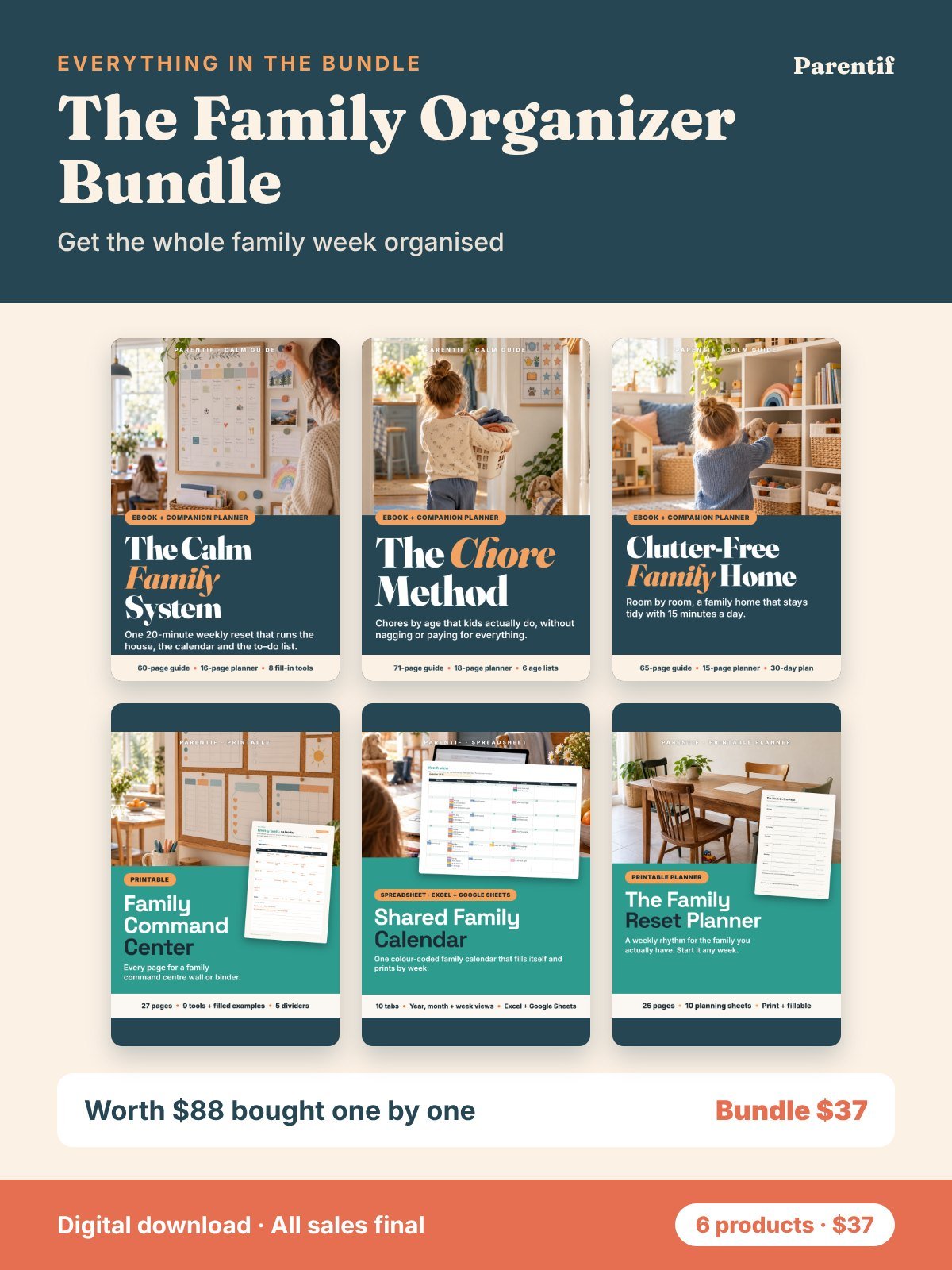
The Family Organizer Bundle
The house and the week running without shouting, in one bundle.
- Split the rotate box into two or three smaller boxes, each with a mix of toy types.
- Store them out of sight, such as in a closet, under a bed or high on a shelf.
- Every two to four weeks, swap one box out and another in.
- Watch what gets played with. If a toy is ignored across two rotations, it can go.
Kids often greet “returning” toys like new ones. Meanwhile, the room stays calm because there’s less out at any time. That’s why rotation is one of the easiest ways to keep a home tidy for good.
Fewer toys out. More play happening. Less tidying for you.
Give Every Toy a Home Kids Can Manage
After all, a toy without a home ends up on the floor. So make homes simple enough for a small child to use alone.
- Open bins beat lidded boxes for little hands.
- Picture labels let non-readers tidy up by themselves.
- Low shelves for everyday toys, high shelves for messy or adult-help items.
- One group per bin. Mixed bins quickly become junk bins.
- A “tidy before dinner” routine. Five minutes, every day, same time.
A picture routine helps children follow the tidy-up step. Our toddler routine chart guide and visual schedule for toddlers show how to add it to the day.
Before Birthdays and Holidays: Make Room First
Meanwhile, gift seasons bring a wave of new toys. So a quick declutter beforehand makes space and keeps things calm.
Do a 30-minute sweep a week or two before the big day. Fill the donate box, refresh the rotation and clear one shelf for new things. It’s also a good time to agree with family on a calm number of gifts. Our guide on how many gifts a child should get has a simple rule and kind words for relatives.
How to Declutter Toys by Donating Them Safely
Passing toys on feels good, especially when children help choose them, because they see where the toys go. Still, make sure what you donate is safe and complete.
Check toys for broken parts, sharp edges and missing pieces. Older toys may have been recalled, so it’s worth a quick look at the CPSC recalls list for anything you’re unsure about. Wash soft toys, wipe hard ones and put sets together in bags. Then let your child hand over the bag if they want to.
Common Mistakes When You Declutter Toys
Of course, these mistakes are common and completely human. Knowing them helps you avoid a second clean-up next month.
- Doing it all in one giant pile. Work in zones instead.
- Keeping toys “because they were expensive.” The money’s already spent; space and calm still matter.
- Buying storage first. Declutter first, then buy only the bins you need.
- Forgetting about rotation. Without it, the clutter slowly creeps back.
- No daily tidy habit. A five-minute routine keeps the result for good.
If you want a full plan for the whole home, Clutter-Free Family Home walks you room by room with a companion planner. The Family Reset Planner helps you plan a weekly reset, and The Family Organizer Bundle brings the whole system together. Not sure where to start? Try the free family week check.
When Clutter Points to Something Bigger
In most homes, toy mess is just toy mess. Sometimes, though, it’s worth looking a little deeper.
🩺 When to talk to your pediatrician
- Your child gets extremely upset by any change to their things, very often and for a long time.
- Your child has trouble playing with any toy for more than a moment, at an age when that seems unusual.
- You feel overwhelmed by home and family tasks most days; talking to someone you trust can help.
- You’re worried about your child’s development or wellbeing for any reason; your pediatrician is a good first call.
Trust your gut: if something feels off, a quick call is always fine.
FAQ: How to Declutter Toys
How many toys should a child have out at once?
There’s no magic number, but many families keep somewhere between 8 and 15 toys or groups out at a time, and store the rest for rotation. Younger children often do best with fewer. Watch your child: if they play deeply and tidy up easily, the number is about right. If the floor is always covered, try fewer.
How do I declutter toys without my child getting upset?
Keep it short, kind and full of small choices. Explain the goal (“make room for your favorites”), let your child pick top items from small groups, and use a rotation box for anything they’re unsure about. Avoid removing beloved toys in secret. Celebrate the clear space together when you’re done.
What toys should I get rid of first?
Start with the easy ones: broken toys, toys with missing pieces, duplicates and toys your child has clearly outgrown. Then look at noisy or single-use toys that rarely get played with. Open-ended toys like blocks, figures, play food and art supplies usually earn their place for longer.
How often should I declutter my kids’ toys?
A quick 15-minute sweep once a month keeps things under control. Then do a bigger declutter before birthdays and holidays, when new toys arrive. A daily five-minute tidy and a toy rotation every two to four weeks will make each declutter much faster.
Does toy rotation really work?
For many families, yes. When toys are stored and swapped back in after a few weeks, children often play with them like they’re new. Rotation also keeps fewer toys out at once, which can mean less mess and longer play. It’s simple to start: just one storage box and a reminder on your phone.
Where can I donate used toys?
Friends and family with younger children, local charity shops, community groups, schools, nurseries and shelters often accept clean, complete toys. Check each place’s rules first, since some can’t take soft toys or certain items. Before donating, check for broken parts and any recalls on older toys.
Now you know how to declutter toys in one calm afternoon: four boxes, one zone at a time, a rotation box for the maybes and a simple home for everything you keep. Less stuff on the floor means more space to play, and a lot less tidying for you.
Calm help for the hard parts of family life
Seven bundles of guides, planners and printables. Six products each, $37 per bundle.
 No-Fight Days Bundle
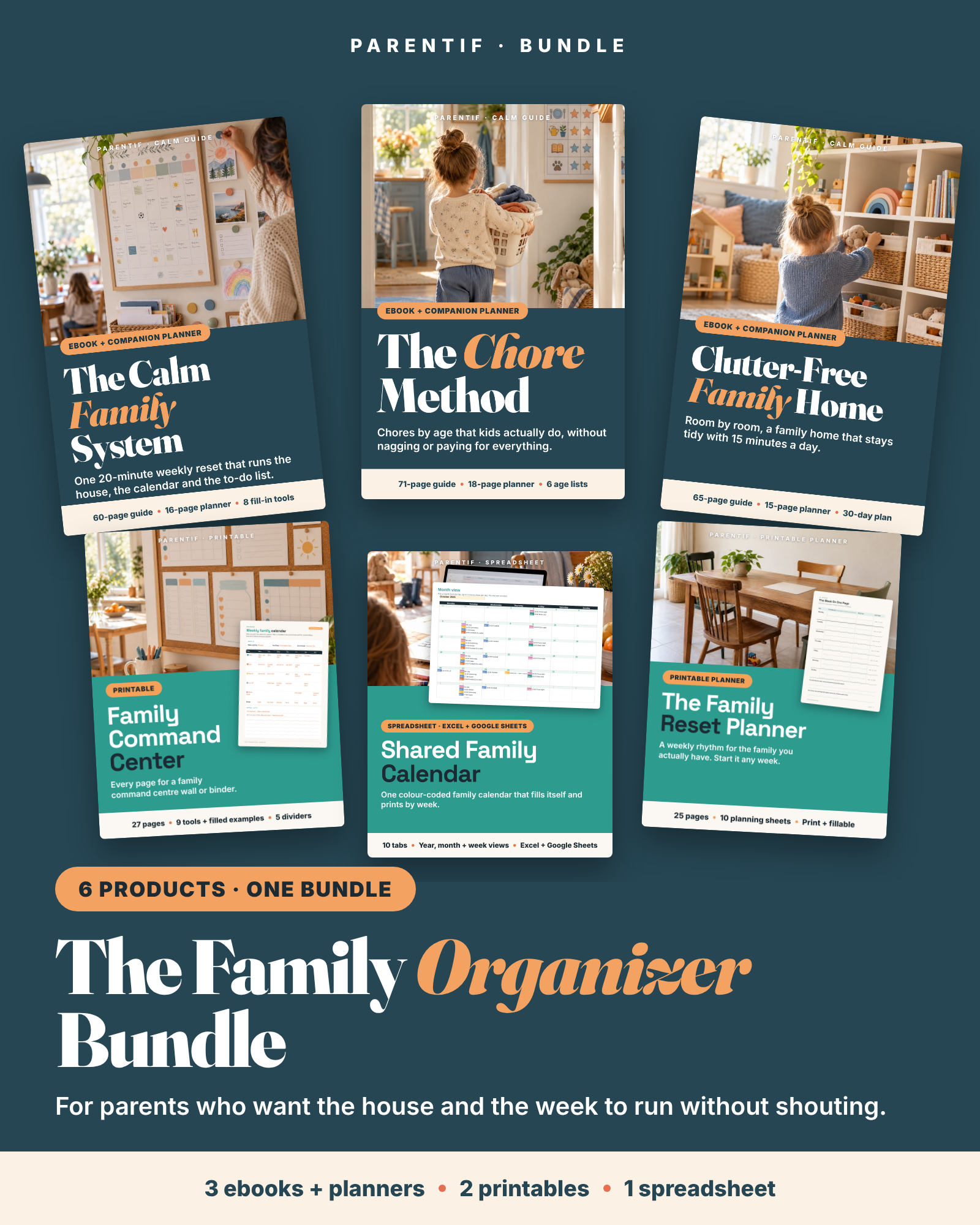 Family Organizer Bundle
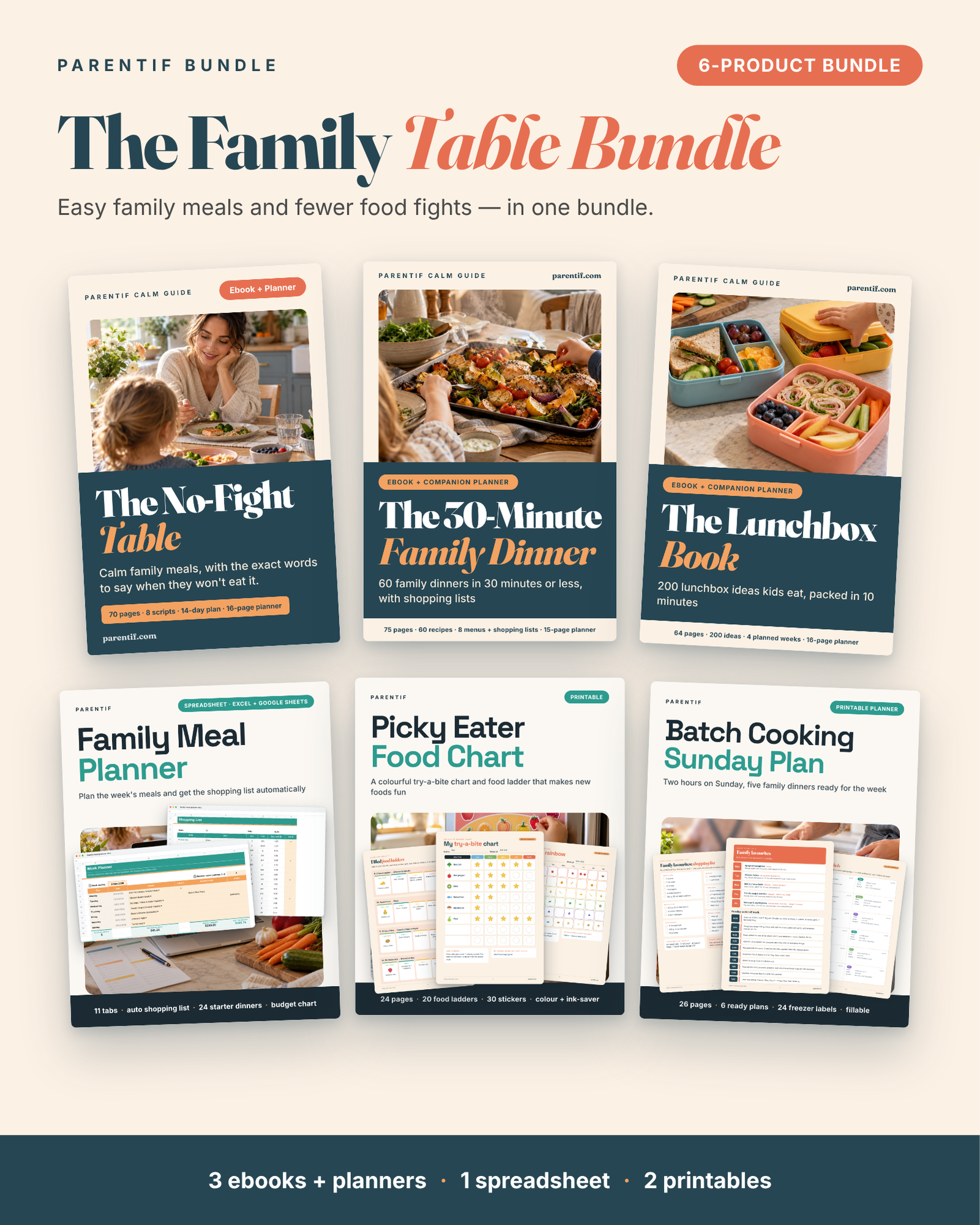 Family Table Bundle
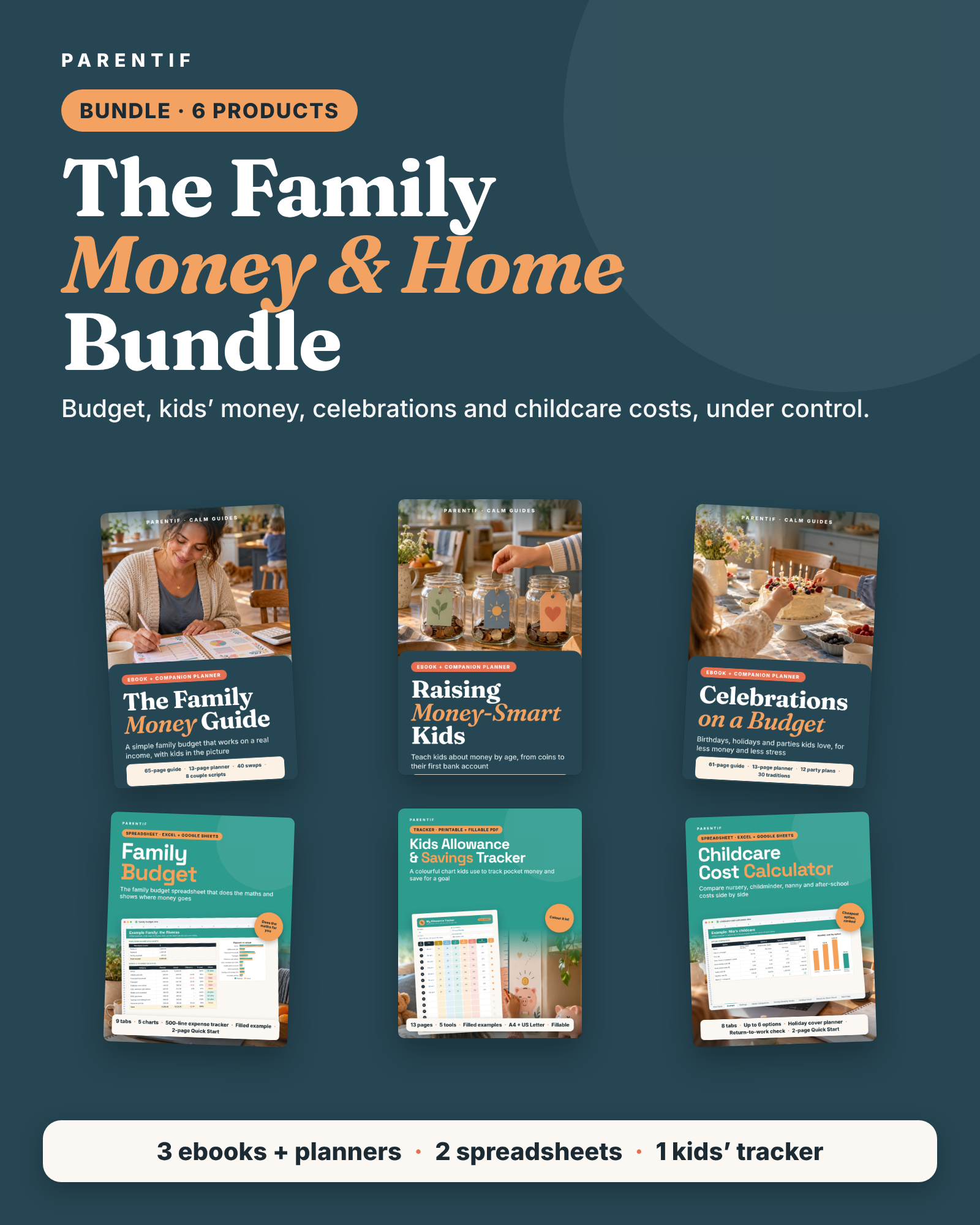 Family Money & Home Bundle
 Family Adventures Bundle
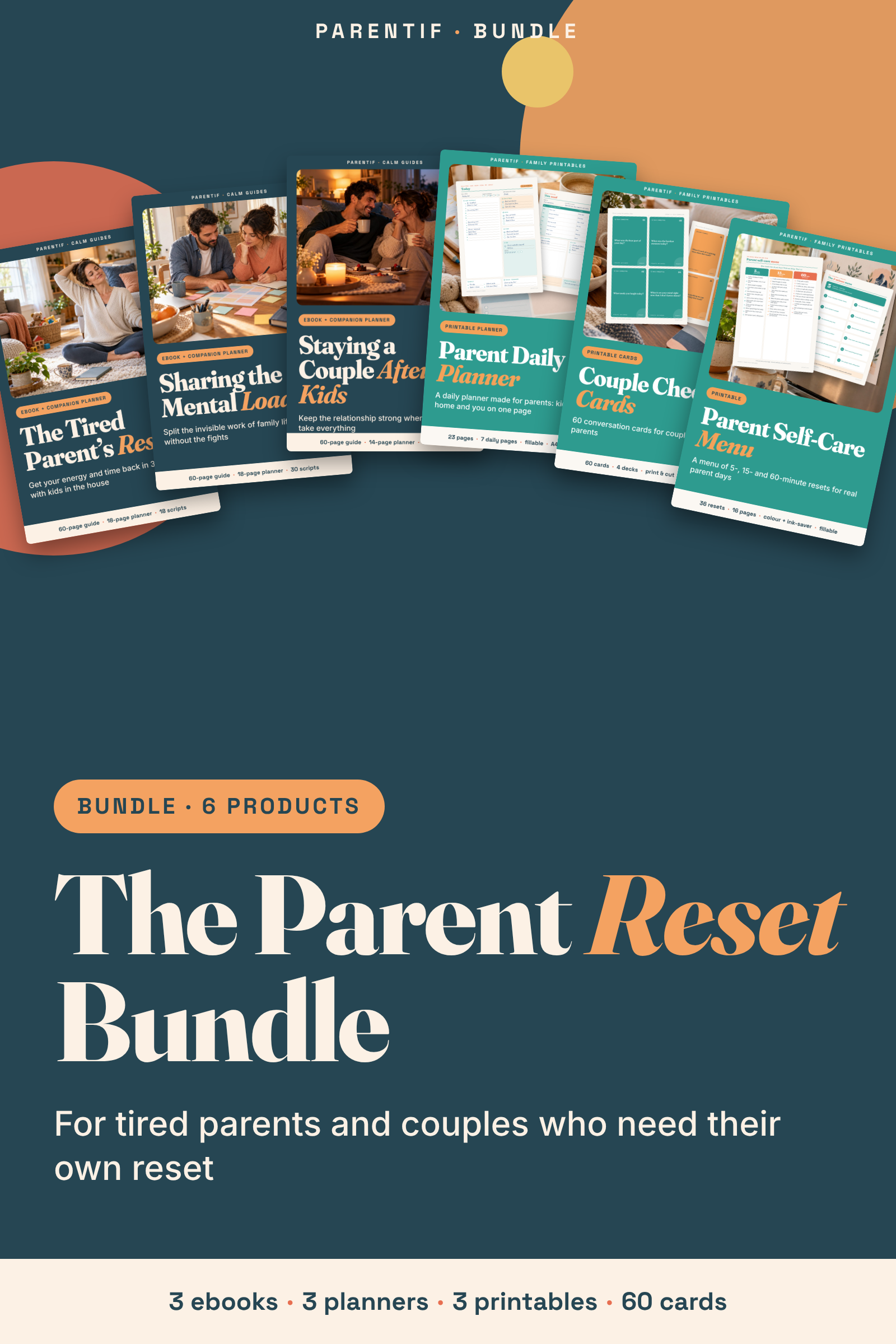 Parent Reset Bundle
 Bump-to-Birth Bundle