General information, not medical advice. Talk to your pediatrician, midwife or doctor about your child.
If your baby is up again, and you are reading this on your phone in the dark, you are not doing anything wrong. Baby sleep is messy for almost everyone in the first two years. Most babies wake at night, most naps are short at some point, and most bedtimes fall apart now and then.
This guide gives you a gentle baby sleep plan for ages 0–2 that you can start tonight. There are no programmes to follow and no long nights of crying to get through. You get safe sleep basics, a calm bedtime routine, simple ways to help your baby settle, and a two-week plan that fits real family life.

The Fourth Trimester
The first 12 weeks at home with a newborn, day by day.
Instant download · Digital download · All sales final
What baby sleep really looks like from 0 to 2
Babies are not built to sleep through the night from the start. Tiny tummies, fast brain development and a strong need for closeness all mean night waking is normal. The pattern changes as your baby grows:
| Age | What is common | What helps most |
|---|---|---|
| 0–3 months | Sleep in short stretches day and night. Day and night are mixed up. | Feed, cuddle, keep nights dark and dull, keep days bright. |
| 3–6 months | Longer night stretches start to appear. Naps are often short. | A simple bedtime routine and a calm, predictable day rhythm. |
| 6–12 months | More awareness of you leaving the room. New skills like rolling and sitting can disturb nights. | Lots of practice time in the day, the same settling words at night. |
| 12–24 months | Usually one or two naps. Testing bedtime is common. | Clear, kind limits and a routine your toddler can predict. |
Every baby is different. If your baby’s sleep worries you, or something feels off, talk to your pediatrician.
Safe sleep comes first
Before any routine or settling idea, check the basics of safe sleep with your pediatrician. The general guidance most families hear is:
- Place your baby on their back for every sleep, naps included.
- Use a firm, flat sleep surface made for babies, like a crib or bassinet.
- Keep the sleep space clear: no pillows, bumpers, loose blankets or soft toys.
- Share a room, not a bed, for the early months if you can.
- Keep the room at a comfortable temperature and dress your baby in light layers or a sleep sack.
Your doctor can explain what applies to your baby. The American Academy of Pediatrics shares parent information on HealthyChildren.org.
Build a calm sleep foundation
1. Light by day, dark by night
Open the curtains in the morning and get outside when you can. In the evening, dim the lights an hour before bed. Night feeds happen in low light with quiet voices, so your baby learns that night is for sleeping.
2. A room that says sleep
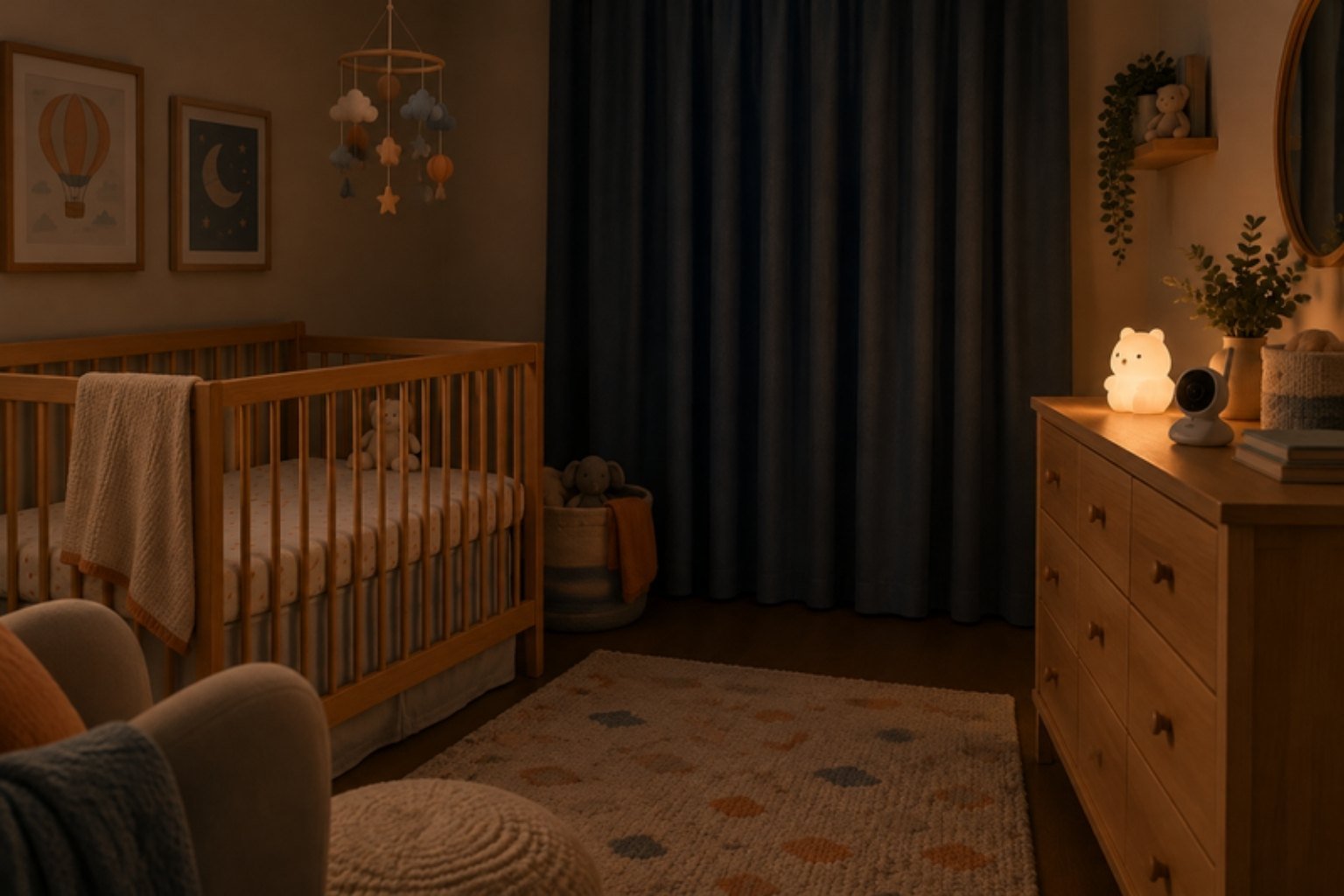
A dark room, a steady background sound, and a comfortable temperature remove a lot of small wake-ups. Keep it the same every night, including for naps where you can.
3. Watch for sleepy signs
Yawning, staring into space, rubbing eyes, pulling ears or turning away from play are your cues. Starting the routine at the first signs is easier than starting when your baby is already overtired and fussy.
The First Year
Newborn sleep, feeding, milestones, the fourth trimester and you: 5 calm guides plus 20 printables.

A gentle bedtime routine in 5 steps
The routine itself is not magic. Doing the same short steps in the same order, every night, is what tells your baby that sleep is coming. Aim for 20 to 30 minutes.
- Bath or wash. A quick warm wash of hands and face is enough on busy nights.
- Pajamas and diaper in the room where your baby sleeps, with the lights low.
- Feed if it’s part of your evening, then a gentle burp.
- A short book or a song. The same song every night works well.
- The same goodnight words as you lay your baby down, drowsy if possible.
- “Night night. Mom is right here.”
- “It’s sleepy time now. I love you. See you in the morning.”
- “Shh, shh. Time to rest.”
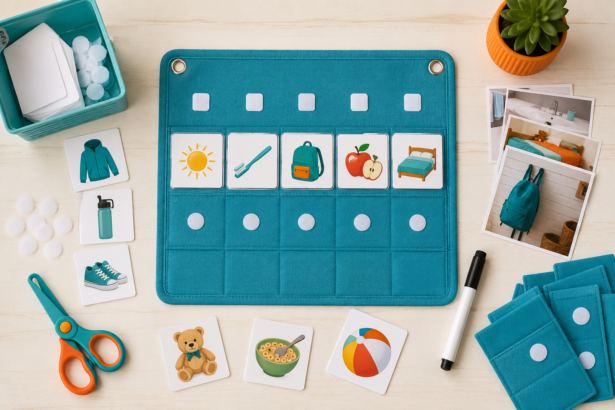
Want ready-made routine pictures and a stay-in-bed pass for later, when your baby becomes a toddler? See The Bedtime Routine Pack.
Helping your baby settle, calmly
You do not have to choose between holding your baby all night and walking away. Most families do best with a calm middle path: stay close, stay quiet, and do a little less help over time when your baby is ready.

Stay close and keep it boring
Lay your baby down, keep a hand on their tummy or chest, and use your goodnight words in a low, slow voice. If your baby fusses, wait a moment before you step in. Many babies grumble briefly and then settle.
Do a little less, slowly
If your baby always falls asleep feeding or rocking, you can gently shift that over a week or two: feed earlier in the routine, rock until drowsy instead of fully asleep, then lay them down and stay close. Change one thing at a time and keep the rest the same.
Respond when your baby needs you
Crying is how babies talk. Respond, comfort and help your baby calm down. Then go back to the same quiet routine. Consistency, not distance, is what makes the biggest difference.
Night wakings without the stress
- Keep the lights low and your voice quiet.
- Check the basics: hunger, diaper, temperature, comfort.
- Feed if your baby needs it. Ask your doctor how night feeds should change as your baby grows.
- Use the same goodnight words every time, then lay your baby back down.
- Share the nights with another adult when you can. Rest is part of the plan.
Naps that actually happen
Naps help night sleep. A baby who gets enough daytime rest often falls asleep more easily at bedtime. Use a mini version of your bedtime routine before naps: dim the room, a short song, the same words. On busy days, a nap in the stroller or car is better than no nap.

When sleep goes off track
Teething, colds, travel, a new sibling, starting childcare or learning a new skill can all upset sleep for a while. It is normal. Comfort your baby, keep the routine as close to normal as you can, and return to your usual steps once things settle.
Your two-week calm sleep plan
| Days | Focus | What to do |
|---|---|---|
| 1–3 | Safe space and light | Check the sleep space, dark room, bright mornings, dim evenings. |
| 4–7 | Routine | Start the 5-step routine at the same time every night. Same song, same words. |
| 8–10 | Settling | Lay your baby down drowsy where you can. Stay close, hand on tummy, quiet voice. |
| 11–14 | Consistency | Keep everything the same. Note what helps. Change only one thing at a time. |
Not sure which stage your family is in, or what to work on first? Take the free parenting stages check or the bedtime battles quiz.
Questions parents ask
When will my baby sleep through the night?
There is no single age. Many babies still wake at night well into the first year and beyond, and that can be normal. Your pediatrician can tell you what to expect for your baby.
Is it okay to feed my baby to sleep?
Yes, many families do. If you would like your baby to fall asleep in other ways too, slowly move the feed a little earlier in the routine and keep the other steps the same.
Should I wake my baby from naps?
Ask your pediatrician, especially in the newborn weeks. For older babies, a very long late-afternoon nap can make bedtime harder, so some parents gently shorten it.
What if my partner and I do bedtime differently?
Agree on the same routine steps and the same goodnight words. Babies settle faster when bedtime feels the same with every adult.
The calm next step
If you are in the first year, The First Year bundle gives you calm, practical guides for sleep, feeding and your own recovery. For the early weeks at home, see The Fourth Trimester. And when your baby becomes a toddler, The No-Fight Bedtime walks you through a calm toddler bedtime step by step.
Warm on the feeling, firm on the routine, boring on the drama. That’s the whole secret.
Calm help for the hard parts of family life
Seven bundles of guides, planners and printables. Six products each, $37 per bundle.
 No-Fight Days Bundle
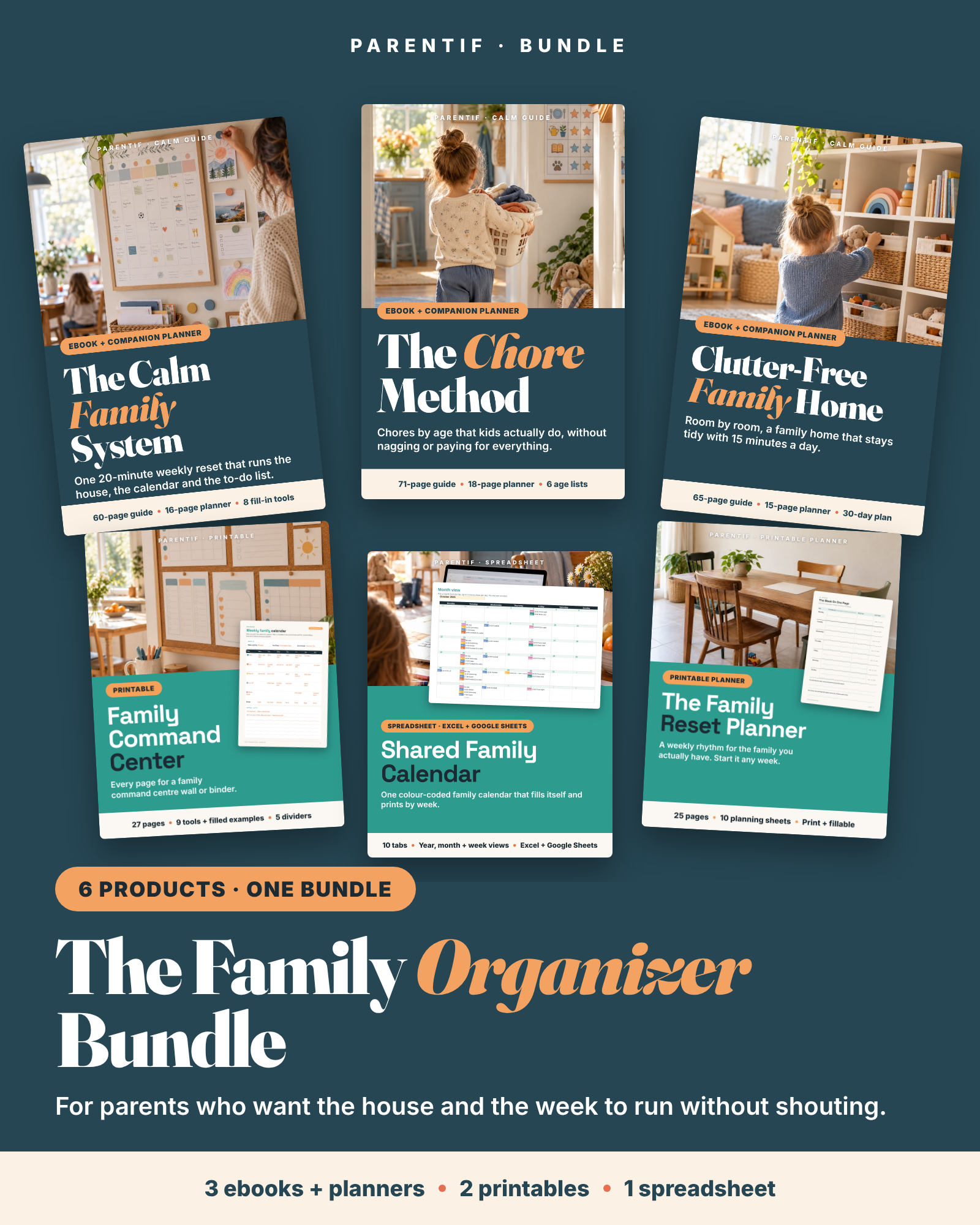 Family Organizer Bundle
 Family Table Bundle
 Family Money & Home Bundle
 Family Adventures Bundle
 Parent Reset Bundle
 Bump-to-Birth Bundle