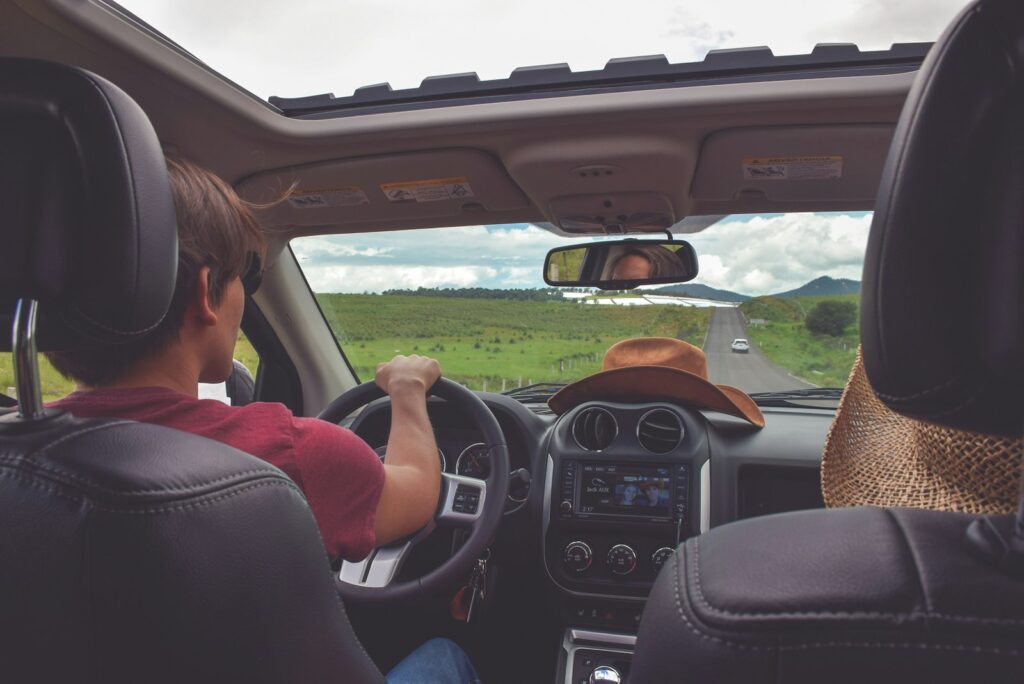
Car games for toddlers are the cheapest travel kit you’ll ever pack: no batteries, no small pieces under the seat, and they work the moment the tablet dies. The trick is choosing games a two- or three-year-old can actually play from a car seat, and saving the right ones for the right part of the drive. Below are 35 no-prep games sorted by type and age, a simple game rotation for long drives, and the words that get a whining toddler back on board.
Quick answer
The best car games for toddlers need no props and run on your voice: spotting games for the first hour, songs with actions when energy rises, and quiet guessing games near the end. Switch games as soon as interest drops, keep each one short, and save a few new ones for the hardest stretch of the drive.
Key facts
- Ages 2–3: spotting colours, trucks and animals, animal sounds, action songs
- Ages 3–5: guessing games, simple I spy, silly story games
- Long drives: rotate game types instead of repeating one
- Safety: the driver only joins talking and singing games
- Pick games with one simple rule for under-threes and add turns and counting from about age three.
- Rotate game types every 10 to 15 minutes: spotting, singing, guessing, then quiet.
- The adult leads every game; the toddler only has to answer.
- Keep a “last 20 minutes” quiet game ready for the end of the drive.
- The driver only plays games that don’t need eyes off the road.
Why car games for toddlers work better than another toy
Ninety minutes into the drive, the toys are all on the floor, the snack cup is empty, and a small voice from the back says “out” every thirty seconds. Another toy won’t help: you can’t reach it, and they’ll throw it in two minutes.
A game is different. It gives your toddler your attention, which is the thing they’re actually missing. It also gives them something to look at outside the window, which helps many children feel better on the road. And it costs nothing to switch to the next one.
The games below are grouped so you can mix them. If you’re planning a whole trip, our road trip with a toddler guide covers stops, timings and naps.
Spotting games (best for the first hour)
Spotting games use the window, so they work best while your toddler is fresh and the view is changing.
| Game | Age | How to play |
|---|---|---|
| Find the colour | 18m+ | “Can you find something red?” Point and celebrate every find. |
| Spot the animal | 18m+ | Cows, dogs, birds, horses. Call out “moo!” together for every cow. |
| Big truck, little car | 2+ | Shout “big!” for trucks and “little!” for small cars. |
| Count the buses | 3+ | Count every bus you pass. Keep a running total all trip. |
| Shape hunt | 3+ | Circles (wheels, signs), triangles (roofs), squares (windows). |
| Traffic light game | 2+ | Say “stop” on red, “go” on green at every light. |
| Find the letter | 4+ | Find the first letter of their name on signs. |
| Bridge, tunnel, hill | 3+ | Clap for a bridge, whisper in tunnels, “wheee!” over hills. |
Song and action games (best when energy rises)
When your toddler starts kicking the seat, they need to move. Song games let them move safely while buckled in.
| Game | Age | How to play |
|---|---|---|
| Song with actions | 18m+ | “Wheels on the bus”, “If you’re happy and you know it”: clap, stamp, wave. |
| Wrong word rhyme | 2+ | Sing a nursery rhyme with one wrong word and let them shout the right one. |
| Animal sounds song | 18m+ | “Old MacDonald” where they choose the next animal. |
| Loud and quiet | 2+ | Sing one line very loud, the next one in a whisper. |
| Freeze song | 2+ | Wiggle in the seat while you sing; freeze when you stop. |
| Name song | 18m+ | Sing a simple tune with everyone’s name in the car, then the dog’s, then Grandma’s. |
| Fast and slow | 3+ | The same song very slowly, then very fast. |
| Finish my line | 3+ | You sing the first half of a line, they sing the end. |
Guessing and thinking games for 3 to 5 year olds
From about three, toddlers love being clever. Guessing games give them that feeling and keep them looking and listening.
| Game | Age | How to play |
|---|---|---|
| What animal am I? | 3+ | “I have four legs and say woof.” They guess, then it’s their turn. |
| I spy (colour version) | 3+ | “I spy something blue.” Colours, not letters, until they know sounds. |
| What’s in my lunchbox? | 3+ | Name foods; they say “yes” or “yuck” for each. |
| Odd one out | 4+ | “Banana, apple, car. Which one isn’t a fruit?” |
| Who lives here? | 3+ | Name a place (farm, sea, jungle); they name an animal that lives there. |
| Guess the sound | 3+ | Make a sound (a sneeze, a doorbell, a cat); they guess it. |
| Twenty questions lite | 5+ | Think of an animal; they ask yes/no questions. Give hints. |
| Rhyme time | 4+ | “What rhymes with cat?” Silly words count. |
Story and silly games (best for the middle of the drive)
The middle of a long drive is usually the hardest part. Story games add a bit of fun and make the time go faster for everyone in the car.
| Game | Age | How to play |
|---|---|---|
| Story with their name | 2+ | Tell a short story where your toddler is the hero. Pause for them to add one word. |
| What happens next? | 3+ | Start a story (“A bear found a red balloon…”); they choose what happens. |
| Silly sentences | 3+ | “The cow drove the car to the moon!” They say “no!” and fix it. |
| Where are we going? | 2+ | Describe the destination: who’s there, what you’ll eat, where they’ll sleep. |
| Pretend phone call | 2+ | “Ring ring, it’s Grandma!” Pass the pretend phone back and forth. |
| Character voices | 3+ | Read the signs you pass in a robot, a mouse or a lion voice. |
Quiet games for the last 20 minutes
The end of the drive is when everyone is tired. Quiet games lower the volume and help your toddler arrive calm instead of wired.
| Game | Age | How to play |
|---|---|---|
| Whisper game | 2+ | Everyone whispers until the next bridge or big sign. |
| Count the breaths | 3+ | Slow “smell the flower, blow the candle” breaths, five times. |
| Look for the moon | 2+ | On evening drives, find the moon, a star, a plane light. |
| Sleepy animals | 2+ | Name animals and say where they sleep: “The bird sleeps in a nest.” |
| Quiet song | 18m+ | One soft song you also use at bedtime. |
A simple game rotation for a long drive
Games work best in a rhythm, not all at once. Here’s a rotation for a two- to three-hour drive. Shift it around your stops and naps.
If your toddler gets cranky in the late afternoon whether you’re driving or not, our article on the toddler witching hour explains why, and it helps to plan long drives around it.
Car games when siblings are different ages
A toddler and a seven-year-old in the back seat want very different games. The answer is to give each child a role in the same game, so nobody is bored and nobody feels babied.
| Game | Toddler’s job | Older child’s job |
|---|---|---|
| Spot the animal | Make the animal sound | Keep score of how many of each |
| I spy | Guess colours | Give the clues |
| Story game | Choose the animal hero | Tell what happens next |
| Count the buses | Shout “bus!” | Count out loud and keep the total |
| Song game | Do the actions | Choose the next verse |
Older children also love being the “game leader” for a few minutes. It gives you a break and makes them feel trusted.
Car games for short everyday drives
Not every drive is a road trip. The 15-minute run to daycare or the shops can be the hardest, because toddlers hate the car seat going on and off. Pick one tiny game for each regular route.
- The school-run song. The same song every morning, started as the car moves. It becomes the signal that the drive is normal and short.
- The landmark game. Find the same three things every trip: the red door, the big tree, the dog statue.
- “Who’s waiting for us?” Name who you’ll see when you arrive: the teacher, Grandma, the shop cat.
Regular games on regular drives turn the car seat into a routine instead of a fight. If mornings in general are a battle, the toddler weekend routine and our visual schedule for toddlers guide help the whole day run more smoothly.
A 5-minute car game kit (optional)
None of the games above need anything. But a small pouch in the door pocket adds variety for very long drives.
What to say when your toddler won’t play
Some days nothing works and the protest gets loud. Keep your voice calm, offer a choice, and don’t take it personally.
For bigger meltdowns, the steps in our toddler meltdown in public guide work in the car too.
Car games and car seat safety
Games should never cost safety. The NHTSA says it’s important to choose the right car seat and use it correctly every time your child is in the car.
Screens on the road: a calm middle ground
Screens aren’t the enemy on a long drive, but they work best as one part of the rotation, not the whole drive. Many families save one show for the hardest stretch and keep games for the rest. If ending a show tends to cause tears, our guide to how to end screen time without a meltdown has the words to use.
Common mistakes with car games for toddlers
1. Choosing games that are too hard
I spy with letters is a five-year-old game. For under-fours, use colours, animals and sounds, and let them win often.
2. Playing one game for too long
Even a favourite game runs out after 10 to 15 minutes. Switch before your toddler gets bored, not after.
3. Starting games during a nap window
If your toddler is drowsy, let them sleep. Games can wait; a missed nap makes the rest of the drive harder.
4. Saving all the fun for the first hour
Parents often start strong and run out of energy by hour two, which is exactly when the toddler needs help most. Pace the games across the drive.
5. Forgetting stops
Games help, but they don’t replace movement. Plan a stop every couple of hours for running, changing and stretching.
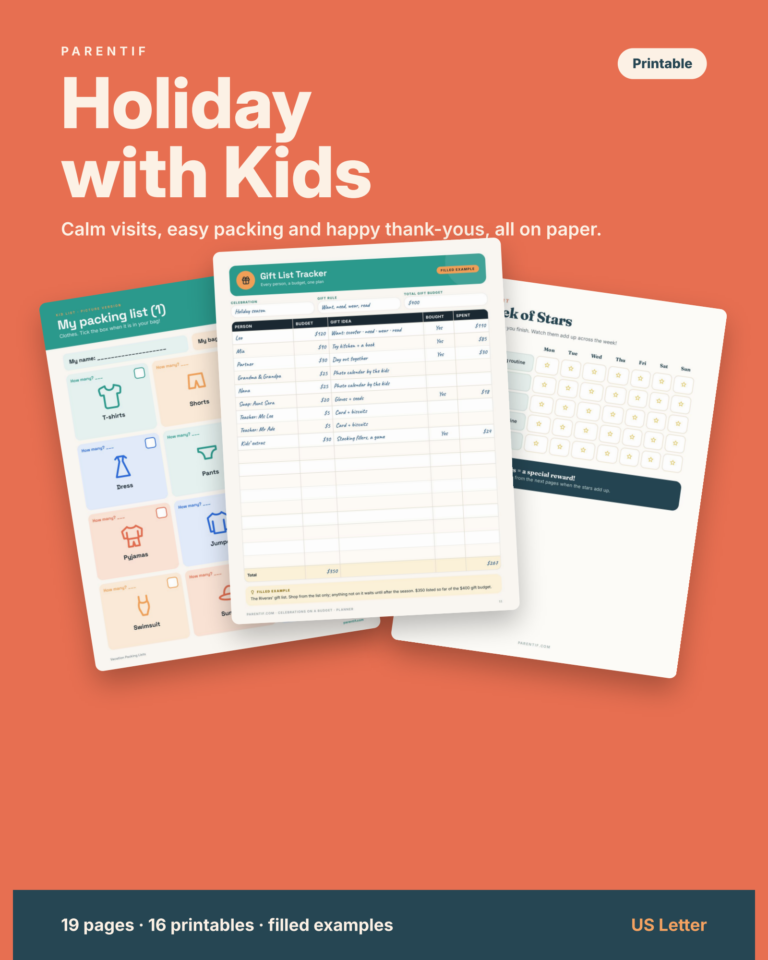
Print it for this holiday · $12
Holiday with Kids Printable Pack: a filled visit plan for Grandma, the 4-anchor holiday day, packing lists and thank-you cards (19 pages).
See the pack →Flying to see family instead? Use the 3-pocket checklist for what to pack for a toddler on a plane.
FAQ: car games for toddlers
What games can you play in the car with a toddler?
Simple games the adult leads work best: find the colour, spot the animal, songs with actions, wrong-word nursery rhymes, sound guessing and short stories with your toddler as the hero. For three to five year olds, add I spy with colours, counting buses and “what animal am I?”. Switch games every 10 to 15 minutes.
How do I entertain a 2 year old in the car without a screen?
Use games with one rule and lots of your voice: narrate what you see, sing songs with actions, play animal sounds and pretend phone calls. Mix in snacks and a nap if the timing fits, and plan a stop every couple of hours. Small surprises, like a new sticker book handed back at a stop, help too.
What are good car games for 3 year olds?
Three year olds love spotting colours and animals, guessing sounds, “what animal am I?”, wrong-word nursery rhymes and silly sentences they can correct. Keep turns short, let them win often and rotate games before they get bored. Save a quiet game, such as whispering or slow breathing, for the end of the drive.
How long can a toddler stay in a car seat?
There isn’t one fixed limit for every child, but toddlers do best with a break every couple of hours to move, eat and change. Plan stops into the drive rather than waiting for a meltdown, and never take your child out of the car seat while the car is moving.
Are car games safe for the driver?
Talking and singing games are fine for the driver as long as they need no eyes off the road and no hands off the wheel. Leave spotting games and anything involving looking at the child to the passenger. If the car is getting too loud or upset, stop somewhere safe.
How do I keep my toddler happy on a long car ride?
Start near nap time, pack familiar snacks, plan stops every couple of hours and rotate games by type: spotting, songs, guessing, stories and quiet games. Lead the games yourself and keep each one short. A calm “almost there” song in the last 20 minutes helps your toddler arrive settled.
The bottom line
The best car games for toddlers are short, simple and led by you, rotated every 10 to 15 minutes with snacks, naps and stops in between. Pick five games from this list for your next drive and write them on a sticky note for the dashboard. For the full trip plan, read our road trip with a toddler cornerstone and browse the travel and family activities collection.











Leave a Reply