A toddler meltdown in public always seems to start at the worst spot: the checkout line, the busy restaurant, the one aisle where everyone turns to look. Your heart races, your face burns, and every piece of advice you’ve ever read disappears. This guide gives you a calm 4-step plan you can run anywhere, the exact words to say, a place-by-place game plan, and a 10-minute routine that makes the next one smaller.
Key Takeaways: Your Public Meltdown Plan in 30 Seconds
Why a Toddler Meltdown in Public Feels 10 Times Worse (and What’s Really Going On)
A toddler meltdown in public is usually the same meltdown you get at home, just with more noise, more waiting and an audience. Toddlers don’t yet have the skills to handle big feelings like anger and frustration, as ZERO TO THREE explains, so when too much piles up, it spills out. Stores and restaurants pile it up fast: bright lights, crowds, things they can’t touch, and long stretches of sitting still.

The American Academy of Pediatrics says on its HealthyChildren.org tantrum guide that tantrums happen most often between ages 1 and 3 and tend to ease after 3, though they don’t vanish overnight. So if your 2-year-old falls apart by the cereal boxes, you’re not doing it wrong. You’re right on schedule.

The Public Meltdown Field Guide
What to do, and exactly what to say, when a meltdown happens in public.
Instant download · Digital download · All sales finalTantrum or meltdown? The difference changes what you do
Many parents find it useful to separate the two. A tantrum usually has a goal: the candy, the toy, staying at the park. Your child is upset, but still somewhat in control, and the storm often stops if they get what they want (which is exactly why giving in teaches them to try again). A meltdown is overload: too tired, too hungry, too much noise. Your child isn’t trying to win anything. They’ve simply run out of the ability to cope.
In real life the two blur together, and that’s fine: the 4-step plan below works for both, and the table tells you which way to lean.
The 4 triggers behind almost every toddler meltdown in public
- Hungry: blood sugar dips fast in small bodies. The pre-lunch grocery run is the classic setup.
- Tired: errands squeezed into the hour before a nap, or after daycare pickup.
- Overloaded: music, lights, crowds, a loud restaurant, a birthday party at full volume.
- Transitions: leaving the park, putting down the toy, getting back into the car seat. Changing activities is one of the hardest things a toddler does all day.
The 4-Step Plan for Any Toddler Meltdown in Public
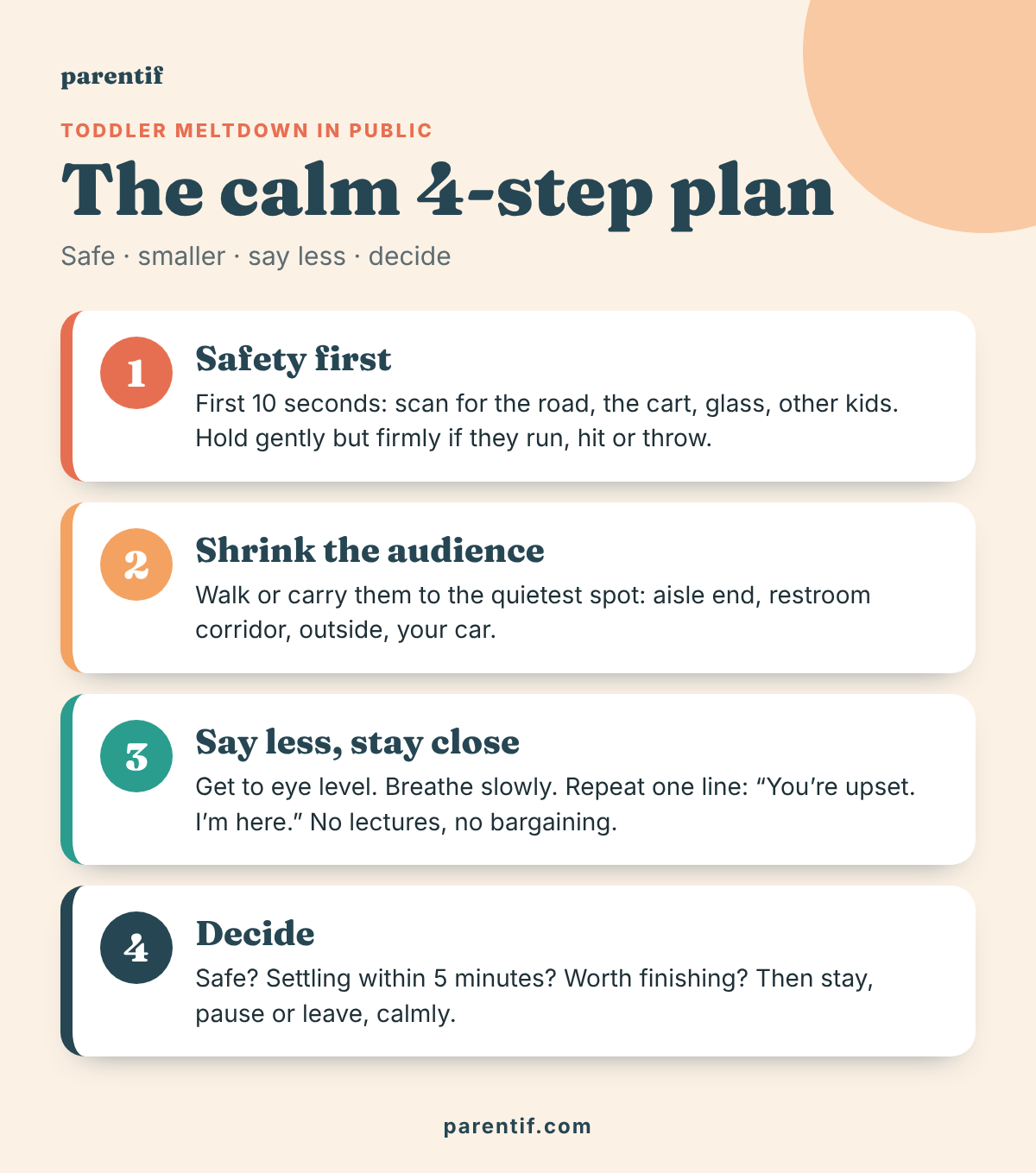
Here’s the plan in one sentence: keep them safe, shrink the audience, say less, then decide. It works in a supermarket, a café or a parking lot, and it takes the panic out because you always know the next move.
Why fewer words end it faster
Notice what isn’t on the list: explaining why they can’t have the toy, counting to three, threatening to cancel the birthday party. Those all add words, and words are exactly what a toddler in the middle of a public meltdown can’t process. Save them for later, or skip them entirely.
Exactly What to Say: 12 Calm Scripts for the Worst 5 Minutes
Scripts work because you don’t have to think when your brain is flooded too. Pick two or three you like, practise them out loud at home, and they’ll come out on autopilot when you need them.
The two-choice trick that stops round two
The AAP recommends offering small choices, like one of two options, instead of yes/no questions. “Do you want to put on your coat?” invites a “NO!” that starts round two. “Red coat or blue coat?” gives your child a little control without giving away the decision.
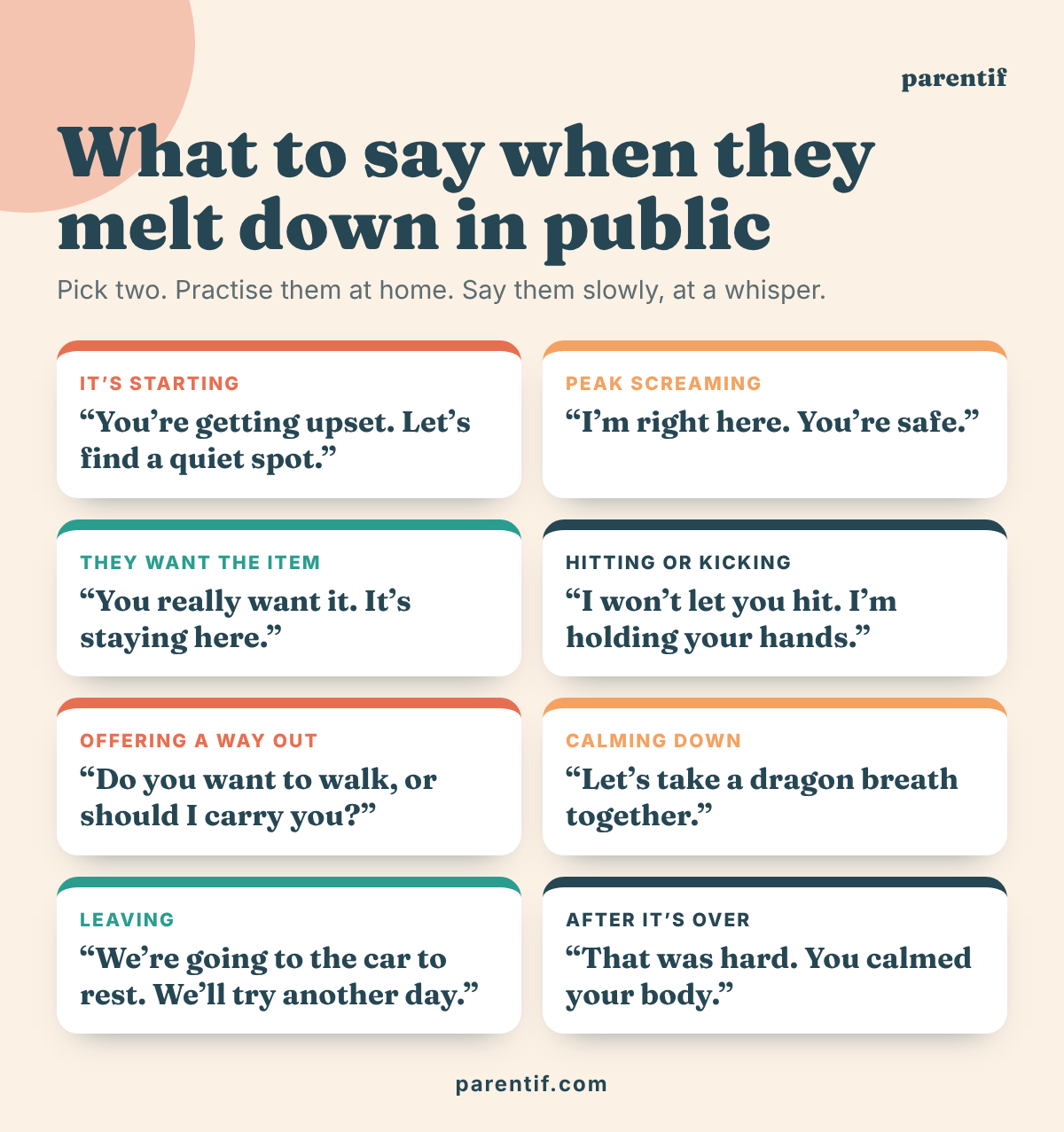
If you’d rather not invent these on the spot, The Public Meltdown Field Guide has ready-made plans and scripts for stores, restaurants, playdates and car seats, plus a companion planner to track what sets your child off.
The No-Fight Days Bundle
Bedtime battles, public meltdowns and rushed mornings, in one calm bundle.

The Store, the Restaurant, the Playground: A Plan for Each Place
Every place can set off a toddler meltdown in public for its own reason, so it helps to have one prevention move and one exit move ready before you walk in. Here’s the cheat sheet, place by place.
How to leave the park without a toddler meltdown in public
This is where most parents get stuck, because leaving something fun is a transition and a disappointment at the same time. Give a 5-minute warning, then a 1-minute warning, then a clear finish line: “Two more slides, then we go to the car.” Count the slides out loud together. When it’s time, go, even if they protest. Hesitating teaches them that protesting buys time.

Stay, Pause or Leave? The 3-Question Rule for Abandoning the Cart
Whether to leave during a toddler meltdown in public depends on three quick questions, not on how embarrassed you feel. Ask them in order once your child is safe.

Leaving isn’t giving in, by the way. Leaving because your child screamed for candy is still holding the limit: they didn’t get the candy. They lost the trip. Say it without anger: “We’re going home to rest. We’ll come back another day.”
The 10-Minute Pre-Outing Routine That Stops the Next Meltdown
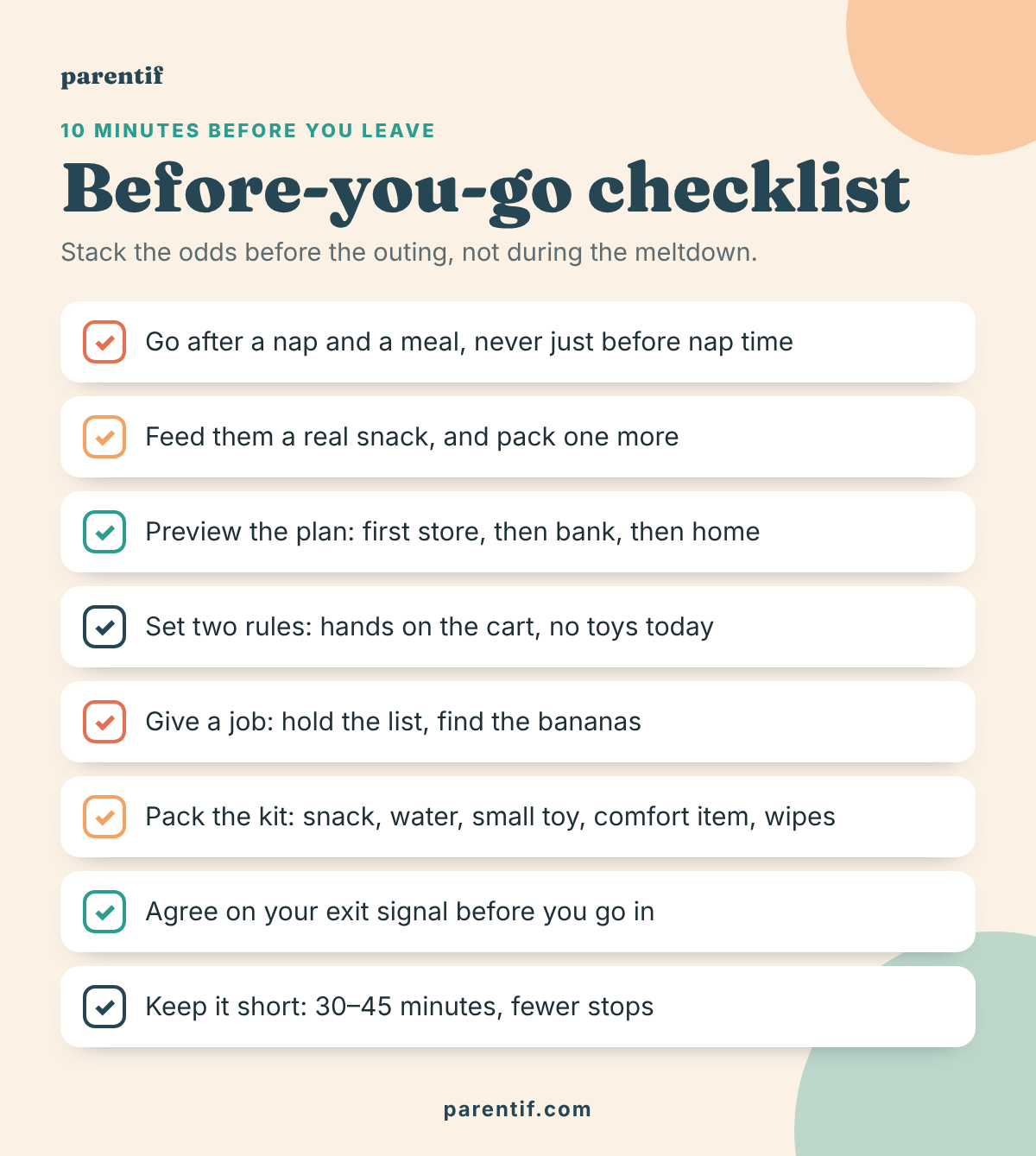
Prevention isn’t about perfect behaviour. It’s about stacking the odds, and most of the stacking happens before you leave the house. Run this routine before any outing where your toddler has had a public meltdown before.
- Time it. Go after a nap and a meal, never in the hour before nap time. Morning trips usually go best for toddlers.
- Feed them. A real snack before you leave, and one more in your bag. The AAP suggests bringing snacks when you’re out if hunger tends to set off tantrums.
- Preview it. Tell them the plan in three steps: “First the store, then the bank, then home for lunch.” Toddlers cope better when they know what’s coming.
- Set the rules. Two rules, said simply: “Hands on the cart. We’re not buying toys today.”
- Give a job. Holding the list, putting apples in the bag, choosing between two cereals. A busy toddler is a calmer toddler.
- Pack the kit. Snack, water, a small toy, a comfort item, wipes.
- Agree on an exit signal. Decide with your partner (or yourself) what makes you leave, so you don’t have to decide mid-scream.
- Keep it short. Plan the trip for 30–45 minutes, not two hours. Fewer stops, fewer chances to melt down.
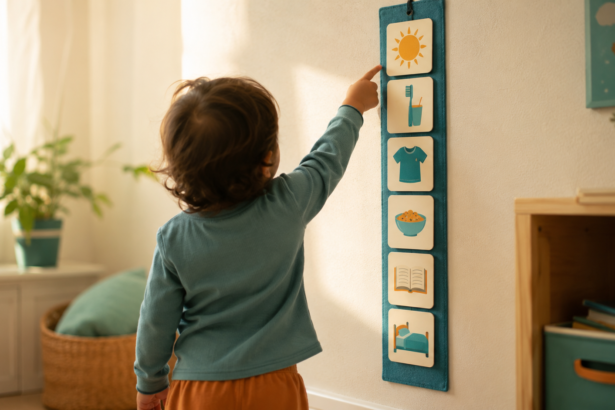
A picture routine helps here too. If your toddler likes to see what comes next, a simple visual schedule for toddlers works for outings as well as for home, with a photo or drawing for each stop.
Stares, Comments and Your Own Racing Heart: Staying Calm When Everyone Is Watching
Your calm is the most important tool you have, and it’s also the first thing to go when strangers are watching. Most of the hard part of a public meltdown isn’t your toddler. It’s the voice in your head saying everyone thinks you’re a bad parent.
Here’s the truth: most people staring have seen a toddler meltdown in public before, often their own child’s, and many of them are feeling for you, not judging you. And the ones who are judging? Their opinion doesn’t get a vote in how you parent. Your only job in that moment is your child.
A 30-second reset for you
- Breathe out longer than you breathe in. In for 4, out for 6. Do it where your child can see you; the CDC suggests letting children see you take deep breaths when you’re frustrated, because they learn by copying.
- Drop your shoulders and unclench your jaw. Your body tells your brain whether this is an emergency.
- Say your own script in your head: “This is a normal toddler moment. I know what to do.”
- Turn your back to the crowd. Face your child and the wall. Out of sight helps both of you.
What to say to strangers during your toddler’s public meltdown
You owe nobody an explanation. If someone comments, a short, friendly line ends it: “We’re okay, thanks.” When someone offers real help, like holding a door or watching your cart, accept it gladly. And a rude comment?, Don’t engage. You can’t calm your toddler and win an argument at the same time, and only one of those matters.
After the Storm: The 2-Minute Repair Talk at Home
The real learning after a toddler’s public meltdown happens later, when everyone is calm, not in the middle of the aisle. The CDC advises waiting until you and your child are both calm before talking through big feelings. Pick a quiet moment later that day, like bath time, a cuddle on the couch or the car ride home once things are settled.

That’s it. Two minutes, no lecture, no “why did you do that?” (toddlers genuinely can’t answer that question). If you lost your temper too, say so: “I yelled, and I’m sorry. I was frustrated. Next time I’ll take a big breath.” That teaches more than any rule.
For more on why these storms happen and how to shorten them at home, read our guide to what causes toddler tantrums and how to stop them.
5 Mistakes That Make a Toddler Meltdown in Public Last Longer
These are the mistakes even experienced parents make during a toddler meltdown in public, usually because they feel right in the moment.
1. Talking too much
Explaining, reasoning and asking “why are you doing this?” adds input to a brain that’s already overloaded. Instead: one short sentence, repeated, then quiet presence.
2. Asking yes/no questions
“Are you ready to go?” has only one answer during a meltdown, and it’s “NO”. Instead, give two choices you’re happy with: “Walk or carry?”
3. Bribing to make it stop
A treat to end the screaming works once and teaches it forever. Instead, hold the limit kindly and comfort the feeling, not the demand. Save rewards for planned moments: “If we finish shopping calmly, we’ll go to the park after.”
4. Changing the plan because of the audience
Being stricter or softer than usual because people are watching confuses your child. Instead, do exactly what you’d do at home. Consistency is what makes the next meltdown shorter.
5. Skipping the repair
When it’s finally over, it’s tempting to never mention it again. But the repair talk is where your child learns the calm-down skill. Instead, do the 2-minute talk later that day, warm and short.
- meltdowns are getting more frequent or more intense instead of easing as your child grows
- your child often hurts themselves or others during them
- your child holds their breath until they faint, or seems unwell during or after
- they come with sleep, eating, speech or development worries
- you feel overwhelmed or worried. That alone is a good reason to ask.
Toddler Meltdown in Public: Your Questions Answered
How do you calm a toddler having a meltdown in public?
Should you leave the store when your toddler has a meltdown in public?
Should I ignore my toddler’s tantrum in public?
What’s the difference between a tantrum and a meltdown?
At what age do toddlers stop having meltdowns in public?
How do I stop my toddler melting down every time we go shopping?
Keep Reading: More Calm Fixes for Hard Toddler Moments
- What causes toddler tantrums and how to stop them quickly
- How to end screen time without a meltdown
- Toddler witching hour: why 5 PM falls apart
- The goodbye routine for toddler crying at daycare drop-off
- Toddler won’t nap? 7 gentle fixes
- How to teach toddlers to share
- Toddler developmental milestones parents should know
- More in Toddler Behavior & Discipline
The next toddler meltdown in public will still feel hard, but it won’t feel like chaos, because you’ll have a plan: safe, smaller, say less, decide. Run the 10-minute routine before your next outing, keep one script ready, and watch how much shorter the storms get when you stay the calm one.
Calm help for the hard parts of family life
Seven bundles of guides, planners and printables. Six products each, $37 per bundle.
 No-Fight Days Bundle
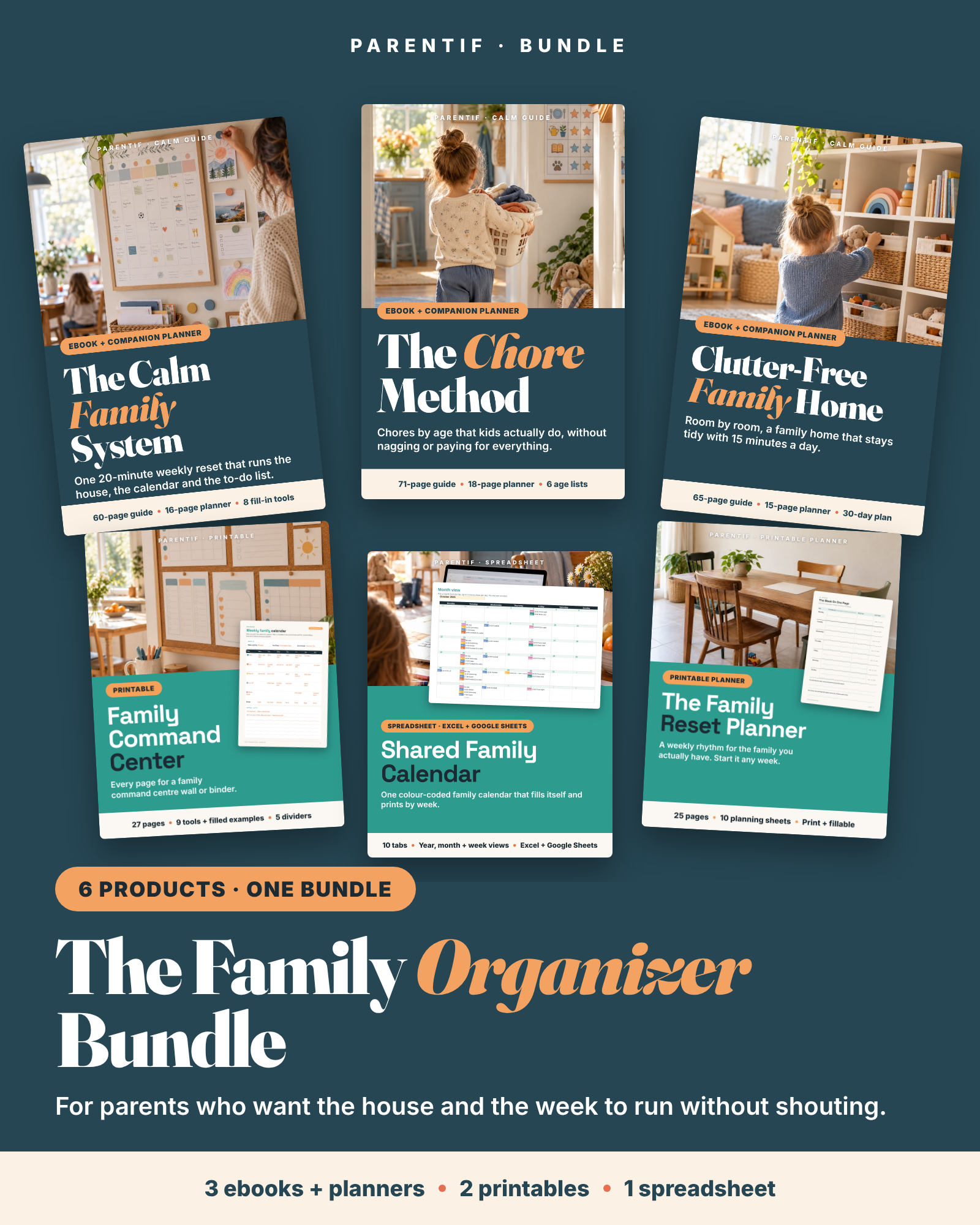 Family Organizer Bundle
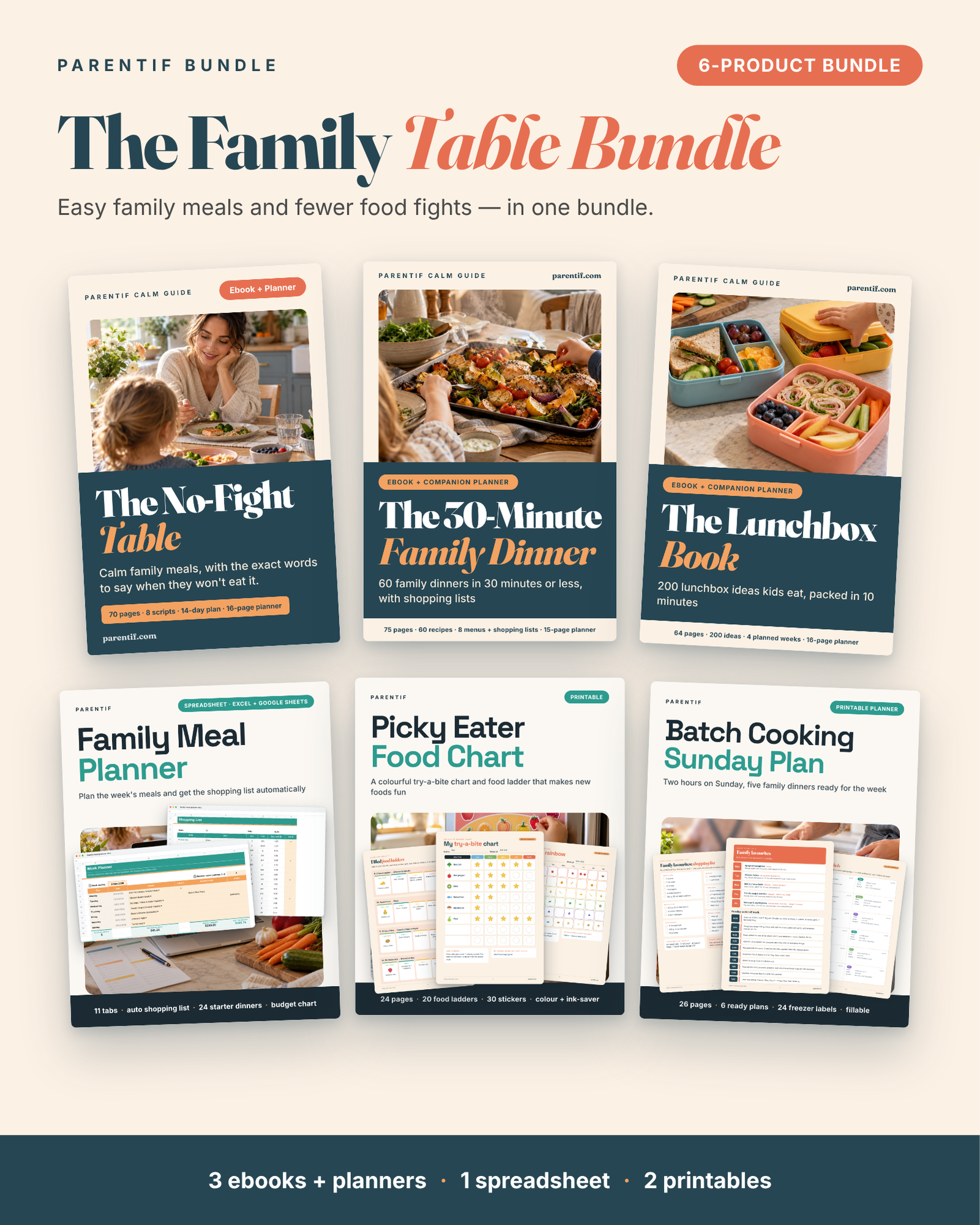 Family Table Bundle
 Family Money & Home Bundle
 Family Adventures Bundle
 Parent Reset Bundle
 Bump-to-Birth Bundle