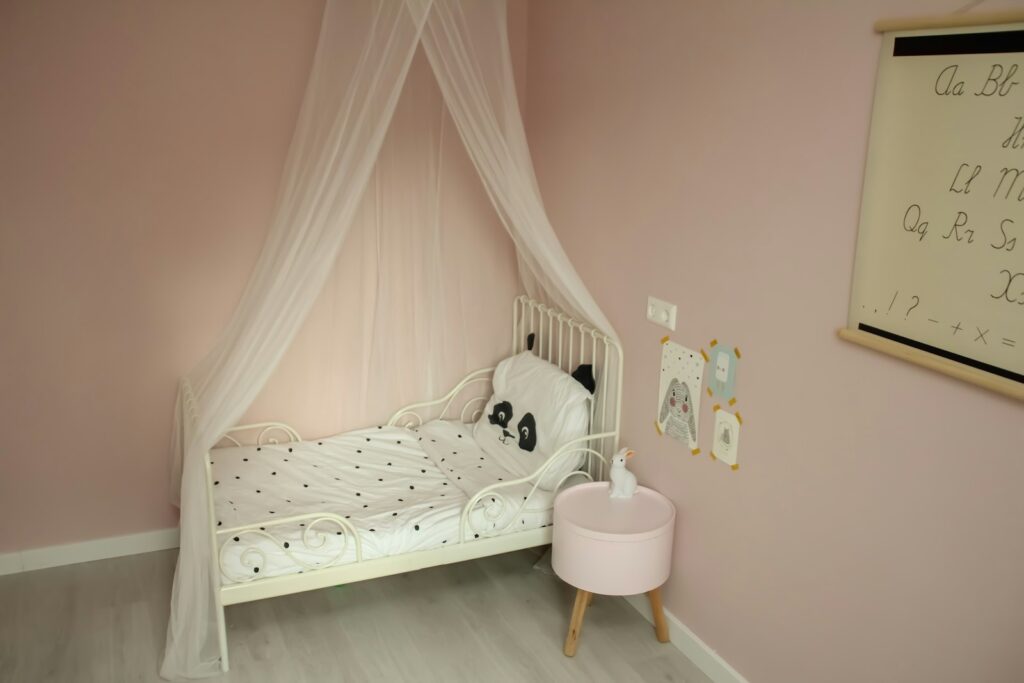
An ok to wake clock for toddlers is a simple light or picture clock that changes colour when it’s time to get up, so a child who can’t read numbers can still see “not yet” and “now”. It can make early mornings much calmer, but only if it’s taught like a new rule rather than plugged in and hoped for. Below you’ll learn when to start, how to choose the times, a seven-day teaching plan, the words to use at 5:30 AM, and what to do when it stops working.
- Start around two to two and a half, when your toddler can follow a simple “stay until green” rule.
- Set the first wake time just after their real wake-up time, so they win from day one.
- Teach the clock in daylight as a game before using it at night.
- Move the time later in small steps only after several good mornings.
- The clock helps with the “when”; it can’t fix a bedtime that’s too late or a nap that’s too long.
Quick answer
An OK to wake clock for toddlers works when the first wake light is easy to win: track three mornings, set the light 10–15 minutes after your toddler’s usual wake time, keep it there for 3 to 5 good mornings, then move it later in 10–15 minute steps. Teach the rule in daylight first and use the same words every morning.
Key facts
- Ready when: your toddler can follow a two-part rule (“stay in bed until the light is green, then come and get me”)
- First setting: 10–15 minutes after the average of three real wake times
- Moving it: 10–15 minutes later after 3 to 5 good mornings
- Realistic target: around 6:30 or 7:00 for most early-rising families
- Common mistakes: a “dream time” first setting, new words each morning, giving up after three days
What an ok to wake clock for toddlers actually does
It’s 5:20 AM and a small face is at the side of your bed asking if it’s morning. You say “not yet”, they ask again, and by 5:40 everyone is up. The problem isn’t only that your toddler woke early. It’s that they have no way of knowing whether 5:20 counts as night or morning.
An ok to wake clock solves that one problem. It uses a colour, a light or a picture (a sleeping moon, a smiling sun) to show when it’s okay to get up. That takes the decision out of your hands and puts it on the clock, which means fewer arguments at dawn. What it doesn’t do is make your child sleep longer by itself. If your toddler is waking very early because of bedtime, naps or light, those still need sorting, and our guide to a toddler waking up at 5am covers the causes in detail.
When to start an ok to wake clock for toddlers
Age is less important than understanding. Your toddler is usually ready when they can follow a simple rule with two parts (“stay in bed until the light is green, then come and get me”) and remember it for a few minutes.
| Age | Ready? | What usually works |
|---|---|---|
| Under 18 months | Usually too young | Keep the room dark and the morning boring; no clock rules yet |
| 18 months–2 years | Sometimes | Use it as a “sun is up” signal you point to, without expecting them to wait |
| 2–2½ years | Often ready | Start the 7-day plan with a very easy first wake time |
| 3 years and up | Usually ready | Add a quiet-time box for the minutes before the light changes |
| In a cot | Works too | They can’t get out, but the light still tells them morning has started |
How to set the times (the part most parents get wrong)
The most common reason an ok to wake clock fails is the first setting. Parents set it to 7:00 when their toddler wakes at 5:30, and the child is asked to wait 90 minutes on the first morning. That’s a test they can’t pass, so they learn the clock doesn’t mean much.
The 7-day plan to teach the clock
Treat the clock like a new game with clear steps. Most of the learning happens in the first week, and most of it happens in daylight.
What to say at 5:30 AM
Mornings go better when you don’t have to think. Use the same short words every time your toddler comes out early.
The quiet-time box: what to put in it
For toddlers who wake up wide awake, the wait feels long. A small box in reach gives them something calm to do until the light changes.
When an ok to wake clock for toddlers stops working
Almost every family hits a wobble: a cold, a holiday, a new sibling, a clock change. That’s normal. The fix is usually to make it easier again for a few days.
| What happens | Likely reason | What to try |
|---|---|---|
| They ignore the clock completely | First wake time was too ambitious | Set it back to just after their real wake time |
| They wake even earlier | Bedtime too late or too much nap | Look at the whole day; see the 5am guide |
| It worked, then stopped | Change in routine, illness or travel | Restart the game for two days, then go back to the plan |
| They’re scared of the clock light | The night light is too bright | Use the dimmest setting or a picture-only clock |
| They wake and cry instead of waiting | They need you, not a rule | Comfort first; the clock can wait until things settle |
If the early waking is tied to naps, our guide to a toddler nap time routine chart helps you see the day as a whole, and the toddler won’t nap guide covers nap struggles.
How to choose an ok to wake clock (what matters, what doesn’t)
You don’t need the most expensive model. A few features make the clock easier to teach; the rest is decoration.
Features you can skip: alarms that make noise (they wake the child you’re trying to keep asleep), built-in screens, and apps that turn a calm tool into a gadget. A plain plug-in lamp on a timer can do the same job on a budget: lamp off means rest, lamp on means morning.
Siblings sharing a room
When two children share a room, one clock can work for both if you set it to the later riser’s target and give the early riser a quiet-time box. Teach both children the rule together in the daylight game, and give each one their own way to win: the older child can be the “light checker” who whispers “green!” to the younger one.
Clock changes, holidays and travel
When the clocks change or you travel, the ok to wake clock is one of the easiest ways to shift your toddler’s morning. Move the wake light in 10- to 15-minute steps over several days instead of all at once. If you travel, pack the clock (or a plug-in lamp on a timer) and use the same morning words in the new room; a familiar signal helps a toddler settle in a strange place.
How the clock fits into the bedtime routine
The clock works best as the last step of bedtime and the first step of morning. Add it to your routine: after the song, “Let’s check the clock. It’s showing the moon, so it’s sleep time.” In the morning, the green light becomes the start of the day. If your routine needs work, start with our toddler bedtime routine, and a picture strip from the visual schedule for toddlers guide makes the steps easy to follow.
Common mistakes with an ok to wake clock for toddlers
1. Setting the wake time to your dream time
If your toddler wakes at 5:30, a 7:00 setting is a 90-minute wait. Start just after their real time and move in small steps.
2. Using it at night before teaching it in the day
A rule learned in the dark at 5 AM is hard to learn. Practise as a game in daylight first.
3. Changing the words each morning
If one day it’s “back to bed” and the next it’s “fine, come in”, your toddler learns the clock is optional. Pick the words and keep them.
4. Expecting the clock to fix everything
A late bedtime, a very long nap or a bright room can all cause early waking. The clock helps your toddler wait; it doesn’t remove the cause.
5. Giving up after three days
Most toddlers need about a week of steady practice. Judge it after seven days, not after the first hard morning.
FAQ: ok to wake clock for toddlers
What age should you start an ok to wake clock?
Many families start between two and two and a half, once their toddler can follow a simple two-step rule like “stay in bed until green, then come and get me”. Some children are ready earlier, some later. Start with an easy first wake time and teach it as a game in daylight before using it overnight.
Do ok to wake clocks really work?
They often help, especially when they’re taught properly: an easy first setting, a daylight practice game, the same morning words and a celebration when your toddler waits. They don’t make a child sleep longer on their own. If bedtime, naps or light are causing early waking, those need attention too.
What time should I set my toddler’s ok to wake clock?
Start 10 to 15 minutes after the time your toddler usually wakes, so they can succeed from the first morning. After three to five good mornings, move it 10 to 15 minutes later, and keep going in small steps until you reach a realistic target, often around 6:30 or 7:00.
What should my toddler do while waiting for the clock?
Give them a small quiet-time box in reach: a few board books, a soft toy and a simple lift-the-flap book. They can rest, look at books or play quietly in bed. Keep screens, noisy toys and anything with small parts out of the box, and make sure the room is safe.
What if my toddler ignores the ok to wake clock?
Usually the first wake time was set too late. Move it back to just after their real wake-up time, repeat the daylight game for two days, and use the same calm words every time they come out early. Celebrate every success. Most toddlers need about a week of steady practice.
Can I use an ok to wake clock for naps?
Yes. Use the same rule: rest until the light changes. Set it to match your toddler’s usual nap length rather than a longer one, and keep the nap routine the same as at night. If your toddler has started dropping naps, a quiet rest with books until the light changes still gives everyone a break.
The bottom line
An ok to wake clock for toddlers works when it’s taught: an easy first setting, a daylight game, the same morning words and small steps later. Track three mornings this week, then start day one of the plan. For more help, read our toddler sleep routines cornerstone and the sleep and bedtime collection.














Leave a Reply