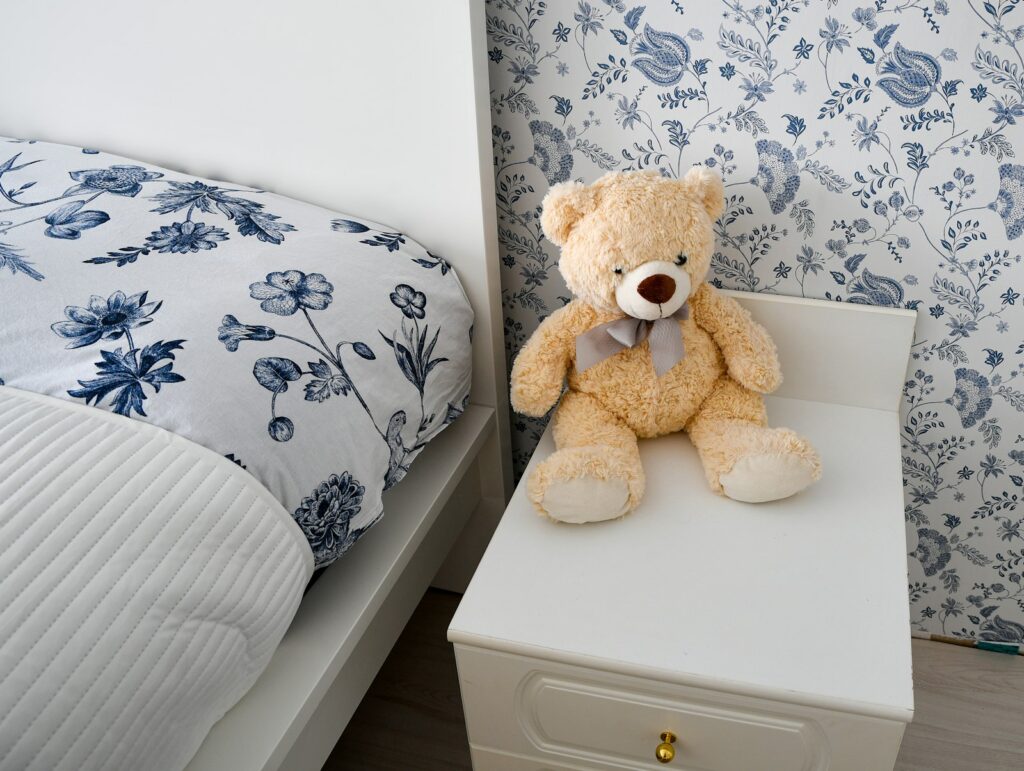
If your toddler won’t sleep at grandma’s house, you’re dealing with one of the most common sleep wobbles there is: a new room, new sounds, a bed that smells wrong and a grown-up who does bedtime a little differently. It isn’t a sign that anything is wrong with your child or with Grandma. Below you’ll get the six-item sleep kit to pack, a daylight room set-up, a one-page plan to hand over, and what to do at 2 AM if it all comes apart anyway.
- Pack a sleep kit from home: comfort toy, pajamas, bedtime book, sleep bag or blanket, night light and a white-noise source.
- Visit the bedroom in daylight and play there for ten minutes before bedtime.
- Keep the same bedtime steps in the same order, even if each step is shorter.
- Give Grandma one page with the routine, the words you use and what to do if your toddler wakes.
- Expect the first night to be the hardest and plan a quiet morning after it.
Why a toddler won’t sleep at grandma’s house
It’s 8:15 PM. Your toddler, who falls asleep at home in ten minutes, is standing up in the travel cot holding the rail, wide awake and asking for you. Grandma has tried rocking, singing and a second bottle of milk. Everyone is tired and slightly embarrassed.
Here’s what’s usually going on. Toddlers fall asleep through a chain of signals: the same light, the same smell, the same words, the same order. At Grandma’s, half of those signals are missing. The room is darker or lighter, the street sounds different, and the person doing bedtime uses different words. Your toddler isn’t being difficult. They’re waiting for the signals that say “now you sleep”.
There’s also excitement. A day at Grandma’s is often full of treats, attention and later meals. A toddler who’s overtired or still buzzing from the day will fight sleep in any bed. If the day was packed with visitors, our guide to a toddler overstimulated at family gatherings helps with the wind-down.
The 6-item sleep kit to pack
The goal is simple: make the new bed smell, look and sound as much like home as possible. Pack these in a separate bag so they don’t vanish into the suitcase.
Set up the room in daylight (the 10-minute visit)
Most parents show the room at bedtime, in the dark, when the child is already tired. Do it in the afternoon instead.
Run the same bedtime steps, in the same order
This is the core of the plan. Bedtime can move a little, but the steps travel with you. If your home routine is bath, pajamas, milk, two books, song, lights out, do exactly that at Grandma’s, even if the bath is shorter and the song is quieter.
| Step | At home | At Grandma’s |
|---|---|---|
| Wind-down | Quiet play after dinner | Same, in the bedroom, no new toys |
| Wash | Bath | Short bath or a warm flannel wash |
| Pajamas | Their own pajamas | The same pajamas from home |
| Book | Two familiar books | The same two books from the kit |
| Song or words | Your bedtime song | The same song, said the same way |
| Lights out | Night light on, door ajar | Same light, same door position |
If your routine at home isn’t settled yet, sort that first: our toddler bedtime routine guide gives you a calm order that’s easy to copy anywhere, and the toddler sleep routines guide covers naps too.
When your toddler won’t sleep at grandma’s house without you
A sleepover without parents is a bigger step than a visit together. Your toddler is missing the room and the person, so the plan needs to hand over as many signals as possible to Grandma.
If goodbyes are hard in general, the steps in our guide to a toddler crying at daycare drop-off work just as well at Grandma’s front door.
The one-page plan for Grandma (copy this)
Grandparents want to get bedtime right, and most of the friction comes from guessing. One page removes the guessing. Fill this in, print it or send it as a photo, and put it on the fridge at Grandma’s.
Keep it friendly, not bossy. Grandma raised children of her own and will have ideas. The page simply says “this is what your grandchild is used to”, which makes it easier for everyone.
Sharing a room with your toddler at Grandma’s
Staying together often means sharing a room, and that brings its own problems: your toddler can see you, hear you, and decide it’s play time at 9 PM. A few small changes help.
- Put up a divider. A clothes rack with a blanket over it, or the travel cot turned so your toddler can’t see your bed.
- Go to bed in the dark. Get your things ready before their bedtime so you can slip in later without turning the light on.
- Use white noise. It covers your sounds and the house sounds at the same time.
- Stay boring when they spot you. Same short words, back to sleep. If you start chatting, it becomes a game.
If the room only has one bed, a travel cot or a toddler floor bed is usually easier than sharing, because your toddler keeps their own sleep space.
What usually helps, by age
| Age | Main reason for bad sleep away | What usually helps most |
|---|---|---|
| 12–18 months | New room and missing the parent | Sleep kit, same sleep bag, parent nearby on night one |
| 18 months–2 years | Testing a new adult’s limits | Same words from Grandma, calm returns, a practice nap |
| 2–3 years | Excitement and later bedtimes | Quiet last hour, bedtime close to normal, daylight room visit |
| 3–5 years | Night-time worries and imagination | Night light, a chat about the plan, a “brave sleeper” sticker in the morning |
What to do when they wake up at night in a new room
Night wakings are more common in a new place, especially on the first night. The aim is a calm, boring response that tells your toddler everything is fine and it’s still night time.
- Keep the light low. Night light only, no big light.
- Keep the talk short. The same few words each time.
- Comfort, then settle. Stay as long as they need to feel safe, without turning it into play time.
- Don’t start new habits you don’t want at home. If you bring them into your bed one night at Grandma’s, that’s fine; just tell them it’s a Grandma’s-house thing.

Naps at Grandma’s house
Naps are often harder than nights, because the house is busier in the day. Protect one nap with the same short routine you use at home: a book, the comfort toy, curtains closed, white noise on. If the nap won’t happen in the cot, a stroller walk or a car drive is a fine plan B. Our guide to when a toddler won’t nap has more gentle fixes, and the toddler nap time routine chart is easy to print and leave with Grandma.
Getting back to normal at home
The first night home can be a little bumpy, especially if bedtime ran late or your toddler shared a room at Grandma’s. Go straight back to your normal bedtime and steps. Keep the next day quiet. If early mornings creep in, the plan in our guide to a toddler waking up at 5am helps reset the clock.
Common mistakes when a toddler won’t sleep at grandma’s house
1. Showing the room for the first time at bedtime
A dark, unfamiliar room at the end of a long day is a hard sell. Ten minutes of play there in the afternoon changes how the room feels.
2. Leaving the sleep kit at home
Parents pack clothes, snacks and toys and forget the very items that tell a toddler it’s time to sleep. Pack the kit first, in its own bag.
3. Letting bedtime slide too late
A big later bedtime on the first night usually makes the night harder, not easier. Keep it within about 30 minutes of normal.
4. Changing the words
Grandma’s lovely new lullaby is a different signal. Ask her to use your words and song, at least for the first nights.
5. Calling right before sleep
A video call at bedtime can bring back the missing-you feeling just as your toddler was ready to settle. Call after dinner instead.
Visiting for more than one night? The 4-anchor holiday routine for toddlers keeps wake-up, rest, meals and bedtime steady while everything else flexes.

Print it for this holiday · $12
Holiday with Kids Printable Pack: a filled visit plan for Grandma, the 4-anchor holiday day, packing lists and thank-you cards (19 pages).
See the pack →FAQ: toddler won’t sleep at grandma’s house
Why won’t my toddler sleep at grandma’s house?
Usually because too many sleep signals changed at once: a new room, different light and sounds, a different person doing bedtime, and a more exciting day than usual. Bring the same bedtime steps, comfort toy, pajamas, book and night light from home, and show the room in daylight. Most toddlers settle within a few nights.
How do I get my toddler to sleep in a new place?
Make the new place feel like home: pack the sleep kit, visit the room in daylight, and run your normal bedtime steps in the same order. Keep bedtime close to normal and the last hour calm. If they wake at night, use the same short words each time and keep the light low.
What should grandparents do at bedtime?
Follow the same steps and words the parents use at home, in the same order. Give the grandparent a one-page plan with the routine, the comfort toy’s name, the bedtime song and what to say if the toddler wakes. A practice nap before the first sleepover helps both of them feel confident.
At what age can a toddler sleep over at grandma’s?
There’s no set age. It depends on your child, your family and how well your child knows Grandma’s house. Many families start with a practice nap there, then one night, once the child is comfortable with that grandparent doing bedtime. If your toddler is very unsettled, wait a few months and try again.
Should I stay with my toddler until they fall asleep at grandma’s?
On the first night in a new place, staying close is fine and often helps. Sit near the bed, keep the talk short and calm, and leave once they’re drowsy if that’s what you do at home. Avoid creating a brand-new habit you don’t want to keep when you get back home.
How long does it take a toddler to adjust to sleeping somewhere new?
Many toddlers need a few nights to settle in a familiar second home, sometimes longer for a completely new place. The first night is usually the hardest. Keep the routine steady, and if sleep problems last more than a couple of weeks or your child seems unwell, check in with your pediatrician.
The bottom line
When your toddler won’t sleep at grandma’s house, the fix is to bring bedtime with you: the sleep kit, the same steps, the same words and a room they’ve already played in. Pack the kit tonight and write the one-page plan for Grandma. For more help, see our toddler sleep routines cornerstone and the sleep and bedtime collection.












Leave a Reply