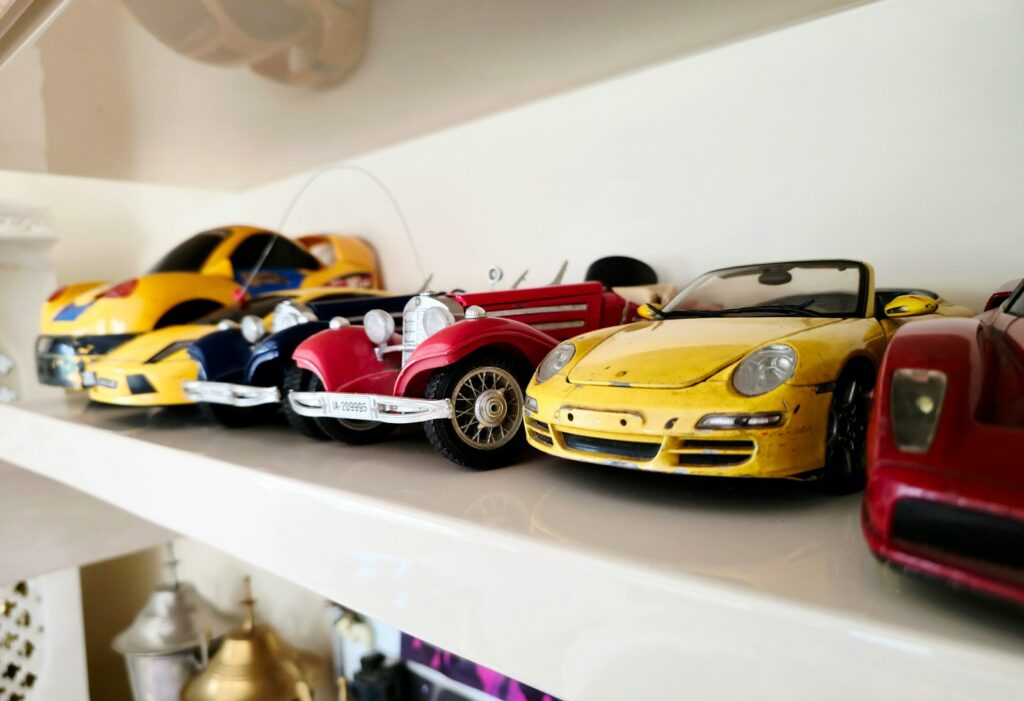
The best playroom organization ideas aren’t about pretty bins; they’re about making a room your child can actually tidy without you. If the floor is covered by 6 PM and tidy-up time ends in tears every night, the system is too hard for a small person to use. Below you’ll get a five-zone layout, storage rules that work at toddler height, picture labels, a five-minute nightly reset and the safety steps every playroom needs, whether you have a whole room or one corner of the living room.
- Fewer toys out is the biggest single change: keep a small selection on the shelves and store the rest.
- Divide the room into five zones so every toy has an obvious home.
- Use low, open shelves and bins without lids so a toddler can put things away with one hand.
- Add picture labels: a photo of the toy on the bin, so non-readers can tidy too.
- Anchor every shelf and dresser to the wall and keep small parts away from under-threes.
Why most playroom organization ideas fail
The internet is full of beautiful playrooms: matching baskets, labelled drawers, a craft cart with 40 markers in rainbow order. Then real life happens. The baskets have lids a toddler can’t lift, the drawers are too high, the labels are words a three-year-old can’t read, and everything ends up in one big pile on the rug.
The fix isn’t more storage. It’s simpler storage for a smaller person. Organization that works for children is low, open, visual and limited. When there are too many toys, even the best system collapses, which is why decluttering and rotation come first. If you haven’t done that yet, start with our guides on how to declutter toys and toy rotation for toddlers.
Playroom organization ideas that start with zones
A zone is a small area for one kind of play. Zones make tidying obvious (“cars live in the build zone”) and they make play better too, because children can see their options.
| Zone | What lives there | Best storage |
|---|---|---|
| Build | Blocks, construction toys, cars, train track | Low open bins on the floor or bottom shelf |
| Pretend | Kitchen, dolls, dress-up, animals | A small shelf plus hooks at child height |
| Create | Paper, crayons, stickers, playdough | A table with a caddy; messy items stored higher |
| Read | Books and a soft seat | A front-facing book ledge or crate |
| Move | Balls, soft play, a mini slide | A corner basket and clear floor space |
Storage rules that work at toddler height
Before you buy anything, look at the room from your child’s eye level. Kneel on the floor. What can they reach? What can they see? That’s the space you’re organising.
Picture labels: the trick that makes tidying possible
Most children can’t read “Animals” on a bin, but they can match a toy to a photo. Picture labels let a two-year-old put things back in the right place, and they cut down the “where does this go?” questions to almost nothing.
How many toys should be out?
Fewer than you think. When too many toys are out, children tend to tip and move on instead of settling into play. Keep a small selection on the shelves, one or two from each zone, and store the rest out of sight. Our toy rotation for toddlers guide explains how to set up rotation bins and swap them every week or two.
| Age | Toys out (rough guide) | Rotation |
|---|---|---|
| 1–2 years | A small handful per zone | Swap every week or two |
| 2–4 years | One shelf’s worth, one or two per zone | Swap every one to two weeks |
| 5–8 years | More choice, with sets kept complete | Swap or swap less, by interest |
Small-space playroom organization ideas
Most families don’t have a dedicated playroom. A corner of the living room or a bedroom can work just as well, and often better, because you can see the play from the kitchen.
- Go up, not out. A tall shelf anchored to the wall stores rotation bins on top, everyday toys at the bottom.
- Use under-furniture space. Shallow rolling boxes under the sofa or bed hold train track or dress-up.
- Pick one rug as the play zone. When the rug is clear, the room is tidy. It gives everyone a clear finish line.
- Choose furniture that hides toys. A storage bench or ottoman closes over the evening clutter.
- Keep the craft zone portable. A caddy that lives on a high shelf and comes down to the table.
Two children, different ages, one playroom
A toddler and a six-year-old share a room badly when everything is on the same shelves. The six-year-old’s small-part sets get scattered, and the toddler gets frustrated by toys that are too hard.
- Split the shelves by height. Toddler toys on the bottom shelves, older-child sets with small parts on higher shelves or in a closed cabinet.
- Give the older child a “builder’s table”. A small table or tray where projects can stay out safely between sessions.
- Shared zones stay shared. Books, dress-up and the move zone work for both ages.
- Tidy by age. The toddler does one bin, the older child does two. Both finish at the same time.
A 2-hour weekend set-up plan
You don’t need a full weekend. Two focused hours are enough to set up the zones, once the toy decluttering is done.
The 5-minute nightly reset
Organization only lasts if there’s a daily habit behind it. The nightly reset is short, the same every day, and done together.
A picture routine helps here too; our visual schedule for toddlers and toddler routine chart both include a tidy-up step you can copy.
Playroom safety: the must-dos
A tidy playroom also needs to be a safe one. The Anchor It campaign from the US Consumer Product Safety Commission explains that anchoring furniture with drawers, doors and shelves to the wall prevents tip-over injuries.
Keeping it organised when new toys arrive
Birthdays and holidays can undo a tidy playroom in one afternoon. Plan for it before the gifts come in: decide which bin the new toys go in, and store a few of them for the next rotation. If the flood of gifts is the real issue, our guides on how many gifts a child should get and how to tell grandparents no more toys help with the conversation.
Common mistakes with playroom organization ideas
1. Buying storage before decluttering
New bins for old clutter just make neater clutter. Clear and rotate first, then buy only the storage you still need.
2. Lids, drawers and high shelves for everyday toys
If your child needs you to open it, they won’t tidy it. Everyday toys belong in open bins at their height.
3. Mixing toy types in one big box
A single toy box turns into a dump-and-search pit. One type per bin keeps sets together and makes tidying obvious.
4. Word labels for non-readers
Words look tidy but don’t help a toddler. Use photos of the toys, with the word underneath for later.
5. Skipping the daily reset
Even a perfect system fills up in a week without a habit. Five minutes every evening, together, keeps it working.
FAQ: playroom organization ideas
How do I organize a playroom with lots of toys?
Start by reducing what’s out: store most toys in rotation bins out of sight and keep a small selection on low shelves. Then group the rest into zones (build, pretend, create, read, move), give each toy type its own open bin and add picture labels so your child can put things back without help.
What is the best storage for a toddler playroom?
Low, open shelves with shallow bins, no lids and one type of toy per bin. Toddlers should be able to reach and put away every everyday toy with one hand. Front-facing book ledges work better than bookcases, and anything messy or with small parts belongs on a high shelf for supervised use.
How do I organize toys in a small space without a playroom?
Use vertical storage anchored to the wall, shallow boxes under the sofa or bed, a storage bench that closes over the day’s toys and one rug as the play zone. Keep only a small selection out and rotate the rest. A clear rug at the end of the day means the room is tidy.
How do I get my child to tidy the playroom?
Make it short, the same every day and done together. Give a five-minute warning, use a tidy-up song, give one small job at a time (“all the cars in the car bin”) and finish with a clear rug. Picture labels on the bins help young children know exactly where each toy goes.
How many toys should a toddler have out at once?
Fewer than most families expect: one shelf’s worth, with one or two toys from each kind of play, is a good starting point for many toddlers. Store the rest and swap them every week or two. If your child plays well and tidying is manageable, you’ve found the right number.
Is a toy box a good idea for a playroom?
A single big toy box tends to become a dump-and-search pit where toys sink and sets get lost. Shallow open bins sorted by type usually work better. If you use a toy chest, avoid heavy lids that can slam, and choose one with a lid support or no lid at all.
The bottom line
The playroom organization ideas that last are the simple ones: fewer toys out, five zones, low open bins with picture labels and a five-minute reset every night. Start with one zone this weekend and anchor the shelves before anything else. Then read our toy rotation for toddlers cornerstone and browse the family routines and organization collection.





Leave a Reply